


Search Edarabia
Popular Searches: Schools | Universities | Courses | Jobs
There’s this so-called educational revolution with the onset of modern technology and internet. Now, teachers have a wide array of new opportunities to learn and integrate in the classroom.
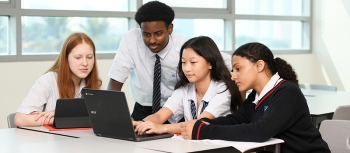
Unlike traditional classroom, learning environments are not anymore constrained within the four walls of classroom. Many of today’s learning spaces are making use of technology such as laptops, tablets, and mobile devices, as well as interactive whiteboards. Students mainly use technology to share, research and collaborate ideas.
To keep up with this digital revolution in education, teachers must strive to build a community of learners. Here are some of the points to remember.
1. Use an innovative approach
As an educator, researching about new methods involving the use of technology in the classroom should never stop. You must think of fresh, innovative ways to engage your students. Many educators are embracing digital environment to help their students grow. By doing this, you also motivate your students and help them develop practical and analytical skills.
A wide range of teaching materials are already available for consumption. This makes it easier for teachers to acquire materials for the classroom. Don’t be afraid to fully embrace technology and make it the central tool in learning.
2. Embrace new learning opportunities
Nowadays, a field trip is not just a field trip and a project is not just a project. Students will most likely bring their mobile devices, laptops and ipads. Internet connectivity is a must to be able to collaborate with their classmates. Those types of learning occur in different parts of the globe every day, helping students develop critical thinking, creativity and teamwork.
At the center of each assistive learning tool is the educator brave enough to try new teaching strategies and enhance learning experience of his students.
3. Encourage a ‘community’ between your students
The instructional model of classrooms has changed rapidly. The teacher isn’t the only one at the center feeding information to students. There are so called “flipped classrooms,” where instruction is delivered to students at home via the web in the evenings, and class time is used for collaboration, individualized and small-group interaction.
Some educators are using the ISTE Standards to support the transformation of learning, teaching and leading in their connected classrooms. Continue to build a community of learners – among students and adults – that examines how learning and teaching can look to realize the vast benefits of technology. It’s important to create a connected world and prepare students for success by transforming learning through technology.
4. Make learning relevant.
Listen to your students when they speak. Don’t judge their speaking qualities, just listen to their message. Let them talk about things that mattered to them. Encourage sharing among students.
5. Let students know you care about them.
Remind your students that you care about them, and that your relationship goes beyond the four corners of the classroom. You are the second parent of these students, and it is your duty to take care of their well-being.
Do you know other tips aside from those mentioned above? Do share in the comments below.





 Twitter
Add a Comment
Please do not post:
Thank you once again for doing your part to keep Edarabia the most trusted education source.