


In an era where our young people are exposed to pressures that endorse the promotion of self-image through modern media channels, social and well-being concerns around this call for national responses to guide the young away from such self-absorption. Schools, therefore, face a challenge.
How can social and emotional education be successfully delivered in the classroom? For a start, we need to redefine the classroom. The lives of pupils flow in and out of physical spaces and so the relevance of their learning needs to be carried forward with them wherever they are. Thankfully, nearly all pupils will find school a safe environment. Sadly, their social and emotional concerns are most likely now in the online world. Therefore, the relevance of setting the correct tone and education within the school builds strength and resilience to the emotional well-being, which in turn will give a cushion to the challenges that pupils face and that schools and families cannot directly control.
A number of schools are working hard to break the ‘selfie’ culture which can pervade in young people’s lives (indeed even with some adults!). The writer Quentin Crisp said of the young, “The young always have the same problem — how to rebel and conform at the same time. They have now solved this by defying their parents and copying one another”. Social networking can fuel this craze, however perhaps in this statement, we also have the answer to the question of how to approach social and emotional intelligence in our schools.
“At Brighton College we want all of our pupils to be first class versions of themselves, rather than a second-class version of someone else”. So says Mr. Richard Cairns, leading educationist and commentator.
‘Copying one another’ is the key, and action empowers pupils to not only see a confident and kind self but to experience it. Brighton College UK has been exemplifying this over a number of years. ‘MADD’ is the annual Make a Difference Day, it is a fixed point where all in the College get involved in community projects and contribute to the community beyond their school. Beyond that, Respect Week brings issues of potential intolerance or ignorance to the fore and develops across the School a deeper understanding of the concerns and needs for groups who might suffer prejudice, groups such as the elderly and the homelessness. These schemes for action, express throughout the School community at large the desire to see beyond their own needs and self-image. Pupils understanding themselves in greater depth through empathy over the direct experience of others. But beyond empathy pupils grow in confidence over their emotional response by being empowered to structure their goal of doing something about it. That sense of action that leads to results, appeals to young people.
Schools need to ensure that they action what they promote. In the case of Random Acts of Kindness, an expression used frequently in Mr. Cairns’ school, staff and pupils wear wristbands which act as a visual prompt to consider where in each day they may have received and also expressed kindness to others. Social–emotional learning builds a personal sense of well-being and there is no better sense of well-being at any age than feeling people have genuine care and respect for you. From that strength, pupils know they can support, be kind, to others.
Social and emotional learning deals with the whole person. These are terms that have been written about at great length. Simple and practical acts, I would suggest, give a much more powerful sense and meaning to social and emotional development than many words will do. Ultimately then pupils can go forward in life with an understanding that it is fine to “Be yourself; everyone else is already taken” (Oscar Wilde), they will do so from learned actions and experiences. These build their confidence, allowing them to be comfortable in their own skin. Now that I contend must be essential!

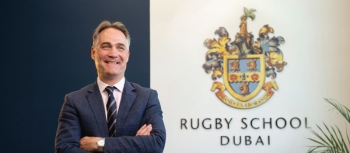
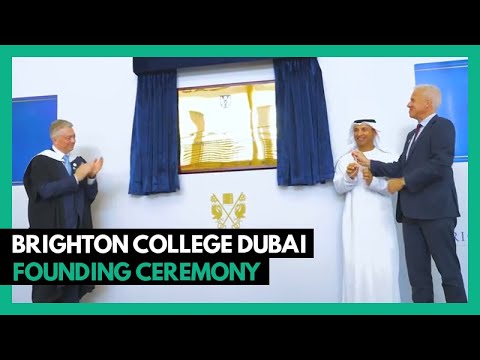
Mr. Marco Longmore brings with him to Dubai over 25 years of teaching experience. Prior to joining Brighton College Dubai as Head Master, he had the privilege of working at four leading HMC Schools in Edinburgh and London, including the Edinburgh Academy where he had been Rector of the school for the past nine years.
Marco Longmore is 47 years old, married to Karen and they have two children. A Scot, Marco read History at Edinburgh before beginning his teaching career in 1991 at George Heriot's School, becoming Head of History at George Watson's College in 1998. His next move was south, as Senior Deputy Head at Alleyn's School in London, before returning to the Scottish capital in 2008 to lead the Academy. During the period of his headship, The Edinburgh Academy has grown to become one of Scotland's most successful co-educational schools.





 Twitter
Add a Comment
Please do not post:
Thank you once again for doing your part to keep Edarabia the most trusted education source.