


Leadership is a lifelong journey of self-improvement and growth, and one of the most effective ways to expand your leadership skills is by immersing yourself in the wisdom found in books. Whether you’re an aspiring leader looking to develop foundational skills or a seasoned leader seeking fresh perspectives, the leadership book can be an invaluable guide. In this comprehensive guide, we will explore a thoughtfully curated list of the best leadership books across a spectrum of categories. Whether striving to develop courage, discover your core values, enhance teamwork, or master the art of communication, these books offer insights and strategies that can elevate your leadership capabilities.
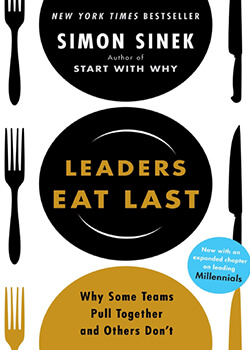
Favorite Quote: "Leadership is about a lot more than just being in command." It is about caring for people under your supervision."
The Book's Short Summary: Simon Sinek explores the concept of leadership as a form of service, where leaders prioritize the well-being of their teams. He delves into the creation of a culture built on trust and collaboration.
Why should you read it? This book offers a fresh perspective on leadership, emphasizing the importance of putting people first.
Key Takeaways: Trust-building, servant leadership, and prioritizing team members' welfare.

Favorite Quote: "People don't buy what you do; they buy why you do it."
The Book's Short Summary: Sinek emphasizes the significance of understanding and communicating the "why"—the purpose and motivation behind your leadership. He explores how inspirational leaders inspire action by starting with a clear sense of purpose.
Why should you read it? To discover your purpose as a leader and inspire others through a shared vision.
Key Takeaways: The power of purpose, creating a compelling vision, and motivating teams
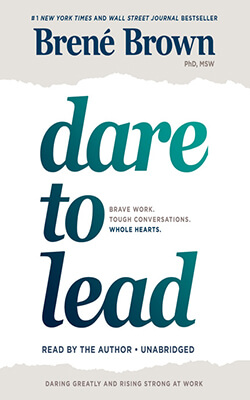
The Book's Short Summary: Brené Brown explores the intersection of vulnerability and leadership, offering insights on building courageous and compassionate leadership. She emphasizes that embracing vulnerability leads to more authentic and effective leadership.
Why should you read it? Cultivate the bravery required to lead with empathy and authenticity.
Key Takeaways: Embracing vulnerability, daring leadership, and fostering a culture of bravery
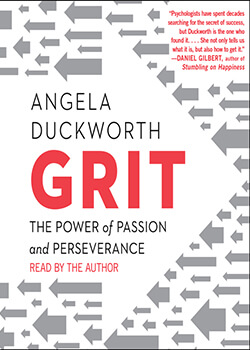
The Book's Short Summary: Angela Duckworth explores the concept of grit and its pivotal role in achieving success in leadership and life. She delves into the importance of sustained effort and resilience.
Why should you read it? To develop the resilience and determination needed to overcome challenges in leadership roles.
Key Takeaways: The importance of passion, perseverance, and developing grit
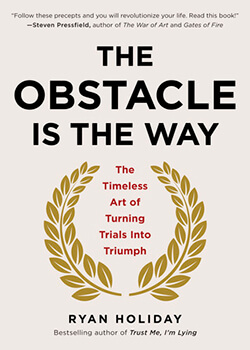
Favorite Quote: "The impediment to action advances action. What gets in the path will eventually become the path."
The Book's Short Summary: Ryan Holiday draws inspiration from Stoic philosophy to provide a framework for transforming obstacles into opportunities in leadership. He encourages readers to view challenges as stepping stones to growth.
Why should you read it? To learn how to approach challenges as opportunities for personal and professional development.
Key Takeaways: Resilience, adaptability, and the power of a positive mindset.
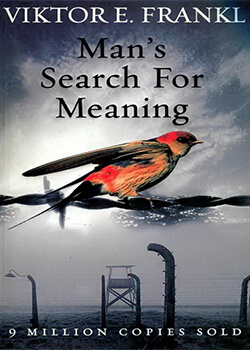
Favorite Quote: Anything can be removed from someone's life, but one of them is the last of a person's freedoms—the power to select one's attitude in a certain set of events, being able to choose one's path."
The Book's Short Summary: Viktor Frankl, a Holocaust survivor, reflects on the search for meaning in life and how it can shape our choices and impact others. He explores the profound connection between personal values, purpose, and leadership.
Why should you read it? To understand how your values and sense of purpose can guide your leadership and positively influence those around you.
Key Takeaways: Finding meaning in adversity, the power of choice, and leading with purpose.
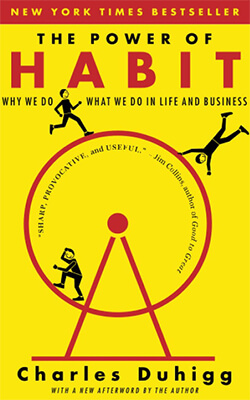
Favorite Quote: "Change might not be fast, and it isn't always easy. However, virtually any behavior may be reformed with a little effort and time."
The Book's Short Summary: Charles Duhigg delves into the science of habits and how understanding them can lead to personal and organizational transformation. He explains how aligning your habits with your values can create a change.
Why should you read it? To discover how to shape your habits to align with your values and achieve personal and professional growth.
Key Takeaways: Habit formation, habit change, and the impact of habits on leadership
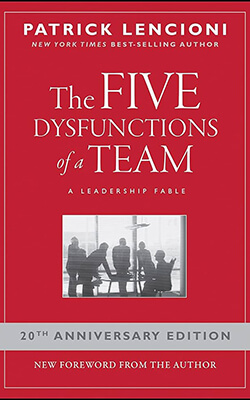
Favorite Quote: "Not finance. Not strategy. Not technology. Because it is both strong and uncommon, collaboration provides the ultimate competitive edge."
The Book's Short Summary: Lencioni identifies common team dysfunctions and provides practical solutions for building cohesive, high-performing teams. He highlights that effective teamwork is the ultimate competitive advantage.
Why should you read it? To understand the dynamics of effective teamwork and how to overcome common pitfalls that hinder team performance.
Key Takeaways: Trust-building, productive conflict, commitment, accountability, and achieving results as a team.
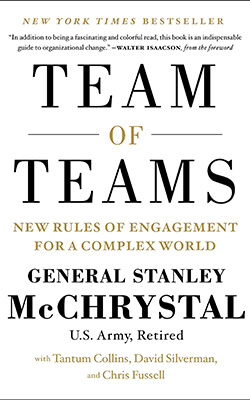
The Book's Short Summary: General Stanley McChrystal shares his experiences leading the Joint Special Operations Task Force in Iraq and the importance of adaptability in teamwork. He advocates for a shift from traditional hierarchy to a more flexible and interconnected approach to leadership.
Why should you read it? To learn how to lead and foster teamwork in complex and rapidly changing environments.
Key Takeaways: Adaptability, shared consciousness, and decentralized decision-making in teams
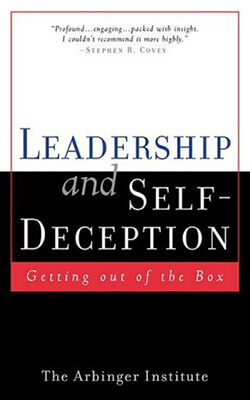
Favorite Quote: "The problem is not out there. The problem is the little person in the mirror."
The Book's Short Summary: The Arbinger Institute explores the concept of self-deception and how it hinders effective leadership and collaboration. The book delves into the importance of overcoming self-deception to improve interpersonal relationships and teamwork.
Why should you read it? To understand the role of self-awareness and empathy in group dynamics and leadership.
Key Takeaways: Overcoming self-deception, improving interpersonal relationships, and enhancing teamwork

The Book's Short Summary: Katzenbach and Smith explore the dynamics of high-performance teams and how they drive organizational success.
Why should you read it? To understand the factors that contribute to the success of teams and how to foster a team-oriented culture.
Key Takeaways: Characteristics of high-performance teams, team leadership, and the impact of teams on organizational effectiveness
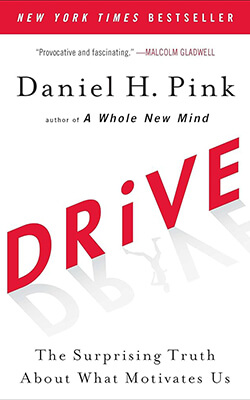
Favorite Quote: "The private part of best implementation and satisfaction at the office is the exact human need to direct our lives, to learn new skills and make new things, and to do much better than previously by ourselves and for our world."
The Book's Short Summary: Pink delves into the science of motivation and how leaders can leverage intrinsic motivation to improve team performance.
Why should you read it? To learn how to inspire and engage your team on a deeper level.
Key Takeaways: Intrinsic motivation, autonomy, mastery, and purpose
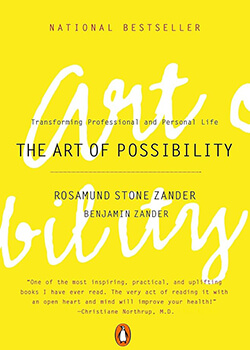
Favorite Quote: "It's all a new addition anyway, so we might as well create an additional story or a framework of the definition that improves our quality of living a life and the way of living the lives of those in our surroundings."
The Book's Short Summary: This book offers a unique perspective on leadership and creativity, emphasizing the power of mindset and possibility thinking.
Why should you read it? To develop a presence that inspires creativity and fosters innovation.
Key Takeaways: Possibility Thinking, Leadership Mindset, and Creative Leadership
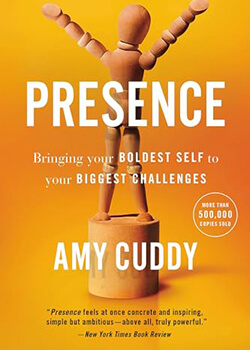
Favorite Quote: "Don't fake it till you make it. Fake it till you become it."
The Book's Short Summary: Amy Cuddy explores the concept of "power poses" and how body language can impact one's presence and leadership.
Why should you read it? To understand how body language and self-assurance contribute to effective leadership presence.
Key Takeaways: Power posing, confidence, and authentic leadership presence.
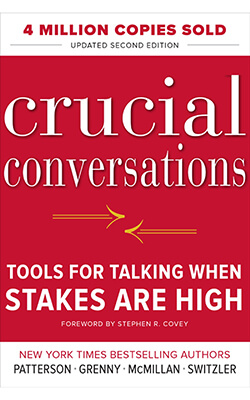
The Book's Short Summary: This book provides tools and techniques for handling high-stakes conversations with finesse and achieving meaningful outcomes.
Why should you read it? To improve your communication skills in critical situations.
Key Takeaways: Effective dialogue, active listening, and mastering crucial conversations
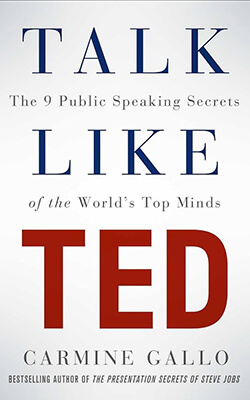
Favorite Quote: "Great speakers are not born. They're taught."
The Book's Short Summary: Carmine Gallo analyzes TED Talks and distills the key elements that make them compelling.
Why should you read it? To enhance your public speaking and communication skills, which are essential for leadership roles.
Key Takeaways: Storytelling, emotional connection, and delivering impactful presentations
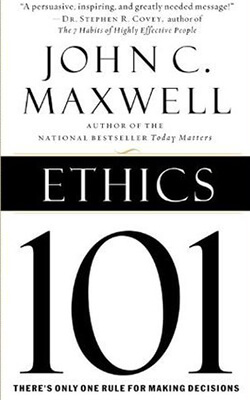
Favorite Quote: "Ethics is the knowledge of the difference between what is your duty to do and what is not."
The Book's Short Summary: John C. Maxwell provides practical guidance on ethical decision-making for leaders.
Why should you read it? To strengthen your ethical foundation as a leader and make principled decisions.
Key Takeaways: Ethical decision-making, integrity, and moral leadership
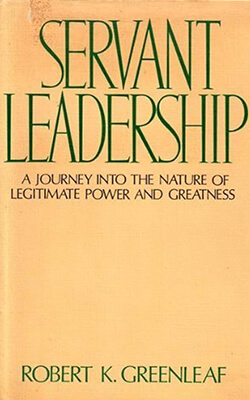
The Book's Short Summary: Robert K. Greenleaf introduces the concept of servant leadership, emphasizing the leader's role in serving others.
Why should you read it? To explore the transformative power of leading through service and empathy.
Key Takeaways: Servant leadership philosophy, empathy, and fostering a culture of service
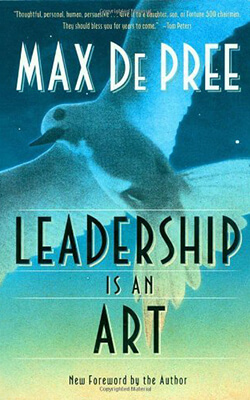
The Book's Short Summary: Max DePree advocates for a holistic approach to leadership that encompasses artistry, ethics, and nurturing relationships.
Why should you read it? To explore a unique perspective on leadership that goes beyond traditional management.
Key Takeaways: Leadership as an art form, building trust, and ethical stewardship
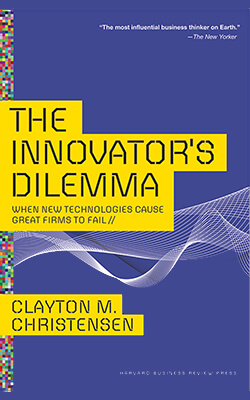
The Book's Short Summary: Clayton Christensen explores why successful companies often fail when faced with disruptive innovations and how leaders can navigate these challenges.
Why should you read it? To gain insights into innovative thinking and adaptability in leadership.
Key Takeaways: Disruptive innovation, adapt or die, and sustaining innovation
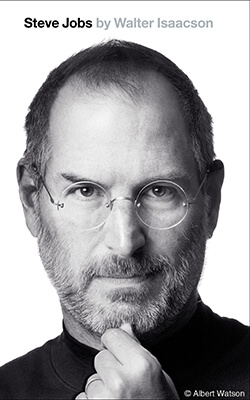
The Book's Short Summary: Walter Isaacson's biography offers an intimate look into the life and leadership of Apple's co-founder, Steve Jobs.
Why should you read it? To learn about the unconventional leadership style and relentless pursuit of excellence embodied by Steve Jobs.
Key Takeaways: Visionary leadership, innovation, and the pursuit of perfection

The Book's Short Summary: Nelson Mandela's autobiography recounts his extraordinary journey from a prisoner to the President of South Africa and the principles that guided his leadership.
Why should you read it? To learn about resilience, forgiveness, and leadership in the face of adversity.
Key Takeaways: Courage, forgiveness, and the power of reconciliation













 Twitter
Add a Comment
Please do not post:
Thank you once again for doing your part to keep Edarabia the most trusted education source.