


On his recent visit to the UAE, Dr. Armstrong spoke about the challenges of educational leadership in international schools, particularly in the Middle East region. He emphasised the passion and dedication necessary for teachers in these schools and acknowledged the unique diversity found in international school communities, especially in Dubai and the UAE.
I believe people go into teaching because they want to give something back. They want to support young people and their development, educationally, socially and holistically. For most teachers, it’s a vocational calling. If you don’t have that passion to promote and nurture young people’s development, then you probably won’t last long in teaching because it’s a tough job.
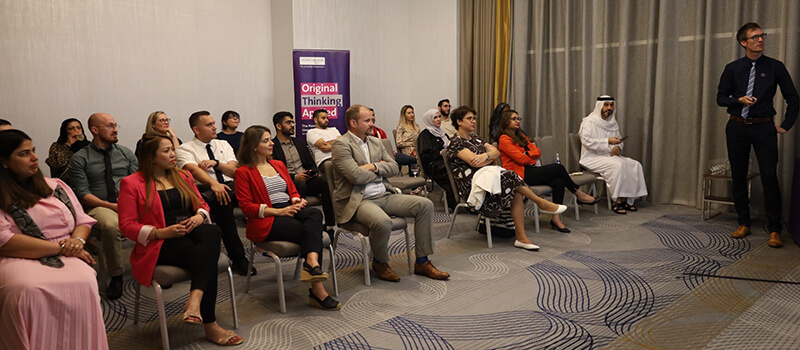
Teachers are very passionately and emotionally engaged in what they’re doing. If you’re an educational leader, you are probably blessed with a cadre of teachers in your school and most of them are very passionate about what they do. Of course, not every teacher’s got the same level of passion –some might struggle in a particular school, in a particular context but I think if you can get the right blend of teachers and set the right culture, then your school is probably doing well.
Teaching is very challenging and education is a complicated business. Schools in particular tend to mirror the communities and the societies they serve. So, the challenges you may see in a particular context will be mirrored in the departments and the classrooms of the schools in those areas. Teachers are faced with this every day and it’s not just about educating or getting students through exams and educational progress. This is important, of course – to students and parents and is how schools are judged – but anyone who’s been involved in a school will know that it’s about much, much more than that.
It’s a high-pressure job and those pressures are increasing. I’m privileged because most of our programme’s students are teachers and educators working in different schools, different contexts, together in one place, in one programme, and we all learn from the wonderful diversity of experience that they bring. I can see it’s a tough job and a lot of them are in very difficult roles. If they didn’t have that passion for teaching, would do something different because they’re smart people.
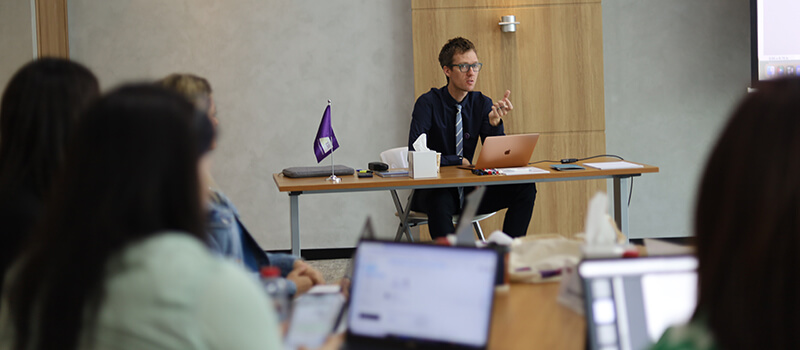
The community they serve here is distinctive, with its international school dimension and the type of students that are going through the classrooms. Dubai has got such an amazingly diverse population and this is replicated in the teaching profession here and in the diversity of students on our ELiP programme in the Middle East. This brings rich cultural diversity with all that knowledge, history and identity. It’s wonderful to have all these people working together in one place, in one school in many cases. The kids they teach might also be very culturally diverse or have different linguistic abilities.
Schools are schools and I’ve visited many schools all over the world and I see many commonalities, with the same classroom replicated from sub-Saharan Africa or Northern Europe, South America or Iceland.
But there is also context. Dubai and the Middle East region are distinctive because of the large expat community and the relative affluence. There’s some consistency in terms of the student population and the sort of teachers here. The dominant school type here is a private fee-paying international school. Parents have a lot of influence over what happens in schools. For leadership, that can be a significant challenge with parents expecting a return on their investment through results. It’s a different way of thinking – a business model in education.
We developed the ELiP programme originally because we felt there was a gap for a programme that focused on educational leadership from an academic, research and theoretical sense but positioned to allow students to apply that academic thinking in practice. We took our experience in international schools and built the programme and then we tapped straight into the international schools which already existed around the University’s international centres. The majority of our students are international schoolteachers and leaders in Singapore, Shanghai, Hong Kong and Dubai. But we have other students as well from different sectors and different phases of education – such as early years, further education, higher education, NGOs. We also have a number of students who work in the state school sector in different parts of the world.
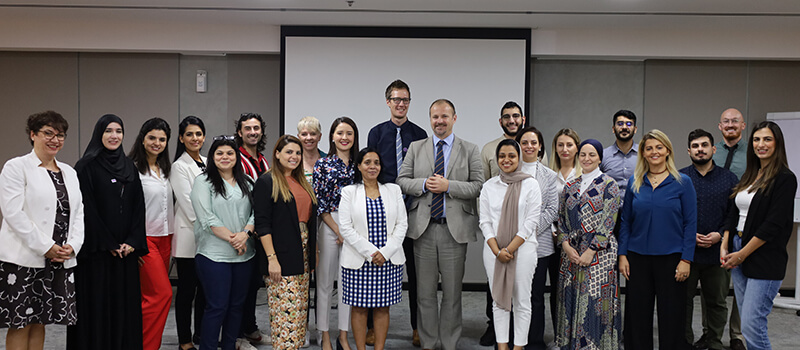
We’ve learned a lot about leadership in the international school sector running the programme. Dubai is similar to Singapore and Hong Kong in terms of the competitive international school space.
These schools are small to medium-sized businesses and have relatively big budgets and so need to be run with financial astuteness and business acumen. The head teacher, the school principal, has a lot of responsibility leading a profit-making entity based on a business model. But ultimately, they are still there to provide an education for the next generation of young people in the regions they serve. If they don’t do this well, the business model will fail. The two – education and business -can coexist but present distinctive challenges for the school leadership.
Dr. Paul Armstrong is a Reader in Education at the University of Manchester, based in the Manchester Institute of Education. Dr Armstrong is involved in a number of research projects as a research active academic. He is also the Director of the part-time MA Educational Leadership in Practice (ELiP) programme, which the University runs across all its international centres, in Dubai, Hong Kong, Shanghai, Singapore and Manchester.
For more information on The University of Manchester’s part-time MA in Educational Leadership in Practice please visit https://www.manchester.ac.ae/study/part-time-ma-educational-leadership-practice.










 Twitter
Add a Comment
Please do not post:
Thank you once again for doing your part to keep Edarabia the most trusted education source.