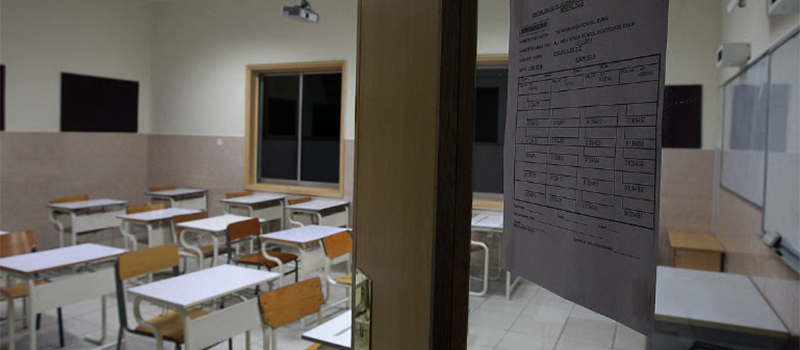
For many Grade 10 students in the UAE the new format has prompted questions about preparation strategies
CBSE-affiliated schools principals across the UAE are reminding students and parents that under the revised Class 10 board examination scheme from 2026, the first board exam is compulsory — and not appearing for it can have serious consequences.
The clarification comes after the Central Board of Secondary Education (CBSE) recently issued an official note outlining eligibility rules for the two-exam format that commences this year. The Class 10 board exams began on Tuesday, February 17, 2026.
School leaders say the intent is to reduce stress while maintaining academic standards, but they are keen to ensure families understand that the second exam is not a replacement for the first.
Deepika Thapar, CEO-Principal of Credence High School, underscored the distinction. “CBSE has clarified that the first Class 10 board exam is mandatory, while the second exam is only for improvement. Students who pass all subjects like English, Hindi/Regional Language, Mathematics, Science, and Social Science may improve up to three subjects, and those with compartment results can reappear in failed subjects. At our school, we have structured revision schedules and focused mentoring to ensure strong preparation for the first exam.”
She added that schools are also helping students view the second attempt in the right light.
“Our counselling team guides students to see the second attempt as a supportive safety net, helping them manage stress and make informed choices, while maintaining academic rigor and confidence”.
Bhanu Sharma, Principal of Woodlem Park School, Ajman, also echoed the importance of attendance in the first sitting.
“Under the revised guidelines, the first Class 10 board exam is mandatory for all students, and those who miss it will not be eligible to appear for the second exam in the same academic year. Students absent in three or more subjects in the first exam will be marked ‘Essential Repeat’ and must reappear the following year.”
She clarified that the second examination serves defined purposes.
“Only those who sit for the first exam can take the second exam, which is designed for specific purposes: improving marks in up to three subjects, clearing one or two compartment subjects, or a permitted combination of both. The second exam is not a substitute for the first, and students cannot add new or additional subjects after passing Class 10.”
For many Grade 10 students in the UAE — already balancing internal assessments, competitive streams, and parental expectations — the new format has prompted questions about preparation strategies.
Dr Prema Muralidhar, Principal of The Royal Academy Ajman – a North Point Education School, said clarity has been central to easing anxiety.
“We are nurturing a mindset where students engage with the first examination with confidence and commitment, while perceiving the second attempt as a supportive opportunity for academic refinement rather than a fallback. This clarity has helped maintain academic rigour while simultaneously reducing performance anxiety.”
The shift has also led to operational changes within schools.
“The policy shift has enabled us to reimagine academic planning through a more personalised and flexible lens. We have redesigned our assessment calendar to incorporate diagnostic checkpoints, targeted remediation cycles, and enrichment modules between the two examination windows.”
Mentoring, too, is becoming more data-driven and reflective.
“Our mentors are engaging learners in goal-setting conversations, helping them analyse performance data, and guiding them to make informed decisions about improvement attempts. Importantly, we are reinforcing the philosophy that excellence is a journey of continuous growth.”
© Khaleej Times



















 Twitter