


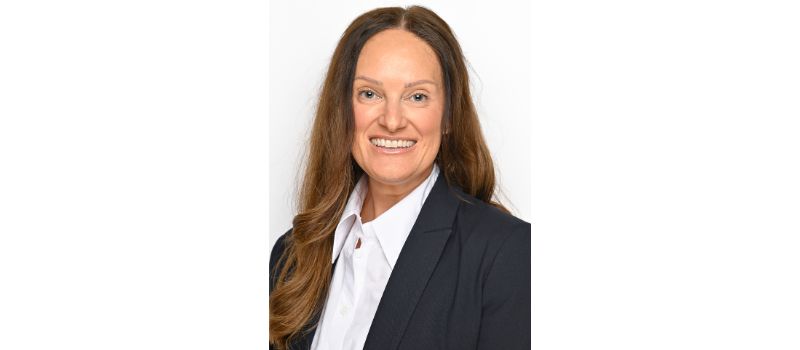
In a world where education is increasingly shaped by technology, The Arbor School is placing equal emphasis on what happens beyond the screen. In this conversation with Principal Ms. Gemma Thornley, we explore how the school is cultivating resilience, adaptability, and a strong sense of purpose in its students. From prioritizing well-being and meaningful relationships to fostering critical thinking and social responsibility, Arbor School’s approach ensures that every child is supported to grow not just academically, but as a confident and compassionate individual.
We haven’t transitioned to anything yet. We have set up a working party and are reviewing the requirements for the AI curriculum. We can’t just jump to teaching AI when you don’t know yet what the benefit is of it. It also is evolving so quickly, any curriculum approach has to take this into consideration. We are currently looking at the way our school (students and teachers) utilise AI technology and rather than framing it as a ‘tool’. We are looking at the research behind it, including the OECD research. We are a school that is very much about outdoor education and experiential learning experiences, and we don’t mandate our youngest students have devices as we want our children to learn as much as possible through hands on learning. According to the OECD stats (international review of Ed tech) it concluded that students that very frequently use computers at school do a lot worse in most learning outcomes. So with this in mind, we are currently reviewing how we approach this with our beliefs and approach to education.
We never have allowed smartphones to be visible in school, so this is not anything new for us. However, we are tightening our policies to ensure that all stakeholders understand the shift is now not just a school level decision, but a federal one.
Have you seen a tangible impact on student social interaction and focus? Again, Arbor is a very different school in its approach to learning. We are a National Curriculum for England school, but with an ecological and environmental lens over the top of what we do. Our curriculum has been designed very carefully and intentionally to embrace outdoor education and opportunities to learn in a variety of different spaces. Our focus on wellbeing and positive education also is built into the curriculum and we give students opportunities to have the space and time for reflection and social interaction. This is so important in a world that is so fast paced and has news cycles at the touch of their fingertips. It can be overwhelming and in giving children the space away from it, is really important and can help with that correlation between academic knowledge and creative thinking.
We have a lot of restrictive screen time in the primary school, so it is not an issue. They should be using their time in class to develop critical, systems and creative thinking skills. So this restriction is fully supported. Over 13s, it is about navigating the IT systems they may need to use in the future without compromising academic rigour. It is about finding a balance between educational integrity and educating them that thinking hard and knowing the process is really important. We know from science and research that in order to learn, knowledge has to go into your short-term working memory, to then be transferred to the long-term memory through the building of schema to be recalled later. With this, at Arbor we work to ensure our students have an understanding of how the brain learns best. The science behind the learning are the tools we have to build on, and we are preparing them for future workforce too, so we frame it as the technology assisting, but knowing that it isn’t the answer to finding the answer quickly.
We see the national subjects as a vital part of helping our international community understand the country they live in. Rather than treating Arabic, Islamic Studies, and National Identity as isolated curriculum requirements, we work hard to connect them to the wider life of the school. One of the key areas we have invested in is Arabic immersion in the early years, which is developing really well. At this stage the focus is on language through play, storytelling, music, and routine, so children build a natural familiarity and enjoyment of the language. What we are seeing already is that students view Arabic as something joyful and part of their daily experience rather than something separate from the rest of their learning.
As students move through the school, we place a strong emphasis on relevance and cultural understanding. Our aim is that students do not simply learn about the UAE academically, but develop an appreciation of the country’s values, traditions, and global outlook. For a diverse international student body, that means helping them understand the story of the UAE, the importance of its culture and faith traditions, and how these shape life in this region.
The temptation from a parent perspective is to channel their child through a structured career path. This is why it’s important our curriculum is broad. It is about making sure everyone has a plan B. Starting conversations young and framing it to be age appropriate is important. Educating parents as part of this too is important, as the way they chose career pathways will be very different to how their children do. We purposely call our careers and uni advisor a Futures Counsellor as we are very aware that traditional pathways to the workforce aren’t necessarily the only way now or applicable. Our goal is to develop graduates who are ready not just for university, but for life, who are young people with strong qualifications, a sense of purpose and the ability to thrive in an economy defined by rapid change.
At Arbor we have never been a one-size-fits-all school. From the beginning we designed the school around the belief that education should recognise the individuality of each learner, rather than expecting every child to fit neatly into a single academic pathway. Yes, we are a National Curriculum for England school, but our curriculum has been carefully developed over the last eight years to sit slightly outside the traditional model. We have continually refined it through monitoring, reflection, and feedback to ensure it is shaped around our students, their interests, and their potential. We don’t just want to tick curriculum boxes.
We look intentionally for each student’s strengths. For some, that may be academic excellence, but for others it may be creativity, environmental leadership, entrepreneurship, sport, or a passion for community impact. Our role as a school like Arbor is to recognise those strengths early and create opportunities for students to develop them. The evidence that the approach works can be seen not only in our strong academic outcomes, but also in the paths our students go on to take. Our alumni include entrepreneurs, climate advocates, artists, athletes, and young people who are determined to make a positive contribution to the world.
We have developed our own ecological and environmental curriculum that is very focused on global challenges and this starts with legacy projects in the primary school that are designed through experiential and collaborative project based learning approaches. This then develops into standalone lessons focused on ecoliteracy in Key Stage 3 and developing into our own Global Impact Certificate, and also offering the Pearson Global Perspectives qualification at GCSE. At Key Stage 5, students have opportunities to take an EPQ (Extended Project Qualification) that is also backed by a teacher lecture series focused on global challenges and solutions.
A strong holistic programme underpinned by a positive education framework. We also have mindfulness built into secondary curriculum, and a strong counselling and coaching mindset. In addition to this, we support our parent community with talks and resources to help triangulate what we do at school with home, ensuring we are all focused on developing our students not just academically but holistically too.
Our SEND department is called THRIVE, and is purposely called this to ensure all learners are part of the school and can thrive in whatever success looks like for the individual child. We have a dedicated team of specialist teachers and LSAs that work with our students of determination to ensure their learning is personalised and adaptive teaching is in operation in all phases of the school. Because of this approach, we have been able to take students that other schools turned away or could not support. This year we have also employed a specialist who is in charge of our accomplished learner programme.
This is part of our pastoral programme led by our digital leads in primary and secondary.
Our families have always been a central part of the community school we have cultivated and these initiatives have only strengthened our relationships with them. Our Friends of Arbor parent association arranged a wonderful Ramadan Bazar for the school just before Ramadan started, and it was so well attended by our community; Muslims and non-Muslims coming together for the spirit of the Holy Month. This is why community matters, and in the challenging times we are facing as a nation, it is even more significant and special now.
Autonomy and ownership in their classrooms is key. Giving them a voice, a choice and ownership is not just for students, it is for all when it comes to agency. Ensuring transparency in regard to decisions made for the good of the school is also really important, and having a leadership team who know education and will work with the team to ensure the very best for all should not be underestimated. Teaching isn’t about a playbook or about painting by numbers, it has to be as personalised for the teachers as it does for the students. Otherwise, you risk losing your very best talent.
Education should help young people understand that they are part of something bigger than themselves. The world they are inheriting will need thoughtful, courageous people who care not only about success, but about responsibility, to each other, to their communities, and to the planet we all share. If we can help them grow into people who think this way, then we will have done something meaningful.


 Twitter
Add a Comment
Please do not post:
Thank you once again for doing your part to keep Edarabia the most trusted education source.