


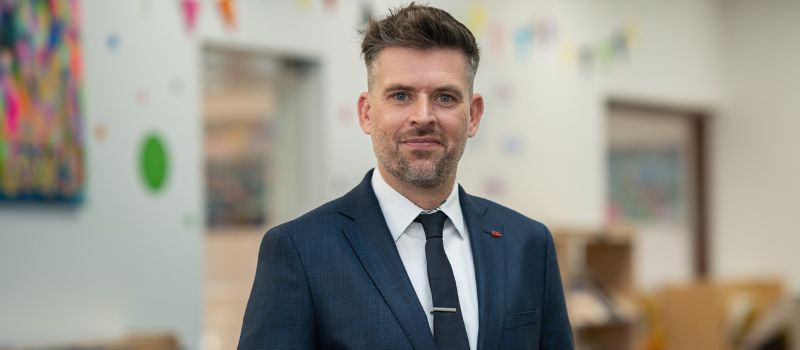
Edarabia had the opportunity to interview Steve Arnold, Principal of Ranches Primary School, to explore how primary education is shaping students for a rapidly evolving world. He shares how Ranches introduces AI literacy through age-appropriate exploration, focusing on curiosity, questioning, and ethical understanding rather than direct generative AI use. Steve highlights how the school builds resilience, critical thinking, and strong relationships from the earliest years, ensuring children develop the confidence to face challenges. He also emphasizes the importance of human connection, personalised learning, and meaningful parental involvement, while providing strong support for Students of Determination and nurturing a positive digital footprint for every child.
Well, it looks a little different at Ranches because we are a primary school only. We’ve been quite deliberate about our approach here. For us, AI isn’t just a tool, and it isn’t a subject that sits in isolation. It’s part of how children understand the world they are growing up in.
In the primary years, that starts very simply. What is AI, where do we see it, and how does it make decisions. We focus heavily on curiosity and questioning. Who made this? Can I trust it? What might be missing?
At the same time, we are honest about boundaries. Our children are not using generative AI directly at this age. That’s important. But our teachers are. Through Cognita’s partnership with Flint AI, and led brilliantly by Andy Perryer at our head office, we are using AI to improve planning, adapt learning, and sharpen feedback.
So the children benefit from AI-enhanced teaching, while learning to think critically about it. That balance matters.
We’ve never had phones in school, so for us it wasn’t a shift, it was more of a reaffirmation.
What we see every day is children talking, playing, negotiating, falling out, making up, running around. All the things childhood should be.
There’s a clarity that comes from removing that distraction. Attention is stronger. Conversations are richer. Play is more creative.
It also makes things simpler for families. There’s no grey area. When children are here, they are fully present.
It comes back to values and timing.
As a primary school, we are building foundations. Critical thinking, ethical awareness, and a strong sense of what learning actually is. If children outsource thinking too early, they lose something important. We must not be tempted to use generative AI as a cognitive crutch. The critical thinking skills involved in evaluation, analysis and creativity are like muscles. Children need to do the heavy lifting.
So we hold the line on direct use, but we lean heavily into understanding. We talk about bias, accuracy, authorship, and responsibility in very real, age-appropriate ways.
By the time children move on to secondary, they are not just ready to use AI, they are ready to question it. That’s far more powerful.
This is something we care deeply about.
Arabic, Islamic Studies, and National Identity are not treated as add-ons. They are part of the fabric of the school.
We work hard to connect them to real experiences. Local stories, traditions, celebrations, and the everyday life of the UAE. Children need to feel it, not just learn about it.
For our international families, it becomes a window into where they are living. For our local families, it’s about pride and connection, especially in the current climate. We have much to celebrate and be thankful for. As a school with a majority expat cohort, it is so important to amplify our local culture.
When it’s done well, it brings the whole community together.
If I had to choose three, it would be this.
The ability to think clearly and independently
The ability to build strong relationships
And the ability to keep going when things are difficult
If you have those, you can navigate almost anything.
We talk much less about jobs and much more about habits.
Curiosity, effort, reflection, and the willingness to try things that might not work.
If a child leaves us believing that their path is fixed, we’ve probably got it wrong. The world is changing too quickly for that.
Instead, we want them to feel confident stepping into the unknown and figuring things out as they go.
It starts with knowing the children really well.
Not just their data, but who they are. What they enjoy, what they avoid, what lights them up.
From there, it’s about giving them opportunities to shine in different ways. In the classroom, through sport, through the arts, through leadership.
We’re not trying to make every child the same. We’re trying to help each child become more of who they already are.
You can’t teach resilience through a lesson. It has to be lived.
We create environments where children experience challenge, where things don’t always go to plan, and where they are supported to work through that.
Adults play a big role in the language we use. We normalise struggle. We celebrate effort. We model calm when things feel uncertain.
Over time, children start to see that difficulty isn’t something to fear. It’s something they can handle.
The most important system is people.
Teachers who know their children well. Leaders who are visible. A culture where it’s okay to say, “this feels like too much”.
We also have strong pastoral structures, safeguarding systems, and regular check-ins, but none of that replaces human connection.
If you get the relationships right, you spot things early.
Inclusion for us isn’t about placement, it’s about progress.
We are working hard to ensure that every child is challenged appropriately and supported effectively. That means high-quality classroom teaching, skilled support staff, and clear ownership from teachers.
Our aim is not just that children feel included, but that they achieve, contribute, and succeed in ways that are meaningful to them.
We frame it positively.
It’s not just about what to avoid, it’s about what to build.
Even at a young age, we talk about identity. What do you stand for? How do you treat others? What would you be proud for someone to see?
The idea that your digital presence is a reflection of who you are is something children understand surprisingly well.
Parents are more connected to the learning than ever before.
Not in a pressured way, but in a partnership sense. We’ve seen that when school and home are aligned, children feel more secure and more successful.
We work incredibly hard to create a sense of belonging for our families. They don’t just want one way communication form the school, they want to be actively involved. This is such a good thing for us. At Ranches we actively encourage parents to work with us as Reading Rangers, event organisers and community facilitators. It works so well, especially at this moment when we are engaged in distance learning.
It’s not about adding more. It’s about bringing things closer together. I want our families to feel like Ranches is their school, not just their child’s school.
We keep things simple.
There is always something new, but not everything needs to be adopted at once. We focus on what genuinely improves teaching and learning, and we support staff to build confidence step by step.
We also value experience hugely. Great teaching hasn’t suddenly changed. Relationships, clarity, and strong instruction still matter most.
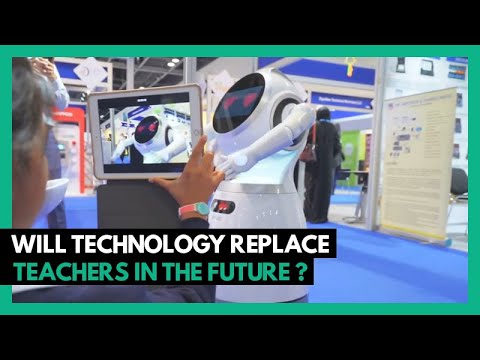
Technology should support that, not replace it.
In uncertain times, it’s easy to look outward for answers.
But the most important things are still very human. How we treat each other. How we show up each day. How we respond when things are hard. As we move ever closer to true integration with technology, the human skills become the most important for long-term success. Communication, compassion and critical thinking are vital.
If we can get those things right, everything else becomes a little more manageable.



 Twitter
Add a Comment
Please do not post:
Thank you once again for doing your part to keep Edarabia the most trusted education source.