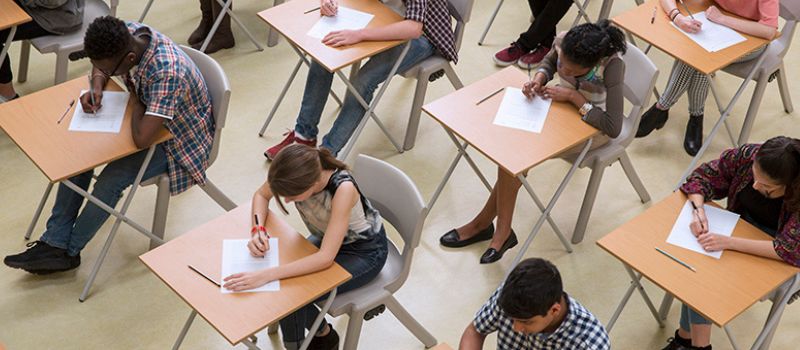
Schools prioritise coursework and wellbeing while students navigate uncertainty around final assessments
As classrooms across the UAE reopen after weeks of disruption, clarity is emerging on one key issue: major international examinations will not return this academic year.
For thousands of students following IB and UK curricula, the shift away from formal exams remains firmly in place, even as in-person learning resumes.
Instead, schools are doubling down on alternative assessment pathways — from coursework and internal assessments to predicted grades — to ensure students can still secure fair outcomes.
While the return to physical classrooms has brought a sense of routine, questions around grading and academic futures continue to weigh on many.
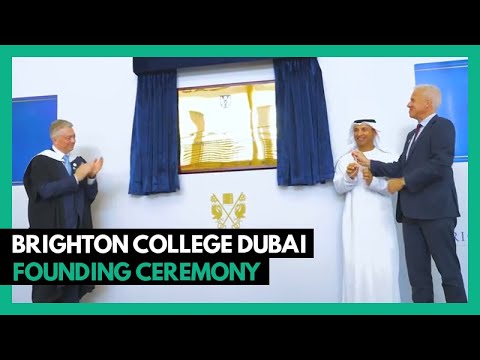
For some students, however, the transition has been smoother than expected. Ibrahim Tanvir, a Year 13 student at Brighton College Dubai, said he feels reassured by the support systems in place. “I am not worried about exams getting cancelled because the school has been supporting us a lot, frankly. It can be challenging but hopefully we know what we need to do to get the grades we deserve.”
He acknowledged that while there is still some ambiguity, clearer communication from schools has helped steady nerves. “There is a bit of uncertainty around exams but with all the information that the schools have given us, we feel a lot more confident.”
Others are still grappling with the new reality.
UAE national Alia Bin Thaneya, a Year 11 student, said the uncertainty around exams has been unsettling. “Exams getting cancelled worried me a bit because now I might be doing them in school, and I just want to know what’s happening,” she said.
She added that returning to in-person classes is helping her stay focused. “Now that schools are back, I want to stay on track. I feel it will help stabilise our education after the cancellations, and being back in face-to-face classes is motivating too.”
At the same time, she noted that being back in classrooms is helping her regain focus and motivation. “Now that classrooms have returned, I want to stay on track. I feel it will help stabilise our education after the cancellations, and being back in face-to-face classes is motivating too.”
School leaders say the decision not to reinstate exams is rooted in fairness and student wellbeing.
Richard Drew, Principal of Jumeira Baccalaureate School and Chair of the UAE IB Association, explained that the IB’s non-exam route is now fully underway. “Following the IB’s decision not to hold IB Diploma examinations this year, the NECM policy has been implemented to ensure students receive fair and reliable grades. All students’ Internal Assessments will be submitted to the IB for external moderation, and these marks, together with school predicted grades, will determine results to be released in July.”
He stressed that bringing exams back at this stage would create more harm than benefit for students. “Now that schools have resumed, the obvious questions relate to the G12 exams and if they will be reinstated. The exams will not be reinstated as this would be unfair to students in terms of wellbeing and preparation.”
Across UK curriculum schools, a similar approach is being maintained, with no signals of exams returning.
Natalia Svetenok, Principal of Woodlem British School, Ajman, said institutions are continuing to follow guidance from exam boards while preparing students through alternative methods.
“We continue to closely monitor guidance from exam boards; however, there has been no official indication that the previously cancelled UK curriculum summer examinations will be reinstated.”
She highlighted a structured, student-focused strategy to ensure readiness regardless of the final assessment route.
“Our priority remains ensuring that every student is fully prepared and confident. We are supporting our upper secondary students through structured portfolio development aligned with IGCSE expectations, regular mock examinations, targeted revision sessions, and additional lessons.”
At Nord Anglia International School Dubai, the emphasis has also shifted to evidence-based assessment across multiple qualifications.
Principal Kenny Duncan pointed to the complexity of the process but noted that progress is now being made. “NAS Dubai has a broad and varied examination curriculum, with students studying for UK and international qualifications that include GCSE and IGCSEs, A-levels, vocational BTECs, and the IB Diploma Programme.”
He acknowledged the emotional toll the uncertainty has taken on families, while signalling that the situation is improving.
“This has not been an easy journey, with many delays understandably causing anxiety and concern for students and their families. Thankfully, this has now passed, and we are well on our way to concluding this process for all exam classes.”
© Khaleej Times











 Twitter