


The rapid development of AI technology is already having a dramatic impact on education the world over, and it’s important to consider its place alongside fundamental educational values.
AI, particularly generative AI, has garnered a lot of attention in the past few years. Its ability to produce text, images, audio and video material has made it a particularly entertaining area of AI advancement, but there is already concern surrounding the impact it may have on educator-learner relationships. For example, not only is AI being used to cheat on assignments, but there are also the risks of long-term damage being done to children’s critical thinking skills and literacy due to leaning too heavily on AI.
However, there are ways in which AI can make a positive difference to many students – particularly through Personalized Learning. There are already multiple education platforms that are using AI to tailor their content to the unique pace at which each student learns, increasing their engagement levels by treating each student as an individual learner. It’s also useful for the gamification of educational material, which helps children to learn through play. UNESCO even dedicated this year’s International Education Day to AI, urging students and educators to “complement the human and social dimensions of learning, rather than replace them.” Similarly, the UK government has awarded funding to a number of educational technology companies to develop AI-based teaching tools, to combine “AI efficiency with crucial teacher expertise and judgement.”
It’s easy to fall into the trap of being fearful of what technological advances will mean for children. With each new invention, from using pens and paper instead of slates, to the first introduction of computers into schools, there has been the idea that new inventions will hinder the progress made by traditional methods. Even in ancient Greece, philosophers were reluctant to accept the practice of writing things down, as they believed learning to rely on the written word would weaken their students’ memory. However, over half (51%) of teachers feel that AI has the potential to have a positive impact on education.
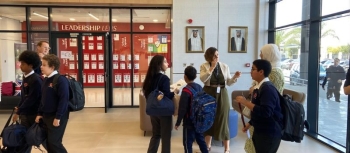
Aldenham Riyadh school understands that it can sometimes be a struggle to maintain the balance between embracing technology, and maintaining the practices proven to best support children from the Early Years Foundation Stage (EYFS) through Key Stage 1 and Key Stage 2. There are some key learning milestones that can only be reached through traditional, practical methods – especially those concerning physical and personal development, and communication.
“As we learned during the pandemic, school cannot be replaced with a virtual environment,” says Shahram Hashemi, Managing Partner of Aldenham Education Group. “Students need to be with other students and have that interaction for both mental well-being and for learning.” But there are other ways in which AI can be beneficial to students, without encouraging them to spend more time in front of screens.
Shahram Hashemi suggests that AI can be used to “assist teachers and administrative staff, to remove the repetitive tasks that they need to complete so they can focus on improving learning and results for the students.” With this approach, the focus is on AI being used to alleviate some of the pressure put on educators, leaving them with more time to spend on creating a nurturing environment and providing the best levels of education for their pupils.
AI’s role in education is not limited to classroom learning; it is also transforming administrative functions within schools. By automating repetitive tasks such as attendance tracking, scheduling, report generation, and even admissions processing, AI enables school staff to dedicate more time to students and curriculum development. A report by McKinsey & Company found that AI-driven automation in education could reduce teachers’ administrative workload by up to 40%, allowing them to focus more on teaching and student engagement.
However AI is incorporated into schools, it’s important that the focus remains on providing the best levels of education, and creating an environment that encourages and supports curious minds. At Aldenham, we are actively exploring how AI can enhance all aspects of school operations, ensuring that technological advancements support—not replace—the core values of education.












 Twitter
Add a Comment
Please do not post:
Thank you once again for doing your part to keep Edarabia the most trusted education source.