I once was part of a performing arts workshop where the coach posed a deceptively simple question: how many of us had painted the same clichéd landscape in school — rolling hills, a half-sun peeking through, a pair of birds shaped like a stretched V, and a stream winding past a lone hut. To my surprise, almost every hand shot up. That moment shook me. What we had thought was creativity was, in fact, conformity disguised as art lessons. Our schools, claiming to nurture imagination, had subtly trained us to stay within the lines.
Which is why, when you come across initiatives like Amanda Ashworth’s Worldschooling Hub, your curiosity is instantly piqued. A fast-growing alternative to traditional education, worldschooling is a philosophy that treats the world itself as the classroom — fostering curiosity, adaptability, and critical thinking far beyond what textbook learning often allows.
As more families reconsider rigid school structures, especially in a post-pandemic, remote-friendly world, worldschooling is gaining traction among those seeking richer, more holistic ways to educate their children. And Ashworth is one of its most passionate advocates.
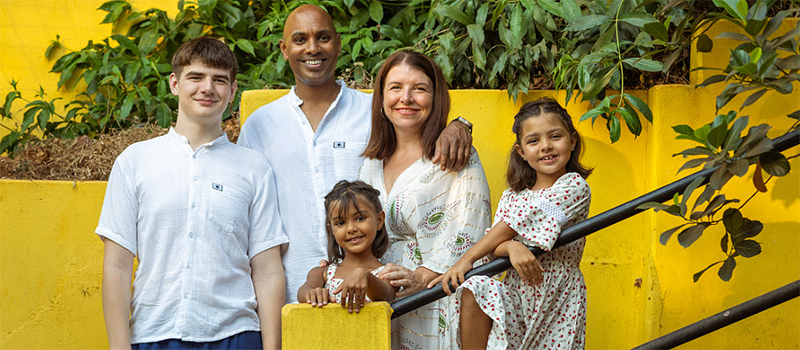
At 41, Ashworth is a British entrepreneur and mother of three who now splits her time between Goa, Dubai, and the UK. Having left school at 16, she built a childcare recruitment agency and later worked with high-growth tech startups in London. But it wasn’t until she read a book that she began to question the structure of her own life and the education system her children were part of.
“The pivotal point was I read the book The 4-Hour Work Week by Tim Ferris and it made me reconsider life,” she recalls. “I then decided to try homeschooling with my then seven-year-old and although he enjoyed school, he was very bright, but I could see his light was fading.” And then, as the pieces came together — her love for travel, her entrepreneurial spirit, and her desire to give her children more than just a curriculum — worldschooling entered the picture.
So what is worldschooling, really? “Worldschooling is where children learn through travel, real-world experiences, and cultural immersion, often outside of traditional school,” Ashworth explains. “It blends elements of homeschooling, unschooling, and experiential learning, and it’s built on the idea that the world itself is a classroom.”
‘The world is a book, and those who do not travel read only one page,’ goes the famous quote by Saint Augustine, and Ashworth couldn’t agree more. For her, this is not just a philosophy; it’s a way of life. “There is no better teacher than travel, from my perspective,” she adds.
When it comes to worldschooling, it’s all about experiential learning and hands-on knowledge. Geography is learned by navigating real cities and ecosystems. History is understood through visiting the places where it happened and hearing diverse perspectives, says Ashworth. “Languages are absorbed through immersion and daily interaction, not just grammar drills. Science becomes experiential — studying marine biology while snorkeling or botany while working in a permaculture garden. And emotional intelligence is naturally built through navigating new cultures, friendships, and challenges as a family.”
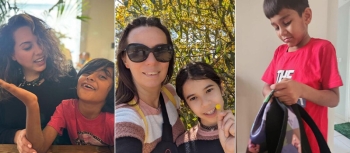
Her youngest children, now five and seven, have never known a conventional classroom. “They were born into a world where movement was normal. We travelled for six months every year, so the concept of ‘home’ has always been something flexible, rooted more in people and routine than in place.”
Sharing specific moments, she adds, “My seven-year-old has developed an incredible sense of curiosity and confidence. During one of our stays in Bali, she would strike up conversations with locals, ask about traditional crafts, and then try to recreate them with her own spin. I remember her carrying offerings during a local ceremony, her curiosity alive with questions about meaning and belief — lessons no classroom could have ever taught so deeply.”
Her younger daughter, meanwhile, is growing up in the Worldschooling Hub in Goa. “She’s surrounded by older children, nature, and constant creativity. One moment she’s barefoot in the garden learning about compost and plants, the next she’s painting quietly in a circle of mixed-age kids. Her vocabulary is advanced, but what’s more striking is her emotional intelligence. She reads people and situations intuitively.”
But perhaps most remarkable is Ashworth’s 16-year-old son, whose path is redefining what academic success can look like outside of school rankings and grade reports.
“He began taking IGCSEs at 13, not because we pushed for it, but because he wanted to and was ready,” she explains. “That early start gave him the confidence to take on bigger challenges, and he’s now halfway through a Business Management degree, which he’s completing online alongside his high school diploma. The flexibility of our lifestyle has actually enhanced his focus.”
Describing his leadership role at the Worldschooling Hub, she adds, “He’s played a key role in co-creating the Teen Hub in Goa, working alongside our teen coordinator to design workshops, run events, and create meaningful experiences for other teens.”
Through a programme called The Knowledge Society (TKS), which partners with companies like Microsoft, her son has also explored emerging tech and real-world problem solving “at a level that stretches most adults,” she adds. “This summer, he’ll be traveling to Canada on his own for a language exchange and to volunteer at a summer camp, completely independently.”
Still, the road hasn’t always been smooth. Amanda recalls their toughest challenge: the pandemic. “In 2020, we got stuck in India when borders suddenly closed, and we had to be repatriated. Aside from that, the biggest challenges have been logistical — flight delays, visa complications, adjusting to time zones.”
So how did they manage? “What’s helped us overcome these challenges is having clear values and open communication as a family. We’re intentional about our pace, we check in often, and we prioritise community wherever we go. That’s part of why we created the Worldschooling Hub Goa — to give other families that sense of groundedness and connection while living this lifestyle.”
The community Amanda has created in Dubai and Goa has become a lighthouse for other families exploring the same path. “We see all types of families — some on a family gap year, others who’ve sold everything to travel indefinitely, and many single mums carving out a new way of living and learning with their children.”
For parents who are curious but afraid to take the plunge, Amanda offers pragmatic advice. “You don’t have to have it all figured out to begin. It’s okay to start small, to try it for a season, and to see how your family responds. Trust your intuition. You know your child better than any system ever could.”
Most importantly, she also demystifies the logistics. “Planning is key. Start by mapping out your monthly costs — travel, accommodation, insurance, and learning resources — and consider ways to generate income on the move, whether that’s remote work, freelance opportunities, or entrepreneurship. You don’t need to be wealthy to worldschool. Quite often, it’s cheaper than our life in Dubai.”
And take it slow, she adds. “Choose one location for a month instead of moving constantly. That helps with cost but also means you don’t burn out. Joining online communities of worldschooling families on Facebook can be invaluable. They’ll often have tips, contacts, and support you can’t Google.”
In an age where “success” is often measured in grades and college placements, worldschooling challenges that very premise. For Ashworth, success now looks radically different — something she also reflects on candidly in her LinkedIn posts.“Before, success looked like the right school, the stable job, the full calendar,” she says. “Now, success means alignment. Am I living in a way that reflects my values? Do I feel connected to my family, my work, and myself? Am I creating space for joy, growth, and presence?”
So, what’s next for Ashworth’s worldschooling hub? “I truly believe we’re
just at the beginning of the worldschooling movement. As remote work rises, AI
reshapes education, and mental health becomes a greater priority, more parents are asking: What kind of life do we
really want to build?”
She also envisions more hubs, more hybrid models, and more diversity within the worldschooling community in the years to come.
© Khaleej Times






 Twitter