


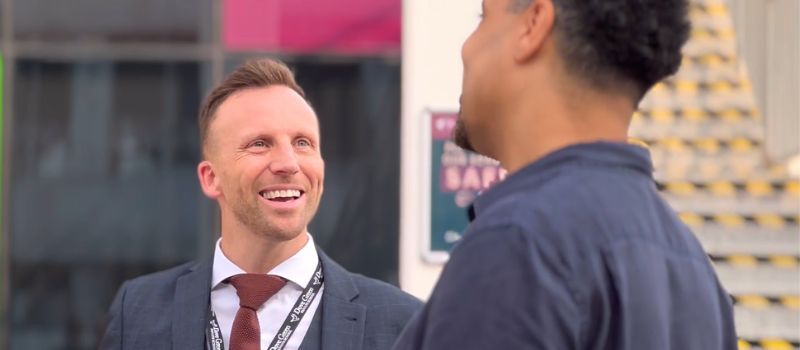
Edarabia had the opportunity to interview Christopher Seeley, Principal of Dove Green Private School, to discuss how the school is embracing AI education and preparing students for the future. In this interview, he shares insights on building AI literacy, fostering critical thinking, and instilling a sense of responsibility in students as they engage with technology. He also emphasizes the importance of resilience, ethical decision-making, and digital citizenship in ensuring students thrive in a rapidly changing world. With a strong focus on inclusivity and empowering students, the school provides a well-rounded approach to preparing them for future challenges.
For me, the shift is from novelty to literacy.
AI tools appeared quickly in education, and initially many schools focused on simply using them. But what matters far more is that students understand how these tools work, their limitations, and how to question them critically.
We focus on three areas: AI literacy, ethics, and creative application. Younger students explore what AI is and how it shapes the world around them, while older students learn about bias, responsible use, and how AI can support — rather than replace — human thinking.
The goal is not to create students who rely on AI, but students who use it thoughtfully and responsibly.
There is understandably a lot of focus on student use of AI, but it is equally important that teachers feel confident and informed in this space. We have recently spent time working with staff to ensure they have a clear understanding of the school’s approach to AI, how it supports learning, and where its boundaries lie.
Through professional dialogue and coaching with staff, we are also encouraging
teachers to explore how AI can enhance learning without replacing the critical thinking, creativity and human interaction that sit at the heart of great teaching.
Ultimately, if we want students to navigate AI responsibly, the adults leading learning must feel just as confident and informed.
The impact has actually been very positive.
There is very little that the world seems to agree on at the moment, so the growing movement across many countries to restrict smartphones and social media in schools has created an interesting global conversation.
Without phones constantly present, we are seeing more conversation, more play, and more genuine interaction between students. Break times feel much more social again, and we are actively observing children eating together and engaging far more mindfully with one another.
From a learning perspective, focus has improved. But perhaps more importantly, the ban has helped us reframe technology as a purposeful tool for learning rather than a constant distraction.
It has also highlighted the importance of working closely with parents. Schools can set the tone during the day, but healthy digital habits are built at home as well, so
supporting families in navigating this space is becoming increasingly important.
In many ways, it has reminded us that the most powerful learning tools in a school are still human interaction, curiosity and conversation.
The guidelines reinforce something we should already be doing.For younger students the priority is still thinking, creativity and human interaction before introducing powerful generative tools.
For older students the conversation shifts to ethics, responsibility and academic
integrity. They need to understand not just how to use AI, but when it is appropriate to use it.
Ultimately we want students who can lead in a world shaped by technology, not just operate within it.
These subjects are incredibly important in an international school.Arabic, Islamic
Studies and National Identity help students understand the culture, history and values of the country they live in.
When taught well, they are not simply requirements – they are opportunities to build cultural understanding and respect within a very diverse community. In a school with students from many different nationalities, these subjects also help young people
develop a deeper connection to the region they are growing up in, while appreciating the traditions and perspectives of others around them.
Ultimately, they play an important role in helping students become globally minded while remaining respectful and aware of the local culture that hosts them.
For me it comes down to curiosity, adaptability and character.
Curiosity drives lifelong learning. Adaptability allows young people to navigate a rapidly changing world. And character – things like resilience, integrity and empathy – ensures knowledge is used responsibly.
Those qualities will matter far beyond any exam result.
We talk less about specific jobs and more about skills and mindsets.
The reality is that careers are becoming far less linear. Our focus is therefore not on trying to predict job titles, but on developing young people who can navigate complexity, work across disciplines and collaborate confidently with both people and emerging
technologies. Our job is to help students understand their strengths while building the confidence to navigate change.
Every student has different strengths, yet education systems have historically been very good at rewarding a narrow definition of success.
Moving away from that starts by recognising that one pathway will never suit every learner. Schools need to create environments where academic routes, applied pathways, creativity, sport and leadership are all taken seriously and valued equally.
Practically, that means giving students real choice in how they progress, recognising different forms of achievement, and helping them understand where their individual strengths lie.
The aim is not to push every student toward the same destination, but to help them
identify where they can genuinely excel and build confidence in that direction.The real shift in education is moving from a system that sorts students to one that discovers their strengths.
Resilience is built through experience rather than taught through a single lesson.
Resilience isn’t something you teach in a lesson. It develops when young people are
trusted with real responsibility, real challenge and the occasional failure, and supported to learn from it.The current situation in our region also reminds us that resilience matters. Schools play an important role in helping young people process uncertainty calmly and keep perspective.
Strong pastoral systems are key.
Teachers, tutors and wellbeing staff work closely together so that changes in behaviour or wellbeing are noticed early. Open communication with families is also incredibly important.
At the same time, we have to recognise that supporting student wellbeing also depends on supporting staff wellbeing. If teachers are exhausted or overwhelmed, it becomes much harder to provide the care and attention young people need. This is where approaches like coaching and professional dialogue can be very powerful, giving staff the space to reflect, share challenges and support one another.
Especially during uncertain times in the world, schools provide routine, stability and reassurance for students – but that stability is only possible when the adults in the building feel supported as well.
True inclusion goes far beyond access and our aim is not simply for Students of Determination to be present in the classroom, but to thrive academically, socially and personally within the life of the school.
That requires several things working together. Firstly, teachers need the confidence and training to adapt learning so that it is genuinely accessible. Inclusion cannot sit only within a specialist department – it has to be part of everyday teaching practice.
Secondly, we are increasingly focusing on personalised pathways, recognising that success may look different for different students. For some that might mean targeted
academic support, for others it may involve strengths-based approaches through sport, creativity, leadership or applied learning.
Finally, inclusion is about culture. Students learn very quickly whether differences are simply tolerated or genuinely valued. When schools get this right, Students of
Determination are able to contribute fully to the community, and the entire school benefits from a more empathetic and supportive environment.
We shift the conversation from “what not to do online” to “who do you want to be online.”
Students need to understand that their digital presence will follow them into university and careers. We encourage them to see the internet as a place where they can
contribute positively and share ideas responsibly. We also encourage students to think of their digital footprint as part of their reputation and personal integrity, not just their online activity.
Education works best when schools and families see themselves as partners rather than separate systems.
Schools can provide structure, expertise and opportunity, but many of the habits that shape a young person’s success – things like resilience, digital behaviour and attitudes to learning – are reinforced at home.
That means honest communication and shared expectations really matter. When parents and schools are aligned, children feel it very quickly.
And during periods of wider uncertainty, that partnership becomes even more important, because schools often provide the routine and stability that families rely on, while families help reinforce the values and behaviours that allow children to thrive.
Experienced teachers bring enormous wisdom to the profession, and that experience should never be underestimated.
Too often in education we talk about change as if it is driven by the next initiative, framework or piece of technology. In reality, meaningful change happens when
experienced professionals are trusted to question, reflect and shape practice together.
My role as a leader is to create the conditions for that – setting a clear direction while giving all teachers the space, trust and professional dialogue to adapt and improve what they do.
That is why culture matters so much. Through coaching, collaboration and honest professional conversation, change becomes something all teachers help lead rather than something simply done to them.
Education is ultimately about people.
The world will keep changing and technology will evolve, careers will shift, and events beyond our control will continue to shape the societies we live in. The current situation in our region is a reminder of how quickly that can happen.
What schools provide in moments like this is perspective, stability and a sense of community. Young people need places where they can think clearly, ask questions and feel supported as they make sense of the world around them.
My message to our community would simply be this: our responsibility is not just to prepare children for the next exam or qualification, but to help them become thoughtful, resilient and principled people. If we get that right, they will be ready for whatever future they step into.





 Twitter
Add a Comment
Please do not post:
Thank you once again for doing your part to keep Edarabia the most trusted education source.