


This year’s IPSEF Middle East brings together schools and investors to engage with world class operators and suppliers, and discuss the current issues and trends in the private education sector.
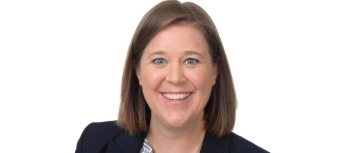
In an exclusive interview with Edarabia.com, Dr. Natasha Ridge, founding Executive Director of the Sheikh Saud bin Saqr Al Qasimi Foundation for Policy Research, shares some of the organization’s notable findings and how they work hand in hand with policymakers to improve the current education landscape in the region.
1. The Sheikh Saud bin Saqr Al Qasimi Foundation for Policy Research seeks to conduct and promote high quality research to help inform policymakers in Ras Al Khaimah, the United Arab Emirates, and broader Gulf region. Can you tell us about some of the key highlights of your research in Ras al Khaimah and the UAE?
Over the last 10 years we have been actively conducting and publishing research examining boys’ education and the challenges facing low performing males in the GCC. We have also conducted research that looks at private schools in the GCC and some of the challenges for teachers, families and governments in the region. We are also concerned with exploring results from large scale international assessments and have published papers using PISA data to explore the performance of low-income Emiratis in these tests and how governments and schools might better help them.
Finally, we are now doing work on the role of fathers in education and how fathers in the Middle East are more or less involved in their children’s education and the impact of that on their children’s education. We then provide recommendations on how schools and policy makers can make schools more father-friendly and how we can encourage fathers to become more involved.
2. Your primary focus is on three specific groups: education, students, and vulnerable populations. Can you tell us more about these 3 areas and why they were chosen as your research focus?
We are very concerned with education as this is central to the development of any country or state and we firmly believe that a country is only as good as the public education system that it has. So, through our research we try to understand current trends and inform policy makers about issues that we see across the education sector.
In addition to the research, we also run many programs for students, for teachers and for inmates in the RAK Correctional Facility. Through our programs we are able to see what works and what doesn’t when it comes to development and we are able to support those who are less privileged or lack skills or information to be more successful in their jobs, lives or studies. Our aim is to help our education sector become one of the best performing in the region, through active support for teachers, students and parents.
3. Can you tell us more about your session at IPSEF, “Mobilizing International and Private Schools as Key Partners in the Domestic Education Sector: Challenges and Opportunities for Governments in the GCC?”
In my session, I will be talking about the very unique system in the GCC where many parents do not have access to public education and as a result, they are forced to send their children to private schools, the majority of which are for-profit schools. This situation is unusual as usually parents can choose between the public and private sectors and because some countries like Australia actually do not allow for-profit schools. The challenge for governments in the region is how to ensure that the sector has enough schools at every fee level so all students can be in school, how to maintain quality and how to ensure that there is a diversity of operators so that they are not overly dependent on one provider.
4. Why do you think the high number of private schools in the region poses a challenge for quality education?
Not necessarily, but I think it is important that governments do not neglect the public sector schools and that they connect public and private schools so that they can work together. Also, I think they should be looking to attract more non-profit schools who show higher student achievement and teacher satisfaction, in our research.
5. How can local and regional leaders respond to this challenge?
By bringing all the key stakeholders together regularly, having clear and transparent regulations that do not change too frequently and by rewarding local, non-profit schools whose students achieve high results. Also, by ensuring that there is not a flight of talent from the public to the private sector and by continuing to try to build world class public schools.
Natasha Ridge is the founding Executive Director of the Sheikh Saud bin Saqr Al Qasimi Foundation for Policy Research. Prior to this appointment, she was the Acting Director of Research at the Dubai School of Government. Natasha has over 20 years of experience working in the international education sector, including in Singapore and Australia.
Natasha holds a Doctorate of Education in International Education Policy from Columbia University, a Master's in International and Community Development from Deakin University and a Bachelor of Economics from the Australian National University.
Natasha has more than 50 publications, including a book entitled Education and the Reverse Gender Divide in the Gulf States: Embracing the Global, Ignoring the Local published by Teachers College Press. Her latest research focuses on philanthropy and education in the MENA region as well as the nature and impact of father involvement in the Arab World.
In addition to being a founding Executive Board member and former President of the Gulf Comparative Education Society Natasha is also a member of the NORRAG Advisory Board and the Board of EduAlliance.
Natasha is passionate about all things related to education and hopes that the work of the Al Qasimi Foundation will continue to make a positive impact on the lives and education of the people of Ras Al Khaimah, the UAE and beyond.





 Twitter
Add a Comment
Please do not post:
Thank you once again for doing your part to keep Edarabia the most trusted education source.