



Edarabia had the opportunity to interview Samar Murad, Principal of ISCS Muwaileh, to discuss how schools are navigating the growing role of artificial intelligence while preserving the human values at the heart of education. In this conversation, she shares insights on teaching AI responsibly, strengthening student wellbeing and focus in a phone-free learning environment, nurturing cultural identity in a diverse school community, and helping students develop adaptability, resilience, and integrity to succeed in a rapidly changing world.
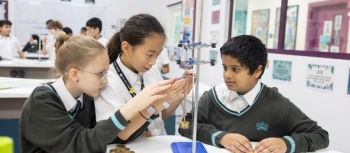
In our classrooms, students explore AI not simply through tools, but through conversations about ethics, responsibility, and the impact of technology on society. We want students to understand not only how technology works, but how it should be used wisely and responsibly. AI should enhance teaching and learning, but it should never replace the human relationships that inspire curiosity, confidence, and growth.
The smartphone ban has reminded us of the importance of human connections. When students spend less time behind screens, they spend more time engaging with one another. We have seen more meaningful conversations, stronger collaboration in classrooms, and a renewed sense of focus in learning.
Schools in the UAE carry an important responsibility in nurturing national identity while embracing global diversity. Our community reflects this beautifully, bringing together students and staff from more than seventy nationalities. Despite this diversity, our community remains united by a shared sense of purpose and a commitment to making a positive difference every day.
Adaptability, critical thinking, and a strong moral compass. Adaptability allows young people to navigate rapid change with confidence. Critical thinking enables them to question, analyze, and innovate responsibly. A moral compass ensures that knowledge and innovation are guided by values, integrity, and a clear sense of identity.
Adaptability is one of the essential anchors we instill, enabling students to navigate rapid change with confidence and shape their own future.
Resilience is taught by helping students learn that challenges and uncertainty are not barriers but opportunities for growth. With guidance and encouragement, they see change not as something to fear, but as something they can shape.
Schools must create environments where every student feels safe, supported, and known. Strong pastoral systems, attentive teachers, and a culture of empathy help ensure that students can flourish both academically and personally.
Education is ultimately about people. It is about relationships, values, and the responsibility we carry as educators to guide young people not only in what they learn, but in who they become. Even in the age of artificial intelligence, the true work of schools remains deeply human.









 Twitter
Add a Comment
Please do not post:
Thank you once again for doing your part to keep Edarabia the most trusted education source.