


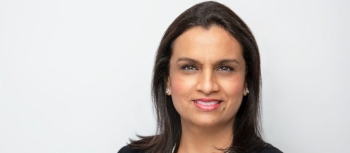
Edarabia invited Claire Hazenburg, GESS Dubai Speaker and Classroom Technology Teacher at the Australian International School of Sharjah for an exclusive interview, to talk about how flipped learning practices can improve K-12 schools and help students consolidate their knowledge and understanding of concepts.
With her passion for using technology to enhance student teaching and learning, Claire also provides some insights on promoting STEM learning among young students and overcoming the common challenges to the inclusion of online learning practices in the UAE.
One of the biggest barriers reflected in the research was overcoming preferred communication styles. Students from high-context cultures, like the UAE, rely on context and subtle, non-verbal cues when communicating. Currently, online communication practices do not afford opportunities for high-context learners. This in turn impacts students’ perceptions of online learning practices and of their abilities, barrier number two. This is a significant factor to be aware of when designing learning experiences or assessments for UAE learners. It is recommended that educators use a combination of structured, online and face-to-face instruction, placing greater opportunities for oral and synchronous collaboration.
Finally, the research also indicated that there was a lack of online learning repositories which provided resources that were in Arabic and culturally relevant to the UAE. Educators would, therefore, be required to develop and create their own resources, which is a time consuming and lengthy process. It made me immensely happy to see the launch of “Madrasa”, an e-learning platform established by Mohammed Bin Rashid Al Maktoum Global Initiatives. It is these kinds of initiatives that are breaking down barriers to the successful implementation of online learning practices in the UAE.
Flipped learning provides alternative learning options for students. As educators, we know one size doesn’t fit all. We differentiate content, our pedagogy and assessment. Why not differentiate the learning environment? Using a Flipped approach to education extends the learning into the home in a structured and controlled way. It maximises in-class learning time by reducing teacher talk and explicit instruction. It allows teachers to spend more time helping students apply and consolidate their knowledge and understanding of concepts.
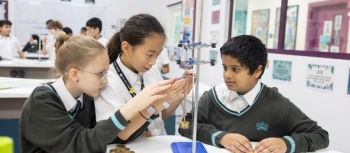
I believe it starts with giving girls, at a young age, opportunities to explore coding, robotics and construction through play-based learning. These kinds of informal and normalised learning experiences can begin to break down students’ own misconceptions and can help young girls perceive themselves as competent and capable STEM creators. I also believe in the power of building relationships and leading by example. My younger sister, who is studying aeronautical engineering, constantly inspires me to push further. I guess it is my hope that my students see and feel the same passion I have for technology and are inspired to begin their own journey towards a STEM-based career.
AIS is currently trialling a Flipped learning approach with Grade 9 Digital Technology students. So far most students are responding well to the approach. Strategically, the tools we are using such as Google Classroom and Google Slides were chosen specifically because they are platforms that our students are already familiar with and can use proficiently. By setting high expectations for student participation and being consistent, I believe that we will continue to see positive outcomes throughout the trial period.
GESS is providing a fantastic platform for educators like myself to share ideas, inspire others and collaborate. Those who come along to the presentation will walk away with an increased awareness of the different types of online learning practices and will hopefully have a better understanding of how flipped learning practices can benefit their students in the UAE.
Claire Hazenberg studied her Bachelor of Primary Education, majoring in Information Technology and Computer Science, at the University of Queensland, Australia. While completing her studies, she was a volunteer teacher at a local school in Northern Thailand, worked with the Down Syndrome Association of Queensland, and was a student ambassador for the University of Queensland.
Since completing her studies, Claire has taught in a range of K-12 school settings in Australia and the United Arab Emirates. In her current position at the Australian International School in Sharjah, Claire is leading the programming and implementation of Digital Technology across Grades 4 to 9.
Inspired by her students and her passion for using technology to enhance teaching and learning, Claire began her Masters of Education (Knowledge Networks and Digital Innovation) through Charles Sturt University. Currently, she is collaborating with CoAction Learning Lab based at Penn State University.





 Twitter
Add a Comment
Please do not post:
Thank you once again for doing your part to keep Edarabia the most trusted education source.