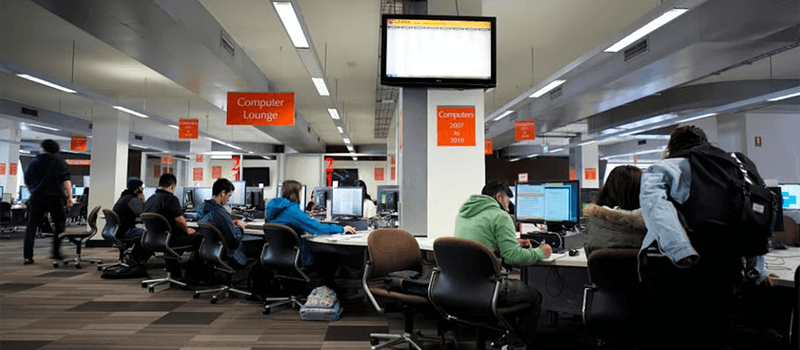
University students told Khaleej Times that AI has reshaped their academic routines, making them more confident about learning
The anxiety of falling behind in a fast-paced lecture is fading for UAE students who now reach for AI tools before raising their hands in class, making a transformation beyond how they learn, but how confident they feel about learning itself.
University students across the Emirates told Khaleej Times that artificial intelligence has reshaped their daily academic routines, replacing hours of scattered Google searches with instant clarification and removing the fear of asking “basic” questions. But the same tools changing education are also raising worries about dependence and intellectual laziness.
“The first tool I use daily is ChatGPT,” said Zayed Ahbabi. “It’s the fastest way for me to understand concepts I’m seeing for the first time, especially when lectures move quickly.”
The change, he said, is psychological as much as practical. “It made learning less intimidating. I ask questions without feeling embarrassed, and I can break things down at my own pace.”
Khalifa Ahmed uses AI for structure rather than answers. “I use ChatGPT mainly for summarising readings and organising my thoughts before assignments,” he said. “It turned studying into a conversation rather than memorisation.”
Students say one behaviour has basically disappeared: the multi-tab Google panic search. “I don’t search endlessly online anymore,” Alahbabi said. “Instead of jumping between websites, I start with AI to get clarity first.”
Khalifa admitted that drafting has changed too. “I don’t write first drafts from scratch anymore. I focus more on refining content and adding my own perspective.”
For Yousef AlNaqbi, AI changed how students’ study together. “I don’t depend as much on classmates for explanations. I try AI first, then discuss with my friends,” he said. “I learn faster and feel more confident asking questions I wouldn’t normally ask in class.”
UAE universities, meanwhile, increasingly allow AI under academic integrity policies — as long as students remain responsible for understanding the work they submit.
But alongside enthusiasm, every student expressed caution.
“I sometimes rely on it too much instead of struggling through the problem myself,” Alahbabi admitted. “It saves time and reduces stress, but I worry about relying on it too much.”
Khalifa echoed the concern. “It can make learning feel too easy if you’re not careful,” he said. “Doing academic work without understanding it defeats the purpose.”
AlNaqbi worries about the social impact. “It might reduce real discussion if people isolate themselves with AI,” he said. “Learning is also about people, not just answers.”
When asked what AI should never replace, all three agreed: personal judgment and exams.
“Replacing personal judgment, especially in exams or decisions that define who you are and make or break your future, is where AI should not be used,” Ahbabi said.
What emerges is not a divide between students who use AI and those who don’t, but an internal debate around the Emirates within each student who uses it daily, while questioning how far to go. AI has removed embarrassment from learning, but it has also introduced a new challenge: learning when not to rely on it.
© Khaleej Times

















 Twitter