


Wellness and Well-being for us is solely our responsibility and we can cultivate a lifestyle that will maintain our well-being.
The pandemic continues to cause stress, worry and anxiety, causing concern to many people. The children in schools are depicting strange behaviour patterns during online classes and parents are equally concerned. Teachers are worried about the emotional and mental well-being of students. Some children are high achievers, some are low achievers and teachers are struggling with how to bridge the gap to support the students to perform better.
Related Articles:
A study reveals that children who are poor in handling their relationships with their friends or not able to manage their emotions are academically poor achievers. We can support these children by cultivating mindfulness among them. I very strongly believe that mindfulness should be included in the curriculum in schools.
The book on mindful education by Daniel Richard Shepherd mentions that mindfulness is the need of the hour. We have a few pieces of research which clearly indicate that mindfulness, if inducted into a curriculum, will help children will display a very significant reduction in their ADHD behavior. It also improves their sitting tolerance and teaches them how to deal with their emotions. This reduces their aggressive behavior, which results in fewer fights on campus and improves relations with their friends creating a better socio-emotional environment in the classroom.
The research also indicated that among adults, this training of mindfulness reduces pain, stress, anxiety, worries and depression. If you are able to practice it in your life, your life will completely change and you can easily teach your children. Teachers who practice mindfulness can have a better connection with the students and engagement is enhanced as there is more acceptance, flexibility, compassion and consideration towards the needs of the students.
How can you cultivate mindfulness?
To cultivate mindfulness, we need to understand a critical concept – the ‘E-F-G-H-I’ concept.
How can you be more mindful?
Mindfulness teaches you that one should not be worried about the past or be anxious about the future; rather one must learn to live in the present. How can we live in the present? Here is the 5-step process that will help you live in the present.
5 – Look around in your environment where you are at the moment. Name 5 things that you can see around you (in your psycho-social ambiance).
4 – Name any 4 things which you can touch and which are in close space, such as clothes, table, book, etc.
3 – Identify 3 things that you can hear.
2 – Identify 2 things that you can smell.
1 – Identify 1 thing that you can taste.
Whatever activity you’re doing, whenever your mind gets distracted, you can do these five steps and practice becoming more mindful. It is simple as you just need to look around and do it. And while doing the 5 steps, you will realize that you were not worried about the past, nor were you thinking about the future. So this is being mindful. This is to live in the present.
Such a wonderful process and why should we not include it for our students in the basic curriculum? During the pandemic in our first online summer camp (July and August 2020), Eduscan created a solid curriculum on mindfulness and now we are looking forward to winter camp students coming in. They will carry this lovely gift of mindfulness back with them. Additionally, every morning at 6:30 am UAE time (India time 8:00 AM), the Eduscan group conducts free mindfulness sessions (30 minutes) for the benefit of the community, parents, teachers and children. Anybody can join the sessions as it is open for all.

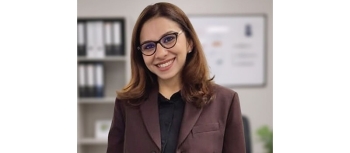
Dr. Alka Kalra is a renowned psychologist and a Professional Counsellor, who is known as a crusader for children who are misperceived as underachievers. With her passion for children who have hidden learning difficulties, Dr. Alka wanted them to never undermine themselves and realized that they have unique skills and strengths. To work with these children, she established Eduscan in 1995. Within two decades in the UAE, Dr. Alka has changed the lives of numerous children who struggled at school due to their low performance. They are now in different parts of the works with successful careers. She also believes in training teachers as they touch many lives.
Community Development Authority (Dubai) certified psychologist, Dr. Alka is known for the assessment of personality, aptitude, intelligence, and hidden learning difficulties. Dr. Alka has had the honor of receiving the university gold medal in Masters of Psychology and has a second Masters in Education as well. She has earned her Ph.D. and her Post-Doctoral Research from the University of Pittsburgh, USA. To know more about her work, follow her on her Facebook, Instagram, and LinkedIn, or visit her website.








 Twitter
Add a Comment
Please do not post:
Thank you once again for doing your part to keep Edarabia the most trusted education source.