


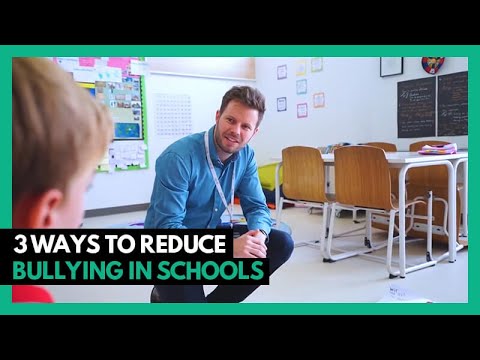
‘Bullying’ is a highly emotive and a strong term for an action that can encompass a wide range of verbal, nonverbal, and physical behaviors. Seemingly trivial events- from being excluded from a game at playtime, being called names that are intended to be hurtful, to having your choice of food ridiculed at snack time -are all aspects of bullying that I am sure, evoke some hurtful memories in adults reading this article.
Schools not only have an opportunity to be able to positively influence a school community to prevent and tackle bullying. They also have a significant responsibility to do so. School bullying happens at school. Now, with the prevalence of social media usage among even primary age children, bullying can occur in the sanctuary of the home too, with some devastating repercussions for children, young people, and families.
Aspen Heights British School has had the privilege of being a brand-new school; a blank canvas to create a positive and supportive school community where bullying is swiftly and effectively dealt with close partnership with children, staff, and families. We have approached this successfully in different ways:
Our school values of ‘Courtesy’, ‘Consideration’, Cooperation’ and ‘Common -sense’ -our ‘4 C’s’ guide all our actions and behaviors in school. The School staff -from learning support assistants, to teaching staff, and administrative staff are role models for these behaviors. We actively teach these to our children through story, role play, and circle times. We positively reward such behaviour and take steps to address behaviour that is contrary to our values.
The staff, children, and families are all very aware of the school expectations of behaviour, how it encourages positive behaviour, attitudes to learning, and to others, and what will happen when a child is unable to meet our expectations. Having an open dialogue, clear, and shared guidelines, and a willingness by families and school to work collaboratively enables most behaviour challenges to be overcome swiftly with a positive resolution.
Children come to school to learn- and they make mistakes, which enables them to learn. Bullying is not a ‘one-off’ incident where a foundation stage child has pushed another child to get to the scooter first -that is a child learning the acceptable and appropriate way to behave. Bullying is targeted, direct and negative behaviour sustained over a period of time. Exploring with children and families what bullying is, and is not is a key aspect of a school’s approach to dealing with bullying.
Across schools, bullying is more likely to occur during play times, particularly if children are bored. Planning for playtimes to be active, happy and social learning aspects of a child’s school day is important for a school to prevent bullying incidents. At Aspen Heights, we have developed a ‘zoned’ playground, where children can choose to create, build collaboratively, run, or take part in one of the traditional playground games taught to them by their peer ‘play leaders’.
We are so proud that our children, who have been together for only 10 weeks, are developing into reflective, kind, happy and supportive members of the Aspen Heights School community.

Mrs. Emma Shanahan has joined Aspen Heights British School (AHBS) in 2017 as Principal. Emma has worked in education for almost twenty-five years, starting as a primary school teacher in London. She has held strategic leadership roles in high performing schools both in the UK and internationally and gained significant regional experience in the Middle East. Most recently, her successes locally have seen her former school being graded ‘outstanding’ in every category in the unified inspection framework in 2015-16.
Passionate, focused and ambitious, Emma has exceptionally high expectations of herself and others. She is experienced in establishing and facilitating processes for personal and organisational continuous evaluation and improvement, exemplified by the organisational attainment of the International Investors in People award.
Emma's philosophy of education is centred on building positive relationships, innovative and creative teaching to ensure all children make impressive progress, as well as building community learning and engagement.
A graduate of the University of Durham, Emma considers herself a 'lifelong learner', being awarded NPQH (National Professional Headship Qualification) in 2013, and receiving an MA(ed) (distinction) from Liverpool Hope University in 2016.








 Twitter
Add a Comment
Please do not post:
Thank you once again for doing your part to keep Edarabia the most trusted education source.