


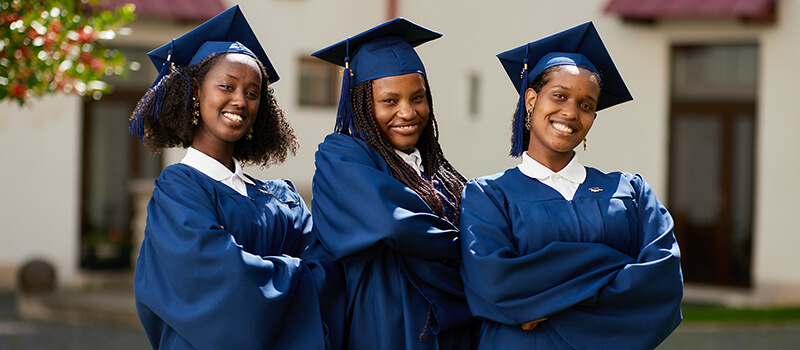
For many families considering Europe as a long-term destination, the key question is no longer only which school delivers strong grades. It is which school can genuinely prepare a young person for independence, cultural integration, and academic success in European universities and later workplaces.
Parents often imagine that a child’s “European future” begins at eighteen.
At Schloss Krumbach International School, this preparation is much earlier. It does not begin at university — it begins now, in the school years themselves. Students grow into confident, capable young adults who understand how Europe thinks, communicates, and learns, because they practise these skills every single day, in an environment designed deliberately for this purpose.
And that environment is unlike anything else.
Atop the Austrian hills, just beyond the curve of a quiet road, a castle rises from the landscape, a home to the world’s most unique boarding school. Inside, teenagers move through their day without phones, without the usual digital fog clouding the mind, and most unusually without the sense that childhood is something to be rushed through.
Schloss Krumbach International School is unlike any other school in Central Europe. It feels closer to an old European idea of education — a place where culture, discipline, responsibility, and intellectual seriousness are not accessories but the foundation.
And yet the most striking thing is not the setting, but the students themselves. They behave like young people who already belong to the world they are preparing for.
“Education is not the filling of a bucket, but the lighting of a fire,” wrote William Yeats once. At SKIS, this quote is not printed on posters, but it is visible in every fragment of daily life.
Below is what that fire looks like.
In most schools, adults debate “healthy screen time.” At SKIS, the debate is unnecessary: phones simply do not exist.
Students speak to each other the way teenagers once did, and that is face-to-face. The absence of devices restores something that has become rare in adolescent life: attention, focus, and reliance on one’s own intelligence. Teachers remark that students stay with a thought longer, argue more clearly, and listen more patiently.
One teacher put it simply: “When the phone disappears, the child reappears.”
The school sees the ban not as deprivation, but as protection — from distraction, from algorithmic influence, from a world that too often replaces thinking with reaction. Aristotle warned that “the energy of the mind is the essence of life.” In a no-phone environment, that energy finally has space to grow.
A Values-Based Community That Shapes Character, Not Just Academics
Academic success matters — but character determines how a young person will navigate adult life. At SKIS, these two elements are inseparable. The school places equal emphasis on kindness, responsibility, courtesy, and ethical behaviour.
One of the most powerful tools for this formation is student leadership, a founding tradition of SKIS boarding life. Older students mentor younger ones, assist new arrivals, lead house duties, organise community events, and represent their peers. They learn that leadership is not about authority, but about service. When younger students look up to them, they see not just seniority, but a model of how to behave.
Teachers reinforce these values by modelling dignity and consistency. Expectations are clear, discipline is firm but fair, and students understand that their actions affect the entire community.
By the time they graduate, students are not only well-educated but also balanced, respectful, and reliable. In Europe, classical education has long been tied to moral formation; at SKIS, this tradition continues in a living, modern form.
As one teacher remarked, “We are raising adults, not just producing graduates.” The philosophy echoes the old European maxim attributed to Goethe: “Behaviour is a mirror in which everyone shows their image.” At SKIS, that mirror reflects kindness, cooperation, and growing maturity — much of it learned through leading, guiding, and being guided.
This moral grounding, reinforced through student leadership, is one of the strongest predictors of successful integration into European society and university life.
The bilingual English–German programme at SKIS is one of the school’s most practical strengths. German is not treated as an “extra” subject. SKIS is the only international school in the country where students in Grades 7–9 actually study in German, alongside English.
This is the core difference. Students don’t simply learn German; they learn through German.
The programme is structured, deliberate, and academically rigorous. Students progress from basic communication to full academic expression through clear scaffolding, targeted support, and daily immersion in Austrian life. German functions as a working language in lessons, cultural activities, routines, and community interactions. It becomes something lived rather than memorised.
For many families, this creates a transformative opportunity: access to Austrian and German public universities, many of which offer extremely low or no tuition fees. The ability to study confidently in two languages gives SKIS graduates a clear advantage in Europe — academically, socially, and financially.
One of our parents even commented, half-jokingly: “Learning German here might be the best investment we’ve ever made.”
Journalists often ask educators how schools can teach independence. The honest answer is simple: they cannot unless students actually live it. At SKIS, boarding life is not just accommodation; it is a training ground for adulthood, where responsibility becomes a daily practice.
Every Wednesday, students take part in a structured room-cleaning and laundry routine. Under the student leadership system, a responsible student checks each room and awards a plus or minus based on cleanliness, organisation, and effort. This peer-led evaluation is followed, of course, by professional staff cleaning, but the educational purpose is clear: Students learn to maintain their own space, manage their belongings, and meet shared expectations.
It teaches discipline, pride, time management, cooperation, and the understanding that one’s environment reflects one’s habits.
These weekly routines eliminate the common problem parents see when teenagers move out for the first time. At SKIS, students don’t grow into the stereotype of the overwhelmed freshman with unmade beds, dirty dishes, and chaotic dorm rooms. Instead, they arrive at university already knowing how to run their lives.
By the end of Grade 12, SKIS students sound, think, and behave like first-year university students, only younger and far more prepared for the world that awaits them.
European universities expect students to handle complex texts, organise information, write independently, and manage long-term assignments. At SKIS, these expectations are not postponed until Grade 12 — students begin training for them from the moment they arrive.
The skills-based curriculum emphasises the foundations of serious academic work:
Daily supervised homework and sessions on academic honesty reinforce these habits. Progress is monitored carefully, giving teachers and parents a transparent view of each student’s development. Over time, students internalise discipline rather than rely on external pressure.
This approach connects seamlessly with the independence learned in boarding life. A young person who can manage a living space, organise routines, meet deadlines, and take responsibility for their behaviour is the same young person who can navigate the academic freedoms and challenges of European universities.
Why Residence Years Matter — and How SKIS Gives Students a Head Start
For families from outside the European Union, one of the most practical advantages of studying at SKIS is the steady accumulation of residence years in Austria. Each school year spent here counts toward the total period a young person has legally lived in the country — something that can later support applications for long-term residency, permanent residence, or simplified re-entry after university enrollment. While SKIS is not an immigration institution and cannot guarantee outcomes, the reality remains: students who begin their education in Austria early gradually build a documented record of residence that many international applicants simply do not have.
This means that when they transition from school to university, they are not arriving as newcomers. They are re-entering a country in which they have already lived for several years, with an existing residence history, language competence, local familiarity, and cultural integration.
For many non-EU parents, this long-term continuity is invaluable: their child does not suddenly appear in Europe at eighteen, but grows into it year by year, supported by the structure of a school and the stability of legally accumulated residence.
Where Europe Becomes a Living Classroom
On any given week, students may stand before a Klimt painting, listen to Mozart performed in the city where he composed, or walk through the old streets of Vienna discussing architecture, politics, or the collapse of the Habsburg Empire. These excursions are not optional enrichment; they are extensions of the curriculum, designed to anchor ideas in lived experience.
But cultural immersion at SKIS does not stop at museums and concert halls. Students also participate in Austria’s traditional winter balls, learning formal etiquette, classical dance steps, and the rituals that historically shape European social life. Historical games from strategic diplomacy simulations to reenactments of different epochs bring history off the page and into the body. Students practise the manners and cultural intuition that define life in this part of the world.
When a class studies a novel and then visits the museum where the author once stood, or debates 19th-century politics and later attends a ball in a Viennese palace, the material becomes real, almost lived.
A visiting IB inspector remarked: “Your students speak about their subjects with a level of cultural awareness we rarely see.”
And that is precisely the point.
This is the difference between studying Europe and inhabiting it. SKIS students do not look at European culture from the outside — they move within it, understand it, and ultimately grow into young people who can navigate its universities, traditions, and communities with ease.
Here, education is not a distant preparation for life. It is life, lived fully, richly, and in the heart of Europe.
By the time they graduate, SKIS students:
They do not arrive at European universities as overwhelmed newcomers.
They arrive as young Europeans — educated, grounded, and capable.
As Hannah Arendt once wrote: “Education is the point at which we decide whether we love the world enough to assume responsibility for it.”
SKIS students step into that world ready to do exactly that.
A Future Built in Real Time
Parents often imagine that a child’s “European future” begins at eighteen.
At SKIS, it begins much earlier — through language, culture, independence, structure, and community. Here, teenagers learn not only how to succeed in Europe, but how to live well in it.
This is the SKIS difference: an education that prepares children not for a distant future, but for the life they are already beginning to lead.





 Twitter
Add a Comment
Please do not post:
Thank you once again for doing your part to keep Edarabia the most trusted education source.