


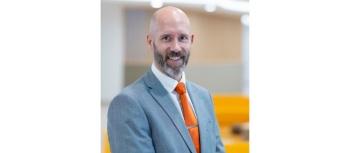
Edarabia had the opportunity to interview Arthur Davis, Principal of Insworld Institute, a private international school in Singapore. Mr. Davis is passionate about providing students with a high-quality education that prepares them for success in life. He shares his insights on Insworld Institute’s approach to teaching and learning, the challenges facing education in the next five years, and how the school helps students develop the skills they need for life after graduation.
My plans for 2025 are to continue to promote the academic achievement, well-being and development of our students. We can do this through an approach to teaching and learning that emphasizes flexibility and adaptability in lesson planning and delivery. This will allow us to work effectively with each student, providing the individual attention and support needed to achieve sustained positive outcomes.
Our focus each year must be on achieving continuous improvement in all aspects of our work, both in the classroom and behind the scenes. This will involve identifying weaknesses and developing strategies to overcome them. Key to this is the ability to reflect on what we do, and a commitment to doing it better. This has to be based on observing and monitoring, but also listening and learning, and the judicious application of new approaches when they are needed.
I believe the biggest challenge will be to maintain academic integrity in schools. The smart phone and now the availability of AI mean that any student will be able to present work that appears to meet the objectives of any assessment in any subject at almost any level. It will be important to instill into all students that it is the learning that counts; the hard work and the practice that enable understanding to develop, rather than generating a correct answer. This may involve looking at different approaches to assessment to ensure that grades reflect the true level of achievement of the student.
Insworld Institute works only with small classes (maximum 12 students in any group). This enables the teacher to know each student well, to gauge their levels of motivation and commitment and to have a clear idea of their learning style and ability. As a result, lessons can be adapted to provide each student with an appropriate level of challenge that will stretch but not inhibit their learning. Small class sizes also enable the students to know the teacher better, leading to a positive working environment, based on mutual expectations and shared purpose. Many students who have become disaffected learners in bigger classes respond well to this closer involvement. The school also provides extensive support for students who are experiencing difficulties with their academic work. This often involves helping students to manage their time and effort more productively, through providing practical guidance or other support.
Insworld is a non-selective school. We believe strongly that every student has the right to improve. We have seen that our approach to teaching and learning can be effective for students across the full range of abilities. All can benefit from carefully planned lessons, based on understanding and teaching what each student needs to learn. We also try to support students in their learning through promoting active inquiry and participation in lessons. Students are more likely to learn accurately and enthusiastically if they are engaged in their lessons.
We are a small and close school community. We actively promote a friendly and inclusive atmosphere in which diversity is acknowledged and celebrated. Our students, who come from over 20 different countries, all have a unique background and education history, and are all valued for who they are. We rarely have problems with bullying or other anti-social behaviour, because the size of the school means that potential problems of this type can be identified quickly, and we can act quickly against any behaviour that is likely to cause distress to other students. We have many students who have come to Insworld because they have found it difficult to flourish in the high-pressure atmosphere of larger schools. Small class sizes and careful monitoring of progress can help us identify if a student is feeling overwhelmed by any problem and take appropriate action. In this we are guided by our Special Education Needs consultant, who will meet with students who are experiencing stress or other difficulties, and seek to help them find a way through their problems. This can often involve working with parents/guardians and medical professionals to ensure that support is coherent and consistent.
The personal and intellectual development of our students is an important part of our work. We want students to think for themselves, to be curious and questioning, and to take responsibility for their conduct. This starts in the classroom, but can be extended to all aspects of school life. We encourage our students to take an interest in the world around them, and to share ideas and insights. We also have programmes of extra-curricular activities such as outreach programmes, sporting activities and team bonding events that promote social interaction and camaraderie.
Insworld actively encourages the involvement of parents and guardians in our work. We feel they have the right to know what we are doing, and we have the responsibility to keep them informed of their students’ progress. We hold formal parent-teacher meetings each term, but we want parents and guardians to feel free to contact us at any time regarding any concern they might have. We welcome all feedback, negative and positive, and where possible, we will act on it. Similarly, we will contact parents and guardians if we have concerns which we feel need to be shared. We support direct contact and communication between teachers and parents, as this is often the most effective way to identify problems and initiate appropriate interventions.
Insworld Institute is a distinctive institution. Our decision to work only with small classes, and the consequent focus on the needs of individual students requires a slightly different approach to teaching. Our teachers need to know their subjects extremely well, but they also need other qualities. They must be flexible in their approach, and be willing to adapt lesson content and delivery while maintaining a focus on academic progress. They also need to be able to form constructive and facilitating relationships with each member of their classes. This can be very demanding, but it can also be extraordinarily rewarding. Our best teachers understand how to involve students and make lessons interesting and stimulating. The close relationship with the students can be the most enjoyable aspect of teaching at Insworld. I believe this is what attracts good teachers, and what keeps them. Other schools cannot offer the same mix of responsibility, engagement and reward. Most teachers want to make a difference. At Insworld, our teachers often are that difference.
Because of the size of our school, opportunities for career advancement for our teachers are limited, but we always try to acknowledge and recognize expertise and experience and promote from within whenever opportunities become available. It is important that all academic and non-academic staff have a clear idea of what the school is trying to achieve it, and how we are working to make this happen.
The non-academic activity which has the biggest impact on students is probably membership of our Student Council. This is a group which represents the interests of the students. This can lead to discussions with school leaders about different aspects of Insworld’s provision and sometimes to important changes. The Student Council is also heavily involved in the organization and operation of many school events, such as student graduation ceremonies and our annual Cultural Festival. These events often take a lot of planning and preparation, and can involve conceiving, planning, organizing and running events. This makes many demands on students in terms of collaboration, sharing tasks, leadership, coordination with school management, managing of a budget and working to tight deadlines. Students who are involved in these activities nearly always learn much from their participation, as well as gaining the satisfaction of doing something that is very important to the school.
For me, as Principal, success would be overseeing the operation of a school which fulfils the requirements and meets the needs of all its key stakeholders – parents, staff, partners, regulators authorities and most importantly, students.
In education, what matters is what you enable others to achieve.







 Twitter
Add a Comment
Please do not post:
Thank you once again for doing your part to keep Edarabia the most trusted education source.