


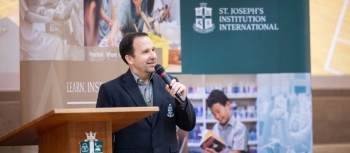
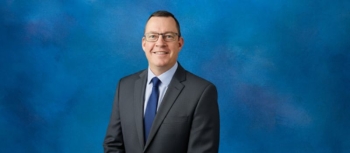
In an exclusive interview with Edarabia.com, Dr. Jake Madden, Principal at Al Yasat Private School in Abu Dhabi, shares his future-focused ideology and approach to education.
This year’s IPSEF Middle East brings together schools and investors to engage with world class operators and suppliers, and discuss the current issues and trends in the private education sector.
1. Can you tell us more about your session at IPSEF, “Building Schools for the Future: A conundrum for schools, education agencies and the wider public”?
A generation ago, teachers could expect that what they taught would equip their students with the skills needed for the rest of their lives. However, today, teachers need to prepare students for more change than ever before, for jobs that have not yet been created, to use technologies that have not been invented and to solve social problems that we just can’t imagine. The time of the industrial age of mass education which was essential for rapidly industrializing nations has now gone. My session is future-focused, drawing alignment from societal trends to global education reform. It highlights a collation of the necessary skills our students will need for the future of their careers. It highlights how meeting this challenge through such strategies as systems thinking, education for sustainability, learner‐centered pedagogy, and building schools as learning communities, needs bold leadership from teachers, administrators, principals, parents, school boards, business/civic leaders, and the students themselves.
2. How can the education system, in general, be more future-forward and not obsolete?
The pressure on schools to improve student learning and classroom teaching has seen a refocus on the role of the teacher. The Information Age of technology moved us into an era of instant information necessitating changes in pedagogy to facilitate learning in this 21st century. The old saying, “We need to educate our students for their future, not our past” is more relevant now than ever before. Future employment opportunities necessitate graduates to have strong interpersonal communication skills, be able to collaborate and problem solve. They will require critical thinking skills, be able to show initiative and have strong self-management skills. And this is the challenge of education systems now.
3. How does Al Yasat Private School develop and nurture future-ready students?
Our vision is to be an “inspirational leading-edge school, dedicated to nurturing outstanding role models, responsible global citizens and informed leaders of the future.” With this in mind, underpinning this vision, our teachers strive to help students to: Work in teams and collaborate; Think critically and engage in complex problems; Develop presentation skills and build oral communication; Write effectively to communicate and articulate ideas; Use technology to learn; Be global minded and take on community service; Be knowledgeable
To achieve this, teachers build into their curriculum projects, activities and assignments that are designed to elicit the key skills future employers require including collaboration, critical thinking, written communication, oral communication, work ethic, and other critical skills while simultaneously meeting the required content standards.
4. How can world leaders adapt to a progressive education system?
In recent years, it seems every country has revised their curriculum articulating the knowledge and skills that students need for the new global workforce. Unfortunately, with the close scrutiny that accompanies changes to current practice, the debate on quality and success follow. Educational agencies need to remove the barriers and impediments that school leaders argue inhibit creativity, innovation and even the autonomy to lead schools. (You don’t lose weight by constantly weighing yourself!)
There is no “silver bullet” or simple fix as all educational entities have their own nuances. However, suffice it to say, that every subject specialist believes their discipline is the most important and as a result, the curriculum expands but time to instruct doesn’t. We need to learn from the higher performing nations, like Singapore, and “teach less to learn more”.
But it is not just the curriculum that needs addressing. The role of the teacher is also changing as a major paradigm shift in learning moves from Teacher-Centred to Learner-Centred approaches. The availability of Massive Open Online Courses (MOOCs) to K-12 is also posing yet another challenge to teachers. All these factors tend to suggest that the teacher has to shift from a traditional teaching methodology to one based on coaching, enabling and guiding. Consequently, this new era of learning calls for new teacher skills to embrace a new pedagogy for the classroom.
Dr. Jake Madden is the Principal of Al Yasat Private School, Abu Dhabi. After graduating with a primary teaching degree majoring in physical education, Jake has enjoyed a successful teaching and leadership career across four educational systems throughout Australia and in the international school sector. He has been a principal in five schools over the last thirty years building and leading learning communities.
He is passionate about leadership and the positive difference that it can make to teacher and student learning outcomes. Over many years, Jake has led and facilitated the professional learning of principals and staff at school, national and international level in the area of leadership, school improvement and curriculum development.
He is widely published in the area of teachers as researchers, authoring four books and a number of journal articles showcasing his experiences and research into leading educational change. He is currently on the editorial board for the International Journal of Innovation, Creativity and Change.
Please do not post:
Thank you once again for doing your part to keep Edarabia the most trusted education source.






 Twitter
I fully agree, we need to prepare students for the future work place including developing what are sometimes considered as soft skills such as collaboration and therefore need a curriculum that is fit for purpose. Furthermore teaching methods that facilitate learning skills.
By Kalwinder Randhawa (Oct, 2019) |