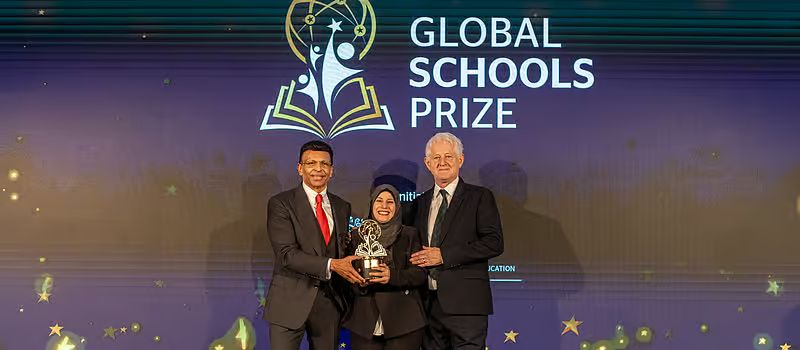
Alsama has developed an accelerated education model tailored for teenagers; through its curriculum, students can progress to university in around six years
Lebanon’s Alsama Project, a refugee-led education organisation transforming the lives of displaced Syrian and Palestinian teenagers excluded from traditional schooling, has been named the winner of the inaugural Global Schools Prize.
This award is an initiative of the UAE-based Varkey Foundation, recognising innovative schools that are transforming education systems worldwide.
Founded in 2020 to support just 40 teenagers in Beirut’s Shatila refugee camp, Alsama has since grown into a pioneering education organisation serving more than 1,100 displaced young people. While many refugee education programmes focus on younger children, Alsama specifically targets adolescents, who are often overlooked and left out of formal education systems.
Selected from nearly 3,000 applications and nominations across 113 countries, Alsama was announced as the winner at the Education World Forum in London, receiving $500,000 (approximately Dh 1.84 million) to scale its impact globally. The award was presented by film writer, director and campaigner Richard Curtis.
Earlier this month, Alsama also won the “Overcoming Adversity” category in the Global Schools Prize, receiving an additional $50,000.
Alsama, which means “sky” in Arabic, is driven largely by the communities it serves: 72 per cent of staff are refugees, 96 per cent come from refugee or local communities, and most senior leaders have refugee backgrounds.
The organisation operates four education centres in Shatila and Bourj al-Barajneh refugee camps in Beirut — each home to around 40,000 refugees from Syria and Palestine — as well as one centre in Homs, Syria.
In Lebanon, 85 per cent of Syrian refugees are unable to attend school, while fewer than 2 per cent of displaced Syrian youth complete secondary education. In Syria, around 8,000 schools have been destroyed by conflict.
Against this backdrop, Alsama has developed an accelerated education model tailored for teenagers whose learning has been disrupted by war, displacement and poverty. Around 90 per cent of students arrive unable to read, write or perform basic numeracy.
Through its curriculum, students learn to read, write and count within six months, and can progress to university in around six years — half the length of a traditional education pathway.
Learning is designed around real-life contexts. For example, beginners learn Arabic through reading road signs or develop numeracy skills by planning weekly grocery budgets in local markets.
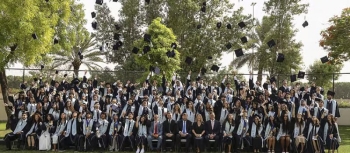
Alsama’s first cohort is set to graduate in July, with students already securing scholarships to institutions including the University of Cambridge, the University of Leicester and Arizona State University.
Each Alsama education centre includes trauma-informed safeguarding and psychosocial support, with full-time psychologists, centre supervisors and weekly awareness classes on children’s rights, healthy relationships, gender equality and personal safety.
The organisation also works directly with families and communities to intervene when children are at risk of early marriage, child labour or abuse.
As a result, Alsama reports it has helped prevent 256 girls from early marriage, kept 278 boys out of child labour, and supported 66 students experiencing domestic or sexual abuse. It has also reached hundreds of parents through awareness programmes aimed at shifting attitudes around education, gender equality and child protection.
Ninety-eight per cent of students report feeling safe at school, a significant figure in communities affected by ongoing violence, instability and trauma.
Even during escalations of conflict in Beirut in 2024 and again earlier this year, Alsama continued teaching without interruption. When students were displaced to Syria, the organisation shifted quickly to online learning, provided SIM cards to maintain connectivity, and set up temporary classrooms in shelters.
A defining feature of Alsama’s model is cricket, used as a tool for leadership, wellbeing and social change. Across more than 20 cricket hubs, boys and girls train together, building teamwork, discipline and confidence.
Half of Alsama’s cricket coaches are girls, helping challenge gender norms and create visible leadership role models for younger students. Older students are also employed as junior coaches, librarians and teachers, providing safe income opportunities that reduce the economic pressures that can lead to child labour or early marriage.
Alsama now plans to use the prize funds to open a second accelerated learning centre in Homs, Syria. The centre will offer Arabic, English, maths, science, IT, financial literacy, professionalism and rights-based awareness sessions, along with yoga and cricket.
© Khaleej Times






 Twitter