


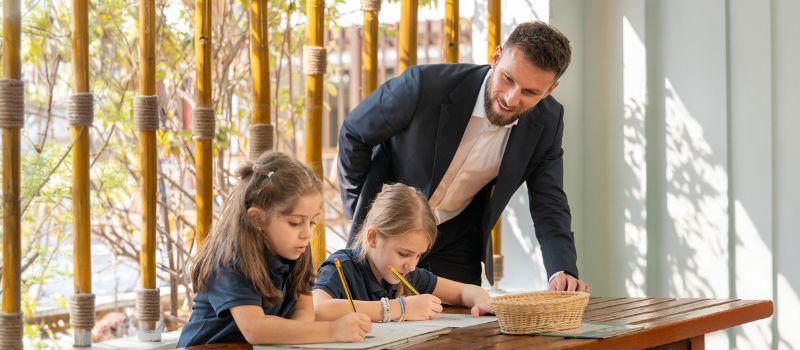
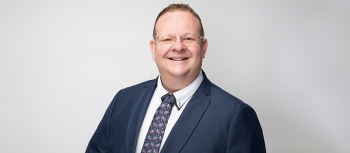
Edarabia had the opportunity to interview Kyle Knott, Founding Principal of The Scholars School, to discuss the school’s vision, academic philosophy, and commitment to nurturing future-ready learners. Mr. Knott shared valuable insights into building a strong school culture, fostering student wellbeing, and creating a dynamic learning environment where every child is empowered to achieve their full potential.
We will move beyond simply using AI tools to treating AI as a subject of logic and ethics. By embedding computational thinking into our curriculum, we teach students the architecture behind the algorithms. It is not enough to generate an answer; our students must understand how the answer was derived, ensuring they remain the masters of the technology, not just its consumers.
The 2025 ban will be a breath of fresh air for our school culture. We have seen a tangible return to real play and face-to-face conversation in other schools. We see the removal of mobile phones as a positive step forward in supporting students with their learning and development.
We protect our younger students with strict safeguards while preparing our older students for reality. For the seniors, we will focus on academic integrity in the age of AI. We will teach them that while AI can support research, the thinking, the synthesis and the judgment must be their own. It is about using the tool to refine, not replace, human intellect.
We explicitly teach Arabic, Islamic Studies, and celebrate National Identity. We also weave them into our broader inquiry-based framework. By connecting UAE heritage with global themes, such as sustainability or innovation, we ensure these subjects resonate authentically with our diverse international student body, promoting a deep respect for our host country.
Beyond academic transcripts, every student must graduate with Grit (the tenacity to persist when learning becomes difficult), Curiosity (the relentless drive to ask “why” and “how” rather than just accepting “what”), and Agency (the capacity to take full ownership of their own learning journey and life choices)
We steer students away from rigid career paths by focusing on transferable cognitive skills. We teach them how to learn – how to analyse unfamiliar problems and create novel solutions. If a student can think flexibly, they can adapt to jobs that do not even exist yet.
We reject the “one-size-fits-all” model by adopting a “scaffold up” approach through adaptive teaching and the High-performance Learning framework. Rather than simplifying work for students who struggle, we keep the challenge high for everyone and provide bespoke support to help them reach it. This ensures that we never place a ceiling on what a child can achieve.
We normalise the struggle. We teach students that difficulty is not a sign of failure, but a necessary step in learning. By praising effort and strategy rather than just intelligence, we help them view global changes and personal setbacks as puzzles to be solved.
Our strongest support system is our relationships. We prioritise knowing every child, where pastoral care is proactive – not reactive. We look for the small changes in demeanour or attendance that signal burnout long before grades start to slip, allowing us to intervene with care and meaningful support.
Inclusion at The Scholars School is about high expectations. We do not just accommodate; we challenge. By identifying specific barriers and removing them through adaptive teaching, we ensure our Students of Determination are active, excelling participants in every aspect of school life.
We teach students that their online presence is a modern CV. We move beyond “don’t do this” warnings to proactive curation, encouraging them to post content that reflects their values, creativity, and leadership – creating a footprint they can be proud of in adulthood.
Parents are our partners in education. Initiatives like The Scholars Parents Committee (SPC) remind us that values are caught as much as they are taught. We actively bring parents into the learning journey, ensuring that the language of growth and resilience is spoken at home as well as at school.
We empower our teachers by treating them as experts. We encourage professional judgment over rigid adherence to mandates. By investing in their development as adaptive practitioners, we help them see new technologies not as more work, but as powerful tools to amplify their own teaching impact and support their well-being.
“Potential is not a fixed point; it is a journey.” If we believe that every child can succeed – and we build the systems to support that belief – there is no limit to what they, and we, can achieve together.






 Twitter
Add a Comment
Please do not post:
Thank you once again for doing your part to keep Edarabia the most trusted education source.