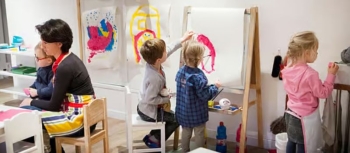
The education system in Madrid is divided into four stages, including preschool, compulsory schooling, upper secondary, and tertiary education. Furthermore, preschool is categorized into two groups, including nursery schools that cater to children aged three months to three years of age. The second stage is joining a kindergarten for kids aged three years to six years. Although preschool is not compulsory, most parents enroll their children.
Besides being the most populous city in Spain, Madrid’s education equally ranks impressively similar to most European (EU) countries. According to the 2018 PISA statistics, students perform well in the core subjects, which include mathematics, science, and reading. Similarly, the state ranked 10th out of 100 EU countries in terms of education performance.
Compulsory education starts from the age of six years, in primary schools which are divided into three tiers:
Primary education aims to provide the children with general knowledge in science, mathematics, language, and culture. Students sit for a final examination and get a school graduate certification. After, they join lower secondary education, which is divided into two cycles:
In compulsory secondary education, students take courses in linguistic communication, mathematics, social and civic education, sciences, plus many more. However, the second cycle prepares students for vocational training and further studies. After completing both stages, students receive secondary education graduate certification, which enables them to proceed to upper secondary education (0ptional) that lasts for two years.
Education at the upper secondary level is specialized, and students undertake more technical/vocational courses. Once they complete their training at this stage, they can either enter the job market or enroll for another professional program that helps enhance their skills in the occupation of their choice. Various types of schools offer upper secondary education, including:
Private schools in Madrid include international schools, Catholic day schools, bilingual, and international baccalaureate schools. The state does not support private schools. Furthermore, these schools get to choose their curriculum, school calendar, and enrollment requirements. Entrance to state schools is based on the catchment area as parents are not allowed to choose a school outside their location.
Edarabia showcases all private schools in Madrid through which parents can filter by tuition fees, curriculum, rankings & ratings. There are many public, private and charter schools near you that cater to both expat and local students.
Depending on the level of education; kindergartens (pre-schools), primary, secondary and high schools will all have varying tuition fees. Most K-12 schools offer different curriculums and extra-curricular activities to support the intellectual and physical wellbeing of students. Admissions for the top international schools in Madrid tend to have waiting lists so it is recommended that parents apply well in advance to secure a spot for their children. Additionally, each school has ratings based on parent reviews and are ranked below accordingly.
For more details, please click here







 Twitter