



Aldenham Prep School Riyadh: A Brief History
Aldenham Prep Riyadh opened its doors in September 2021 as the first international branch of Aldenham School in the United Kingdom which itself has a history spanning over 480 years. As a co-educational British preparatory school, Aldenham Prep School Riyadh combines the traditions and values of its historic sister school with a forward-looking approach to learning in the Kingdom of Saudi Arabia. Now in its fourth year of operation, the school continues to grow, welcoming pupils from diverse backgrounds and providing a rigorous, caring and inspiring environment for learning.
Parental Involvement in Homework
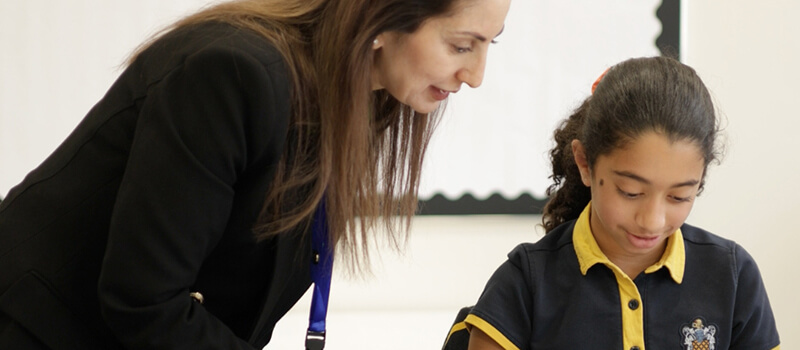
As the new academic year commences, many parents wonder just what kind of involvement, and how much, truly helps children with their schoolwork and homework.
Research consistently shows that the most effective parental involvement is supportive but not intrusive. Parents should aim to help their children develop the skills, discipline and independence needed to manage their own homework. The emphasis needs to be on enabling pupils to do the work themselves rather than completing it for them (Epstein & Van Voorhis, 2019).

Studies indicate that pupils who spend more time on homework generally perform better academically, with the benefits becoming more significant in the upper years of schooling (Cooper, 2019). Moreover, family support plays a vital role in pupil success, often outweighing socio-economic status or parental educational background (Henderson & Mapp, 2022).
Teachers assign homework for a variety of reasons:
Beyond academic benefits, homework helps pupils develop good habits and attitudes. It fosters independence, responsibility and time management while also strengthening home–school connections. When parents are positively engaged, they gain insight into their child’s education and progress.
Importantly, homework should be a positive learning experience and not used as punishment.
Parents can help children succeed with homework by:
It is important to avoid doing the homework for the child. Instead, parents should discuss tasks, ask questions and review work once it is completed. Younger pupils may need more direct support, while older pupils benefit more from encouragement and discussion that promotes independence.
Classroom teachers often emphasise three key study skills that parents can reinforce at home:
Children are more likely to study when they see adults around them engaged in reading, writing or problem-solving. Even small actions, like making a shopping list or talking about work tasks, model important behaviours. Parents can also support learning through shared activities such as reading together, playing educational games or visiting cultural places like museums or zoos. Everyday routines including household chores also reinforce responsibility and perseverance.
References
Mr Mark S. Bedford is Headmaster of Aldenham Prep School Riyadh. He has nearly 30 years of experience in education and has led schools in the UK, Cyprus, Thailand, China and Saudi Arabia. With a background in English Literature, Educational Psychology and School Counselling, Mr Bedford holds a BA (Hons), PGCE, MSc, MPhil, NPQH and is a Fellow of the Royal Society of Arts (FRSA). He is also fluent in several languages and passionate about innovation, pupil wellbeing and building international partnerships in education.












 Twitter
Add a Comment
Please do not post:
Thank you once again for doing your part to keep Edarabia the most trusted education source.