


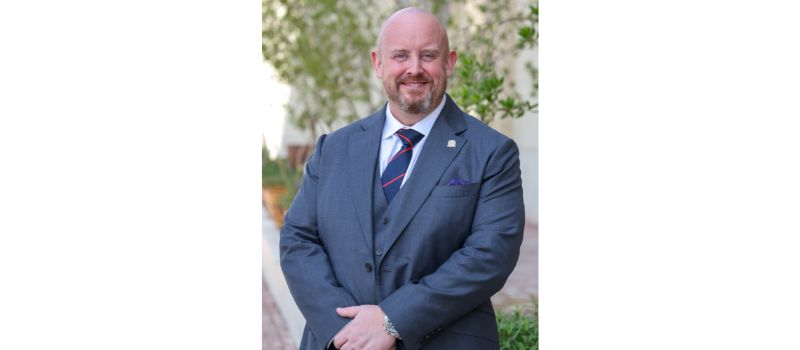
Edarabia had the opportunity to interview Mr. Ian Ward, School Principal of Emirates International School – Meadows (EISM), to discuss the school’s academic priorities, future plans, and approach to supporting student engagement and well-being. Mr. Ward shared insights into EISM’s commitment to high-quality education, innovation in teaching and learning, and creating a supportive environment where every student can thrive.
At Emirates International School – Meadows (EISM), we see artificial intelligence as a new form of literacy. As an IB World School, our curriculum is already grounded in inquiry and conceptual learning, which allows us to embed AI in meaningful ways rather than treating it as an isolated subject.
In the Primary Years Programme (PYP), students begin exploring digital thinking and ethical technology use. In the Middle Years Programme (MYP), they engage with design, systems thinking and data analysis. By the time they reach the Diploma Programme and our forthcoming IB Career-related Programme, students are critically evaluating AI’s role in society and the Academic Integrity that runs alongside it.
Our aim is not simply for students to use AI tools, but to understand them, question them and apply them responsibly to real-world challenges.
EISM had already implemented a smartphone ban prior to it becoming a requirement as it actually reinforced many of the values we prioritise as an IB school.
Without phones during the school day, students are more present in their learning and in their relationships. Breaktimes are more active and social, with students engaging in sport, conversation and collaborative activities. In classrooms, the quality of discussion and focus has noticeably improved.
Importantly, technology remains an integral part of learning, but it is now used with greater intention within structured learning environments.
What we are seeing is a culture where human interaction, curiosity and collaboration take precedence, something that sits perfectly with the ethos of international education.
First and foremost, balance is essential.
For younger students in PYP, we follow national guidelines by limiting generative AI and focusing instead on foundational thinking skills, creativity, inquiry and critical reasoning.
For older students, particularly in the MYP, DP, the focus shifts toward AI literacy. Students learn how AI systems function, how to evaluate outputs critically and how to use these tools ethically.
Within the IB framework, this connects strongly with developing principled learners who understand both the opportunities and the responsibilities that come with powerful technologies. Ultimately, our goal is to ensure students remain competitive, but also thoughtful and ethical innovators.
Our students represent over 80 nationalities, so national subjects play a crucial role in helping them understand the country they call home.
Arabic, Islamic Studies, Social Studies and Moral Education are taught in ways that connect the UAE’s heritage, culture and values to the global themes explored throughout the IB curriculum. Students examine the UAE’s remarkable development while reflecting on ideas such as sustainability, leadership and community.
This approach ensures that national subjects are not experienced in isolation but as part of a wider understanding of identity and global citizenship.
For international students, especially, it fosters a genuine appreciation of the UAE and the vision that continues to shape its future.
If I had to identify three, as there are many, they would be adaptability, critical thinking and empathy.
The world our students will enter is evolving rapidly. Adaptability allows them to navigate change confidently. Critical thinking enables them to question information, solve complex problems and innovate. Empathy ensures they can collaborate across cultures and lead responsibly. These qualities are deeply embedded within the IB learner profile and guide how we design learning at EISM.
Academic success will always matter, but education must go beyond grades. Our aim is to develop thoughtful, globally minded young people who can contribute positively to an increasingly interconnected world.
Instead of asking students what job they want, we encourage them to think about the problems they want to solve.
Through the IB curriculum, students explore global challenges and develop transferable skills such as research, collaboration and innovation. These capabilities remain valuable even as industries evolve.
The introduction of the IB Career-related Programme will further strengthen this approach by connecting academic learning with real-world contexts and emerging industries.
Our goal is to prepare students not for a single career, but for a lifetime of learning and reinvention. In many ways, adaptability will be the most valuable qualification our students leave school with.
Personalised pathways are central to modern education. At EISM, students can pursue different academic routes through the IB Diploma Programme and our upcoming IB Career-related Programme. These pathways allow learners to align their studies with their strengths, interests and aspirations.
Within classrooms, inquiry-based learning encourages choice and student agency. Students can explore concepts through research, design, experimentation or creative expression.
This flexibility ensures that every learner is recognised as an individual while still benefiting from the rigour and depth of an IB education. When students feel ownership over their learning, their motivation and engagement increase dramatically.
Resilience is built through experience rather than instruction. The IB framework naturally supports this by encouraging students to take intellectual risks, reflect on setbacks and improve through feedback. Experiences such as personal projects, extended essays and service learning require persistence, independence and reflection.
Equally important is the supportive environment around them. Our pastoral systems ensure students feel safe to try, fail and try again.
When students learn that challenges are part of growth, they begin to view change not as something to fear but as something to embrace. That mindset will serve them well far beyond school.
Well-being is central to student success. At EISM, we have a strong pastoral structure that includes counsellors, year leaders and safeguarding teams who work closely with students and families. Teachers are trained to identify early signs of stress and ensure support is provided quickly when needed.
We also place significant emphasis on balance. Alongside academic challenge, students are encouraged to engage in sport, creativity, service and leadership opportunities.
Education should challenge students, but it should never overwhelm them. When well-being is prioritised, students are able to thrive academically, socially and emotionally.
Inclusion at EISM goes far beyond access; it is about ensuring every student has the opportunity to succeed. Our inclusion team works closely with teachers to provide differentiated instruction, personalised learning plans and specialist support where required. However, inclusion also means participation and belonging. Students of Determination are encouraged to take part fully in leadership roles, co-curricular activities and academic challenges across the school.
Our goal is simple: every student should feel valued, confident and capable of achieving their potential. When students feel genuinely included, their confidence and achievement flourish.
Digital citizenship is an essential life skill. Through wellbeing programmes and discussions embedded across the IB curriculum, students explore the long-term impact of their online presence. They learn about digital ethics, responsible communication and how their online behaviour reflects their values.
We encourage students to think of their digital footprint as a professional and personal portfolio, something that should represent curiosity, creativity and integrity.
In a world where online presence increasingly shapes opportunities, helping students develop this awareness early is incredibly important.
Education today is a partnership between school and home. Parents play a crucial role in supporting learning, wellbeing and character development. At EISM, we work closely with families to ensure students feel supported both academically and personally.
Community initiatives, cultural events and learning workshops allow parents to engage meaningfully with school life. When families and schools share common values, curiosity, respect and ambition, students benefit enormously. Strong communities create strong schools.
Teachers are the driving force behind innovation in education. At EISM, we prioritise professional learning, collaboration and shared leadership. New technologies and initiatives are introduced thoughtfully, with time for training, experimentation and reflection.
Teachers are also involved in shaping how innovation is implemented in classrooms. This sense of ownership ensures that change feels purposeful rather than imposed. When educators feel trusted and supported, they are far more confident in exploring new approaches that enhance learning for students. Ultimately, the most powerful innovation in any school is a confident and inspired teacher.
Education is fundamentally about possibility. Every day in schools, we see young people asking questions, challenging ideas and imagining solutions to global challenges. That curiosity gives me enormous optimism for the future. My message to our community is simple: remain curious, remain courageous and remain kind.
When young people are encouraged to think critically, collaborate openly and act with integrity, they develop the confidence to shape a better future, not just for themselves, but for the world around them, and that, ultimately, is the true purpose of education.






 Twitter
Add a Comment
Please do not post:
Thank you once again for doing your part to keep Edarabia the most trusted education source.