



As education in the UAE continues to evolve, more families are exploring flexible learning models that prioritise both academic success and student wellbeing. Online schooling, once considered a niche option, is increasingly being seen as a practical complement to traditional education.
In the current climate, where uncertainty and disruption are impacting routines and schooling continuity, many families are also seeking more structured and reliable learning environments that can adapt to changing circumstances.
Minerva Virtual Academy (MVA), a fully accredited online school following the English National Curriculum, says it is seeing a growing number of families based in the UAE seeking a learning environment that balances strong academic standards with greater flexibility and personalised support.
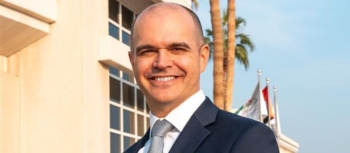
In this interview feature, Hugh Viney, Founder & CEO of Minerva Virtual Academy, shares insights into the changing expectations of parents in the UAE, while families whose children study at the academy share their own experiences of online education.
Q: We’re seeing more parents prioritise wellbeing when choosing schools. What changes are you noticing?
“We’re seeing a clear shift among families—from asking ‘Which school has the best grades?’ to asking ‘Which school will help my child feel safe, confident and motivated again?’,” says Hugh Viney, Founder & CEO of Minerva Virtual Academy.
“Many parents come to us after their child has experienced stress or disengagement in a traditional school environment. What they’re really looking for is balance: strong academics without compromising mental wellbeing.”
In addition, recent disruptions have led some families to seek more stability and consistency in their child’s learning experience, particularly where traditional systems are having to rapidly adapt.
For some families, wellbeing played a major role in the decision to move to an online school.
“Our daughter struggled in a traditional school environment, so moving to an online school made a big difference,” says Anna Morris, whose daughter Bethan studies at MVA in UAE. “What stood out about Minerva was the strong emphasis on both academics and mental wellbeing. Since joining, she’s much happier and able to focus on learning again.”
Q: Online schooling offers flexibility, but parents still want strong academic standards. How do you balance both?
“Flexibility and rigour are not opposites—they work best together when designed intentionally,” Viney explains.
“At Minerva, students combine self-paced study with live teacher-led lessons following the English National Curriculum, including GCSEs and A Levels. Students arrive prepared, allowing live sessions to focus on deeper understanding rather than passive learning.”
Parents say this flexibility also supports modern family lifestyles.
“The fact that lessons are online and recorded gives our family much more flexibility,” says Morris. “We’re sometimes able to travel to visit our other daughter studying in the UK without our child missing school, which simply wouldn’t be possible in a traditional system.”
Q: In what ways does online education help students develop future-ready skills?
According to Viney, many of the skills students develop naturally in an online learning environment mirror those needed in the modern workplace.
“Students build independence, digital confidence and time-management skills simply by navigating a learning model that requires them to take ownership of their studies,” he says.
Parents have noticed these changes as well.
“Both of our children have become much more independent,” says Lisa Doe, whose two children study at Minerva Virtual Academy in UAE . “They manage their own daily schedules and take responsibility for their learning. The flexibility also allows them to pursue their interests and develop other skills alongside academics.”
Q: One concern parents sometimes have about online learning is social interaction. How does MVA address that?
“This is one of the biggest misconceptions about virtual education,” Viney says.
“MVA students interact regularly through live lessons, assemblies, clubs and meet-ups. Over time, a strong community forms between students and families.”
Parents say the flexible model has also changed family life in positive ways.
“Our home life is much more relaxed now,” says Doe. “We spend more quality time together as a family, not just on weekends but during the week as well.”
A More Personalised Future for Education:
Looking ahead, Viney believes education models will continue to evolve.
“Families increasingly want education that adapts to the child—not the other way around,” he says.
“What we are also seeing is that families want reassurance—knowing that learning can continue in a structured, consistent way, even when external circumstances change.”
“The future of education will likely become more personalised and increasingly hybrid.”
For families already experiencing this shift, the benefits are clear.
“MVA encourages our children to think independently and realise that traditional learning isn’t the only way,” Doe adds. “It’s helping them build confidence and prepare for the future.”







 Twitter
Add a Comment
Please do not post:
Thank you once again for doing your part to keep Edarabia the most trusted education source.