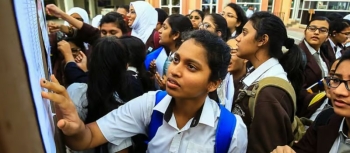
Statistics from the Ministry of Higher Education indicate 365,000 students are enrolled this year in Tunisian universities. However, the state only allocated 70,000 beds to students, creating a large discrepancy that forces students to look for alternative housing options.
One such solution is private dormitories or apartments but this represents a major burden for some students. Many university students agree that rent has become unreasonable.
Mohammed Kadri is a student who hails from the city of Gafsa. He didn’t expect that he would spend several weeks looking for a place to live.
He arrived in Tunis a week before September 15th, when university classes started. Weeks of searching for an affordable flat led to nowhere.
Last year, Mohammed lodged in a government university dorm and paid 10 dinars (5 euros) a month. This year, he submitted an application, accompanied by a statement showing his social condition, to the Northern University Service Bureau to obtain lodging conditions in one of the government dorms.
However, officials in charge of university housing in Tunisia replied with “no vacancies”.
According to the Ministry of Higher Education, only new students who reside 30km or more away from their place of study have the right to benefit from public university housing. The period of housing is set for two years for female students and one year for male students. A ministerial bulletin on housing adds that students who were involved in their dorm’s cultural activities and clubs would qualify for such housing conditions, but for just one additional year.
“The law excludes students who belong to poor and limited-income families, who are supposed to be given priority for university housing,” said Mohammed. “I didn’t imagine that things would be this difficult.”
“I’ve knocked on all doors, but was not able to get a place because of the high rental values and increasing numbers of conditions set by house owners on the one hand, and lack of private dorms specified for male students on the other hand,” he added.
The owner of a flat for rent near a university complex, Hatem Hilali said he fears damage to his property and student problems that never end. “In addition, they don’t pay rent on time, and therefore I always set as a condition for students to sign insurance contracts.”
Real estate broker Moncef Achour confirmed that owners fear renting their properties to students lest they become places for debauchery and suspicious relations.
Caught between the reluctance of some owners to rent their property to students and the increasing number of conditions set by others, many students resort to private university dorms.
The state began giving incentives to those who desire to invest in affordable private university dorms, stated Minister of Higher Education and Scientific Research Bechir Tekkari in an interview published by government media outlets on September 28th.
“Rental values are raised from year to year in spite of the facilities that are offered and the investment incentives that the state gave to investors when they executed these projects,” said Amani Ben Hassen, a student of French. Ben Hassen added that she paid 110 dinars (55 euros) to rent a room together with a friend.
According to the statistics of the Ministry of Higher Education, 150 private dorms are in operation this year, including 61 distributed in northern Tunisia provinces, 33 in mid-region provinces, and 56 in southern Tunisia cities. All university dorms are subject to monitoring by the Ministry of Higher Education.
“Students face many problems in these dorms, especially lack of maintenance and cleaning, and cutting off of electric power at an early hour of the night in some cases,” Amani said. “The reason is that owners are looking for fast profits at the lowest costs without any regard to the circumstances of students or respect for their right to have decent lodging.”
By Monia Ghanmi for Magharebia in Tunis
© Magharebia.com 2010












 Twitter