Ashbury College engages students in a dynamic learning environment and inspires them to become intellectually curious, compassionate and responsible citizens. Since 1891, Ashbury has been fostering the academic, artistic and athletic development of our students while nurturing their spiritual growth. Ashbury welcomes day students from Grades 4 to 8 and day and boarding students from Grades 9 to 12. Ashbury currently has 100 students boarding on campus. Twenty percent of Ashbury's student population is international and represents 48 countries.
With small classes, a dedicated faculty and well-structured athletic and co-curricular activities, Ashbury College helps each student reach his or her potential in a supportive learning environment. We invite you to visit the campus, where you can experience the character, commitment and achievement of our students.
Ashbury College was founded in 1891 by George Penrose Woollcombe, an ambitious Oxford University graduate and a new Canadian, who served as Ashbury's Headmaster for 42 years. The three-room school for boys was originally located on Wellington Street in downtown Ottawa, moving to larger quarters also on Wellington Street and then on to Argyle Street in 1890 near the present Museum of Nature. In 1910, the school - called Ashbury College after Woollcombe's English home - moved to its current 13-acre location in the heart of Rockcliffe Park. With the support of Ottawa benefactors, a new building was constructed for the 115 students, 48 of whom were boarders.
More additions to the school in 1972 accommodated a student population of more than 300. In 1982, girls were enrolled for the first time in the senior school. With the financial support of Ashbury families and friends, a new gymnasium was added in 1985. This was followed by the completion of the new Napier wing in 1994 to house the Junior School. Later that year the Ashbury theatre, computer labs, several special purpose classrooms and the Teron Foyer were completed. The Heather Gillin Residence for girls was opened in 1999 to enhance Ashbury's boarding program.
In fall 2004, a new dining room (named Maclaren Hall), a double gymnasium and four new classrooms were opened. The main floor science lab and front offices were also renovated. Expansion of the Heather Gillin residence for girls began in June 2006 and the new boys residence was completed in September 2009. Today, Ashbury has 170 boys and girls in the Junior School and 515 young men and women, 100 of whom are boarding in the Senior School.
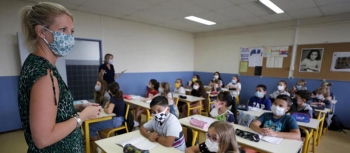
The Junior School, for approximately 175 students from Grades 4 to 8, distinguishes itself by providing a challenging, broad-based program, which promotes critical thinking and creativity as well as preparing students for success in university and in life. Ashbury Junior School teachers are subject specialists who enrich the Ontario curriculum by extending learning beyond the borders of the classroom. It is our aim to enable every student to develop in the areas of academics, athletics, arts, co-curriculars, community and leadership skills. Clear standards and guidelines in work, sport, dress and behaviour help to achieve these goals.
Students are assigned to Forms of approximately 18 to 22 students while subject classes range from 10 to 22 students. A five-period, eight-day timetable is used with a morning break, lunch break, and afternoon break. In Grade 4, the Form teacher is responsible for most subjects; however, students change classes for Science, Art, French, Music, Physical Education and Games. In Grades 5 and 6, students work with specialists in all subjects. French classes for Grades 4,5 and 6 are subdivided into two levels of proficiency so that each student may work at a suitable pace.
To allow for differentiated and one-on-one attention, Grade 7 and 8 students are placed in English, Mathematics and French courses according to their ability. Artistic and linguistic ability are also taken into consideration in Music, Art and Drama. In Grade 8, students, in consultation with their MAD teachers, choose to specialize in two of the three MAD courses.
To support our academic offerings, a signature trait of the Junior School program is Student Super Block. This study skills program offered to all students in Grades 4 to 8 trains students in research and organizational skills, digital literacy and digital citizenship, and teaches students how to use mindfulness to help manage stress and concentration.
In addition to academic support by the Form and subject teachers, a Junior School Learning Strategist helps track and monitor student achievement and provide learning strategies to help students reach their academic potential. Physical and emotional support systems are also enhanced through interactions with the school nurse and the Life Skills coordinator.
Finally, each student belongs to one of four Houses: Dragons, Goblins, Hobbits, and Wizards. House points can be earned for almost every type of activity at school, with a system of points divided between academics, athletics, and the arts. Points are also awarded for effort and achievement, or when a teacher feels that a student has made an extra effort around the school.
The International Baccalaureate Learner Profile is a set of student learning outcomes for the 21st century. At Ashbury College, we strive to develop the following ten characteristics in all of our students, in order to develop "internationally minded people who, recognizing their common humanity and shared guardianship of the planet, help to create a better and more peaceful world" (source: IB Learner Profile Booklet, IBO, 2006).
They develop their natural curiosity. They acquire the skills necessary to conduct inquiry and research and show independence in learning. They actively enjoy learning and this love of learning will be sustained throughout their lives. They explore concepts, ideas and issues that have local and global significance. In so doing, they acquire in-depth knowledge and develop understanding across a broad and balanced range of disciplines.
They exercise initiative in applying thinking skills critically and creatively to recognize and approach complex problems, and make reasoned, ethical decisions. They understand and express ideas and information confidently and creatively in more than one language and in a variety of modes of communication. They work effectively and willingly in collaboration with others.
They act with integrity and honesty, with a strong sense of fairness, justice and respect for the dignity of the individual, groups and communities. They take responsibility for their own actions and the consequences that accompany them. They understand and appreciate their own cultures and personal histories, and are open to the perspectives, values and traditions of other individuals and communities. They are accustomed to seeking and evaluating a range of points of view, and are willing to grow from the experience.
They show empathy, compassion and respect towards the needs and feelings of others. They have a personal commitment to service, and act to make a positive difference to the lives of others and to the environment. They approach unfamiliar situations and uncertainty with courage and forethought, and have the independence of spirit to explore new roles, ideas and strategies. They are brave and articulate in defending their beliefs. They understand the importance of intellectual, physical and emotional balance to achieve personal well-being for themselves and others. They give thoughtful consideration to their own learning and experience. They are able to assess and understand their strengths and limitations in order to support their learning and personal development.
Please do not post:
Thank you once again for doing your part to keep Edarabia the most trusted education source.








 Twitter
The IB curriculum at this school has not only challenged my child academically but has also fostered a love for learning, all thanks to the dedicated staff who truly go above and beyond.
By Sara Al-Mansoori (Jun, 2024) |