


Edarabia had the opportunity to interview Alistair Downs to discuss his plans for 2025 and beyond, the school’s approach to student engagement, the challenges facing education in the coming years, and how RGSR ensures all students feel welcome and have the same chances to succeed.
So much has happened over the past two years since the school opened, but there is still a lot more planned throughout 2025.
Continuing to develop student leadership opportunities is a high priority, both for our formal Student Leadership Council (SLC) and student body as a whole. We have exciting plans to increase engagement with other schools in the RGS Global Village which will provide our students with opportunities to collaborate with RGS students in China, Vietnam, Malaysia, Cambodia and the UK. Continuing to enhance our pastoral care programme, with a focus on the wellbeing of our whole community, is also a priority for the year ahead.
We have fantastic plans to further upgrade the facilities at our existing two campuses prior to the start of academic year 2025/26. These include additional Primary and Secondary Science Labs; new sports facilities; and spaces for the creative and performing arts. Start-Up schools are a real passion of mine and so I am looking forward to continuing my work with the architects and designers as we finalise the plans for our third campus and commence construction work.
Finally, but by no means least, we will be completing BSO in May which I am confident will provide recognition of everything that has been achieved at RGSR to date and cement our place as a leading school within KSA.
In addition to our long-term strategy over three years which includes academics, we review our ongoing departmental and Primary/Secondary self-evaluations towards the end of each academic year. This further informs are decision making for the year ahead.
One of the key areas we are pursuing as we move through academic year 2024/2025 and into 2025/26 is to broaden our subject offering at both IGCSE and A-Level. In addition to this we are working towards offering the IB Careers Related Programme in order to provide additional pathways for our learners.
I think one of the main challenges for schools in the coming years is adapting the curriculum to ensure it meets the needs of students in 2025 and beyond so they are well prepared for the future. Over the past twenty years we have seen a huge decline in the number of routine manual and routine cognitive tasks being completed in the workplace. Meanwhile we have seen an increase in non-routine interpersonal and non-routine analytical tasks. As the skills our students require have changed, have schools adapted their curriculum and teaching?
Although this is an obvious challenge, and one which has been talked about now for a number of years, recruiting and retaining the best staff is set to become increasingly challenging. The number of teachers available simply hasn’t kept pace with the sheer number of new schools that have opened.
I love the quote “Education is not the filling of a pail, but the lighting of a fire” which is attributed to William Butler Yeats. If students appear uninterested or lack motivation, we should first look at what we are doing as a school and as educators. Our priority is to care for each individual student; nurturing their unique blend of talents and abilities, and supporting them to achieve their full potential.
I firmly believe that all students want to learn and so it is our role to support every student to find something they enjoy and that they are passionate about. If they find this then they will likely persevere at it.
Our team is not only focused on ensuring students achieve the very best in and out of the classroom, but also that they feel happy. This is crucial because at RGSR we very much believe that happy students make better learners.
We are proud to be a non-selective and inclusive school of more than 80 different nationalities. In our recent parent survey, the multi-cultural nature of our school was cited as a key strength and we work hard to ensure that all students feel welcome. This is achieved through a robust pastoral care system, establishing and maintaining strong home: school relationships, and student led initiatives.
We are well known within Riyadh as a leader in SEND. Our award-winning provision caters to students who attend our RGSR Hub full time and also to those who receive mainstream support.
Being proactive when it comes to student stress and bullying is crucial. RGSR is known both for its warm and welcoming atmosphere, and the climate of trust which exists between all members of the community. Students are known as individuals and they feel safe, secure and know who to turn to if they need support, advice or guidance. In turn our parents trust the school and are comfortable leaving their children in our care, confident they made the right decision when selecting RGSR.
The House system plays an important role in maintaining and strengthening our sense of togetherness at RGSR. It fosters skills such as leadership, responsibility and respect and develops vertical integration across all year groups. It allows teamwork to flourish, enhances students sense of belonging and strengthen our community.
In addition to full time School Counsellors a number of our staff have completed Mental Health First Aid Training with George Peterkin and we are looking forward to welcoming Rachel Glasspool from ‘We All Beam’ to our school for a whole week in January to work with staff, parents and students on wellbeing.
One of the many reasons our students enjoy such high levels of success is the acknowledgment by all RGS schools that academic results are only one part of the puzzle. We firmly believe that strong academic outcomes are in part a result of personal development and that the two very much go hand in hand.
A holistic, well-rounded education fosters the skills required to be successful in life, complementing the academics and ensuring our students are well prepared for the future. Using the key skills highlighted by the World Economic Forum Future of Jobs Report as guidance, we focus on developing student’s personal, social and emotional skills which support their learning journey. Instilling these skills in our students supports them to grow both academically and as individuals in order to meet the demands of our ever-changing world and to take on future challenges.
Having parents and the community actively engaged in school life benefits the school greatly. In addition to inviting parents in for events, celebrations and curriculum workshops we also hold a data base of parents who have expressed a willingness to visit school as a guest speaker to showcase their expertise or skill and support student learning.
We currently have Parent Reps and are introducing a more formal Parents Teacher Association this year. We also seek parent input through surveys which are sent out twice each year.
Central to achieving success for our students are the people creating the learning environment and delivering the education. We are fortunate to have world class facilities, however without the right people on board no school will realise its full potential.
We focus on strategies for both recruitment and retention, the latter being arguably even more important than the initial recruitment itself! This starts by building trust from Day 1 and ensuring that teachers understand the vision for the school. We work hard to support teachers to feel part of the journey the school is on. We want teachers to feel they are learning and growing with RGSR and so provide comprehensive CPD pathways.
I have always been a huge advocate of ‘growing your own’ leaders and this is something we have focused on at RGSR over the last two years. I have lost count of the number of internal promotions there have been as teachers who have demonstrated the right attitude, work ethic and potential have been provided with opportunities.
Part of the role of our senior leaders is to spot talent from within and then nurture that talent. Teachers are encouraged to take on informal and formal leadership opportunities and are empowered to ‘run with ideas’ whilst being supported by more experienced leaders, rather than being micromanaged.
I am a huge advocate of a holistic educational experience and believe that such an education creates happy, confident and self-motivated students who are well prepared for life’s challenges.
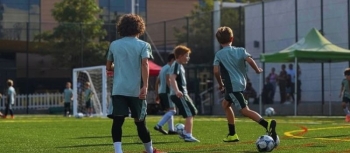
At RGSR we offer a plethora of opportunities after school which positively benefit our students, however if I had to choose one, I would say sports. Through participation in sport our students challenge themselves, develop leadership skills and learn to work as part of a team. Sport provides our students the opportunity to develop skills which support lifelong learning, but above all they have fun and create memories with their peers.
As a school leader I define success as meeting (the exceeding!) the needs of all stakeholders in my school (students, parents, staff and owner), and doing so in a positive school climate and happy learning environment.
I’ll keep it short: “Be yourself, everyone else is already taken” (attributed to Oscar Wilde).
It is my favourite quote and I have had a framed copy on my desk since I took on my first Headship in 2010.






 Twitter
Add a Comment
Please do not post:
Thank you once again for doing your part to keep Edarabia the most trusted education source.