


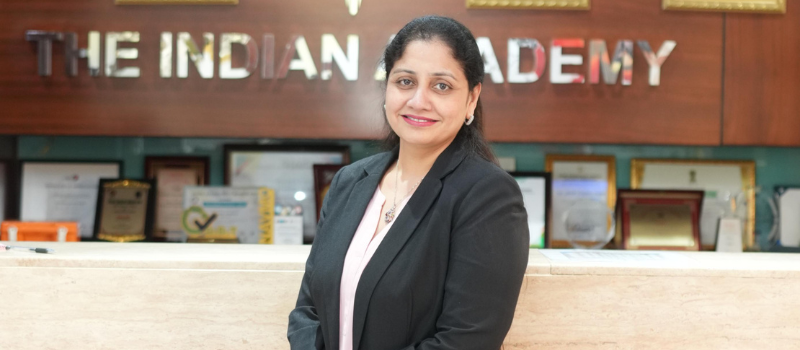
Edarabia had the opportunity to interview Ms. Prarthana Kale, Principal of The Indian Academy Dubai, to explore how the school is preparing students for a rapidly evolving world. In this insightful discussion, she shares how the school integrates computational thinking, ethical decision-making, and digital literacy from the early years, while fostering curiosity, resilience, and responsible leadership. She also discusses how the school promotes cultural understanding, supports Students of Determination, nurtures wellbeing, and provides personalised learning pathways to ensure students thrive academically, socially, and personally.
“Our goal is simple: students should not just use technology-they should understand it, question it and innovate with it.”
At our school, AI is treated as a core literacy. From the early years, students build computational thinking and digital awareness through STEAM learning and interdisciplinary projects. As they progress, they explore coding, robotics and data-driven problem solving. These experiences encourage students to design solutions, present ideas through innovation challenges and apply intelligent technologies to real-world problems while understanding the ethical responsibilities that come with them.
The nationwide smartphone restriction aligned with practices already embedded through clear policies on responsible device use. Break times now promote interaction through reading spaces, Rahhal sports activities, collaborative learning zones such as skill vocational hubs, and student-led initiatives like Career Cafés, where students engage with mentors and career champions. This shift has strengthened a culture of collaboration, curiosity and purposeful engagement.
Balance comes from age-appropriate exposure. Younger learners focus on creativity, computational thinking and digital citizenship without reliance on generative AI. Older students gradually explore coding, data analysis and responsible research practices through classroom projects and competitions. Alongside technical skills, we emphasise ethics-helping students understand bias, academic integrity and responsible innovation.
Arabic, Islamic Studies and National Identity are brought to life through immersive cultural learning. Celebrations such as Haq Al Laila, community Iftaar gatherings and heritage exhibitions help students experience Emirati traditions firsthand. Initiatives like the Āyāt wa ʿUlūm science–faith exhibition and projects such as the 99 Names of Allah calligraphy initiative deepen cultural understanding. Regular seminars led by Islamic advisors further enrich this learning for students, teachers and parents. In addition, the school takes this learning a step further by offering Hifz lessons for interested students through the Rahhal program, providing them with the opportunity to memorise the Qur’an while continuing their academic studies. This initiative strengthens students’ spiritual development and deepens their engagement with Islamic values and heritage.
We emphasise curiosity, resilience and responsible leadership. Curiosity drives exploration, resilience builds perseverance in the face of challenges, and leadership empowers students to collaborate and contribute meaningfully to society.
Instead of asking students what career they want to pursue, we encourage them to ask what problems they want to solve. Through our Classroom-to-Career approach, students explore real-world applications of learning. Career fairs, Career Cafés, alumni interactions and university exposure help students understand emerging industries and develop adaptability.
Every student has a unique pathway to success. Technology-focused learners participate in competitions such as the Technovate Championship and global experiences like the NASA tour. Entrepreneurial students explore initiatives such as Commerce Month and Trade-O-Mania, while the Rahhal programme supports sporting excellence at national and international levels.
Resilience grows through experience. Students participate in collaborative projects, competitions and problem-solving challenges where ideas are tested, refined and sometimes reimagined. These moments teach students that setbacks are not failures—they are part of the learning journey.
Student wellbeing is supported through a proactive pastoral framework involving teachers, counsellors and wellbeing leaders. Mentoring systems, wellbeing surveys and open communication channels help identify concerns early. Initiatives such as Sunshine Calls and Coffee Mornings with the Principal strengthen communication with families, while the Thrive Together (Social, Emotional and Mental Health framework) program ensures structured monitoring and sustained wellbeing support.
Inclusion is central to our philosophy. Students of Determination are supported through personalised learning pathways, Individual Pathway Plans and adaptive teaching practices supported by specialist teachers and Learning Support Assistants. The goal is not only participation but meaningful progress and confidence. Alternative pathways including ASDAN and life-skills programmes support independence and future readiness.
Students are reminded that their digital presence is their first introduction to the world beyond school. Through digital citizenship education and the Common Sense Education framework, they learn responsible communication and how their online actions influence future opportunities. Initiatives such as digital detox and bag-free experiential learning days promote balanced technology use, helping students become responsible digital citizens aligned with the UAE’s vision for ethical, future-ready technology.
Parents today are partners in the learning journey. Initiatives such as Parent Comrades, focus groups and Parents-as-Partners audits allow families to contribute ideas and feedback, strengthening the connection between home and school.
Experienced educators bring invaluable pedagogical wisdom. Through professional learning communities, technology workshops and collaborative observations, teachers explore innovative approaches while sharing expertise with colleagues. This ensures technology enhances learning without overwhelming educators.
“Education should not only prepare students for the future—it should empower them to shape it.”
At The Indian Academy Dubai, part of LEAMS Education, we believe the true measure of education is not what students know when they graduate, but the difference they are able to make in the world beyond school.




 Twitter
Add a Comment
Please do not post:
Thank you once again for doing your part to keep Edarabia the most trusted education source.