It is our aim to be true to the spirit and intentions of the educational impulses and insights offered by Rudolf Steiner. We aim to support each individual child as they strive to reach their own full potential. We work to encourage each child’s unique gifts and potential to unfold in a creative, nurturing, peaceful and respectful environment. We strive to develop equally the faculties of thinking, feeling and willing – head, heart and hands – within each child, so strong foundations are laid for initiative and moral strength in adult life.
We aim to create a place where goodness, beauty and truth permeate the pedagogical, physical and social fabrics. It is our intention to be aware of and responsive to the unique learning opportunities provided by our local natural environment. We are continually striving to provide and develop a curriculum and learning programme that is inspired by a deep understanding of human development.
A curriculum that embraces and reflects the universal values of freedom, equality, peace and democracy and that values diversity and individual worth. A curriculum that enables children to develop into productive and moral adults, who are, in and of themselves, able to impart meaning to their lives. We view ourselves as a community of learners – teachers, parents, and students – striving to achieve individual, communal and global growth and understanding.
Early childhood at Cairns Hinterland Steiner School commences with a structured playgroup for 2 & 3 year old’s from Monday, to Friday. The kindergarten for 4 year old’s operates three days a week and the kindergarten for 5 year old’s operates four days a week. Our prep program operates for five days a week.
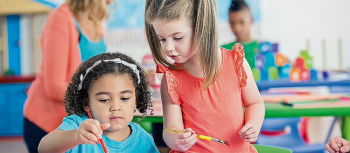
In the kindergarten and prep years we seek to provide and foster an environment that is more like a home rather than a classroom. A warm, secure and calm atmosphere is created where, surrounded by beauty, the young child’s imagination and creativity can unfurl within their play and work. Every feature of the kinder and prep, from the choice of colours to the play equipment offered, has been chosen carefully to provide the optimum environment for the young child to unfold. The children are not introduced to an academic programme. They are simply allowed to be children. A great deal of what they need to learn at this age can be achieved through their own rich and rewarding world of self-directed play. The teacher maintains an unobtrusive, but loving and watchful presence.
The children are free to join the teachers in a range of wholesome, home-based activities, crafts and artistic pursuits. They may be involved in baking bread for morning tea, working in the garden to grow veggies that we can make into soup for lunch, growing flowers for flower garlands or fairy rings, sweeping and mopping, washing dolls clothes and hanging them out to dry, building cubbies, weaving or sewing, painting, drawing, clay work, wood work, singing and ring-dancing.
Each day the children and the teachers come together for circle time, where they sing songs, recite verses and poems and participate in ring dances and finger plays. Later in the day they all meet again for story time, where they are exposed to traditional folk and fairy tales and simple nature stories. The teacher provides the children with rich and beautiful oral language experiences which provide a wonderful foundation for the language work that comes later in their educational journey. Similarly, we are building foundations for the other areas of learning: developing body geography through guided movement, which helps with reading, developing the foundations for math work through rhythmical and counting activities, daily exposure to the world of nature and a focus on seasonal elements lays foundations for science work, etc.
The children enter Class One in the year they turn seven. All academic work is taught in an artistic and holistic way. In Class One for example the children learn the alphabet through the images that arise from traditional fairytales. The story is told, the images are drawn out of the story and the children discover in the images the letters of the alphabet. For example, a mountain will unfold into the letter M, or through the image of a valley they discover the letter V. They paint the letters or draw them, model or sew them. In Class Five the children experience through drama, what it was like to be a citizen of Athens debating in the forum. Academic learning is rich and never dry or abstract; rather it is a living, evolving, creative process.
The children are also given a grounding in practical skills. They are involved in gardening and cooking, furniture making and building, farming, looking after animals and maintaining the school grounds. In craft lessons they make things they will need to use in their daily school life, like recorder bags, book bags and pencil cases. We undertake these activities with the aim to produce well-rounded, capable and practical adults.
During Class Eight, students undertake a year long ‘Project’ and present their findings to their peers. Aimed at expanding their horizons, students are required to work with a mentor to develop a new skill. Students get to choose their own topic with past years’ projects having included building a boat, writing and publishing a novel, building a harp, restoring an old car.
he Cairns Hinterland Steiner School Big Picture programme for Class 9 & 10 will include a focus on: excursions to explore different interest-areas in the world; connecting community, projects and curriculum; and working through a dynamic Personal Learning Plan with each student.
Students will learn how to develop learning goals and projects that meet key requirements, link their learning across curriculum areas, and work together to have a positive impact on their community. As students learn more about their own areas of interest, they will connect with experts in the community to see where that interest may take them in the world. Throughout this process, students develop ‘real-life’ skills such as planning, time-management, speaking-confidence, reporting and reflection. Perhaps most importantly, students will be able to take these experiences into their future lives and feel confidence to ‘learn from life’.
There are four main areas of learning and assessment – the Individual Project/s, the Community Project/s, the Curriculum Learning Tasks and Learning Through Internship. These are managed by the teacher and student, in collaboration with parents. As the year progresses, students develop mentoring relationships through their internship opportunities and these mentors may also contribute to the overall learning programme, or an individual student’s Personal Learning Plan.









 Twitter
Studied or Worked here? Share Your Review
Please do not post:
Thank you once again for doing your part to keep Edarabia the most trusted education source.