


With the growing excitement in the use of Artificial Intelligence, chat bots, digital resources, and the Internet of Things, I am often asked about the future of the education profession. There is no doubt that the exponential increase in accessibility to a vast array of online content and learning resources is changing the nature of teaching. Students can now learn practically anything, anywhere, anytime in customized ways that suit their learning styles and interests. We all know people, both young and old, who take advantage of these resources and are self-taught. In fact, this has always been the case for people who enjoyed libraries and pursued customized education through extensive reading or others who learned through observations and internships. What is different now is the quantity and variety of global access to knowledge and diverse mediums including audio, video and mobile resources.
So why do teachers and schools still exist? Why haven’t we already been replaced by cheaper, digital solutions? The reality is that most people need motivation to learn. They require someone to incite their curiosity, encourage exploration, guide them to relevant, reliable resources at the correct level to promote their educational journey. Equally important, is the provision of personalized feedback that not only corrects misunderstandings but also delivers inspiration to improve. Teachers offer critical support, empathy and coaching to enable progression.
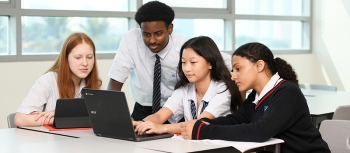
Students of all levels also enjoy learning together. Sharing ideas, celebrating successes, and collaborating on projects can foster creativity, innovation, and develop essential teamwork skills. Good teachers create situations for students to learn together, presenting interesting scenarios that stretch students’ comfort zones while maintaining a relatively safe environment where both success and failure are possible.
Future teachers do not need to worry about being replaced. However, new skill sets will be required. Teachers need to accept that they will not be “all-knowing”, but will rather be a curator of knowledge, helping students to access and evaluate resources and correctly apply them. They will require IT skills that continue to adapt as new technologies become available and the ability to incorporate these seamlessly into the learning process. Curriculum development, resource creation and meaningful assessment design will continue to be critical roles requiring human expertise. Social-emotional skills will be an essential value-add in the classroom to provide a supportive human touch and train students to practice effective social skills in an increasingly socially distant world.
Classrooms led by robots? I don’t think so!

Dr. Monica Gallant is an Associate Professor at the SP Jain School of Global Management, based in Dubai. Qualified as a Chartered Accountant from Canada with an Honours Bachelor of Commerce degree, a Master’s in Education Technology and a Doctorate in Education, she began her career at Deloitte as a Senior Accountant/Auditor and then found her passion for teaching as a community college instructor.
Dr. Monica has worked in the education sector in Dubai for the past 22 years at the Higher Colleges of Technology as the Associate Dean of Business and more recently as President and CEO: The College of Fashion and Design and Dean: Esmod Dubai, French Fashion Institute. She enjoys bringing creativity, technology and authentic learning experiences into the classroom and finding ways to actively engage students.
Dr. Monica’s areas of interest include educational excellence, intercultural intelligence, entrepreneurship, women’s leadership, and Emiratization. She has a strong history of journal publications and international conference presentations.




 Twitter
Add a Comment
Please do not post:
Thank you once again for doing your part to keep Edarabia the most trusted education source.