Dubai’s private schools regulator has released a raft of safety measures to be enforced before classrooms welcome back pupils this September.
The extensive strategy rolled out by the Knowledge and Human Development Authority calls for children aged six and above and teachers to wear masks at all times at school, apart from when eating or playing sports, as part of the country’s ongoing campaign to curb the spread of Covid-19.
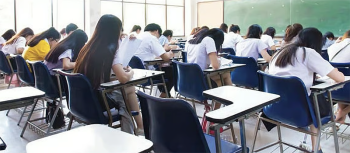
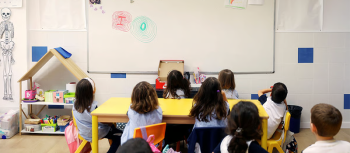
Seats must be placed 1.5 metres apart in classrooms in line with physical distancing practices.
Schools will be allowed to set classroom sizes as long as they are able to keep seats the required distance apart.
Pupils will not swap classrooms between lessons, instead teachers will move between the school building to teach lessons.
The move is part of efforts to avoid crowding in halls as hundreds of children file in and out of classrooms.
There will be no buffets served up in classrooms and PE lessons must focus on sporting activities which do not require physical interaction.
No swimming lessons will take place once schools resume in the new academic year.
Schools closed their doors in March as part of a series of restrictions implemented across the Emirates in the face of the pandemic.
Teachers and pupils instead adopted remote learning to complete the school year.
Last month, the Ministry of Education announced plans to reopen schools in time for September, as long as rigorous safety guidelines were in place.
The comprehensive safety procedures also include:
Thermal screening must be carried out at the entrance of schools.
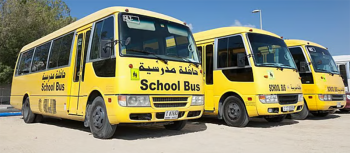
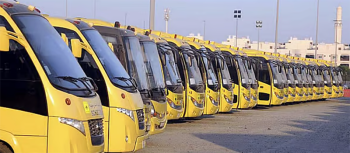
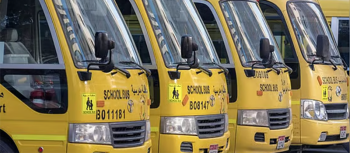
Children who are taking the bus should have their temperature scanned before boarding.
Anybody with a body temperature exceeding 37.5C will not be allowed to enter school premises.
Class teachers will be responsible for referring pupils who have Covid 19 symptoms such as a cough, body aches, fatigue, shortness of breath, sore throat, runny nose, diarrhea and nausea, and headache, to the school nurse for further screening.
Only one family member or a guardian is allowed to enter the school facility for drop off or pick up a child.
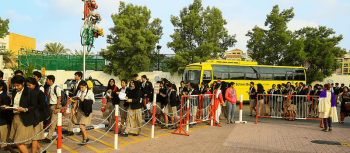
Schools will have to implement a staggered entry and exit procedure to avoid overcrowding.
If a child or staff member begin to show symptoms of COVID-19 while at school, they will be isolated instantly.
The child’s parent or guardian will be notified immediately and the patient will be referred to hospital.
The pupil would not be allowed to return to school until a Covid 19 PCR result is obtained. If the result is negative but there remains a risk it may be a Covid-19 case, the patient would be asked to quarantine for 14 days.
If the result is negative and doctors say it is not a probable Covid- 19 case, the child will be allowed return to school if they do not have symptoms.
If a pupil tests positive for Covid-19, contact tracing will be carried out, including teachers and classmates of the pupils, which may mean anyone who spent more than 15 minutes in a proximity of two metres with the patient, from the day of symptoms onset, or the day of the positive PCR test. They would all need to be quarantined for 14 days.
In cases of Covid-19 emergency, the school would have to follow their guidelines for emergencies set by the school’s qualified nurse or doctor.
The person in charge of health and safety should ensure that the child is accompanied by an adult wearing protective gear when transported to home or to the hospital.
If staff, guests, or pupils were confirmed positive according to a COVID-19 PCR test by an accredited facility, they would not be able to return to school unless they are granted a clearance certificate by DHA stating that they are discharged from isolation.












 Twitter