


Search Edarabia
Popular Searches: Schools | Universities | Courses | Jobs
During the term, students spend a third of their day in school. Their academic achievements, well-being, and social development are, therefore, significantly affected by the school climate. Schools have a clear responsibility to make this as positive as possible. But how can schools foster a positive climate?
Nothing can be better for the nurturing of young people than a school founded on God and built for His pleasure. Al Dhafra expressly states its Islamic values of transparency, fairness, and justice, respect and equality, cooperation, collaboration, and teamwork, care and compassion, honesty and integrity, and accountability in as many places as possible; from website to job descriptions, and classrooms to marketing material. If one’s values aren’t strong, change them.
No-one can ignore the school’s values and everyone from the youngest child to the Principal should be expected to ‘live’ them in terms of behaviour and ethos. They should generate, like a ripple in a pond, from the Principal out. The stronger the example set from senior leaders, through Middle Leaders, through colleagues, through parents, and through the students, the more effect the ripple will have, and the more positive the climate will be.
A message is not enough, however, it must be seen to be reality. The Principal who states a value of respect and equality, but who demands to be treated differently as a Principal, shows that, by that very act, they are unworthy of the responsibility. This cascades again through every member of the school community. Al Dhafra is a large school and senior leaders cannot possibly know everyone. Everyone, however, can know the senior leaders, and their presence around school living out the school’s values is vital to the development of the positive school climate.
All of this sounds very admirable and somewhat ethereal. In reality, at the whiteboard, in the playground, around the corridors, what really makes a difference?
The ethos of a school, I believe, is set by how it deals with failure; failure in its broadest sense. How we treat success is easy but how we react if a child can’t answer a question, if they make a behavioural mistake (even when they are openly defiant, rude, or aggressive) and fall short of our code of conduct, if a teacher makes a mistake, or even if they do something that will lead to dismissal, really matters. How we react in these circumstances tells us and the whole community everything about the climate of the school. If we continue to uphold the values such as respect, care, and fairness, this is noticed, the values are embedded, the school is trusted, and the climate develops into more and more a positive one. The downside of this, of course, is that one breach of these values can be disastrous, trust broken, and the climate damaged.
I apologise if, in wanting to find out how I believe a positive climate can be created, you were looking for up to date, modern, ‘acronym’ ‘eduspeak’. Whilst these are all important for learning, nothing, I would venture, can be done unless the climate is right and, in the end, this comes down to how we, as professionals behave.
As I have said, if the values are wrong then change them, if they are correct, live by them, and if you can’t, seek a post elsewhere.

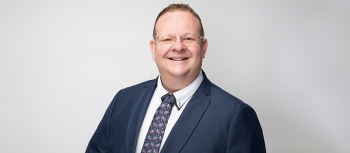
Roger McDuff has been the Principal at Al Dhafra Private Schools, Al Ain since September 2017. This is his first overseas appointment after a teaching career of 32 years in the UK, 25 of which were spent in senior leadership. Originating from Liverpool he is delighted to find a full appreciation of Mohammad Saleh in Al Ain.
He is married to Emma and they have a 9-year-old daughter, 2 dogs, 4 rats, a rabbit, a pigeon, and a crow – a busy household.





 Twitter
Add a Comment
Please do not post:
Thank you once again for doing your part to keep Edarabia the most trusted education source.