


As a child, language learning was faster for me in an environment where I was surrounded by the language being learned and was forced to use the said language. This was an immersive technique used to great effect in times of no technology in the classroom. Rapid strides in use of technology over the last couple of decades have enabled different ways to enrich learning. A distinct and emergent form of online and computer-based learning is immersive learning.
This rapidly mutating form of learning allows learners to be totally ‘immersed’ in a self-contained artificial or simulated complex content-based learning while at the same time, helps learners to polish their technical, creative and problem-solving skills. Learner engagement tends to be high in this environment that is richly visual with sound effects simulating reality or a fantasy world recreated to fit to the context of learning.
High-speed Internet and flat rate pricing boosted virtual worlds over the last decade. An example of this is Immerse Learning (formerly Languagelab.com) an online virtual world created for learning English in 2005 by David Kaskel and Shiv Rajendran in London, being impressed by the speed with which foreign players picked up language skills in Massively Multiplayer Online Role-Playing Games (MMORPGs) within a virtual world.
Learning gained a flip from a chalk and talk scenario to a simulated situation created within a context where language learners had a chance in real time to apply their language skills which you will agree is far superior to mere reading of a text, comprehending the text and answering a set of questions or having a Q & A exchange within the four walls of the classroom.
Joseph Nechvatal in his book Immersive Ideals/Critical Distances states, “An immersive environment is an artificial, interactive, computer-created scene or “world” within which a user can immerse themselves.”
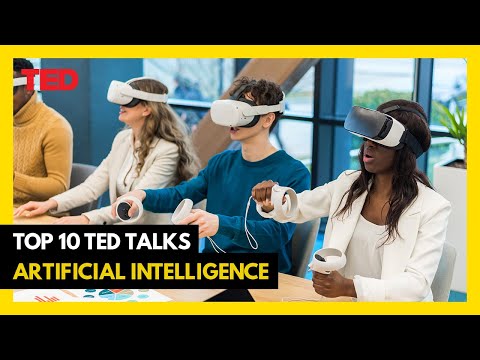
Learners are suspended into virtual reality creating a perception of being physically present in that world using images, sound or other stimuli that goes to provide an engrossing total environment that could be a model of reality or a fantasy user interface which encompasses a number of web-based applications.
Immersive Learning, therefore, places learners in an interactive learning environment either physically or virtually to replicate possible scenarios or to teach particular skills or techniques. Simulations, role play and virtual learning environments can be considered immersive learning.
Learners often encounter hurdles with critical thinking, problem-solving and seeing from a different perspective. An immersive learning environment enables children to participate in complex situations where they need to work together, collaborate, empathize, reason etc. while taking part in the contextual simulated virtual world. Within the safety of the classroom and through the virtual world the software challenges and engages young minds in developing problem-solving and strategy development skills.
The virtual world also makes it more comfortable to make mistakes by affording children the freedom to make their own decision and learn from their own mistakes and failures while at the same time, protecting them through a controlled situation. Distractions can be eliminated due to the high engagement levels since each learner needs to be active in the learning process as opposed to traditional passive forms of learning. Constructive interaction is made possible in the collaborative situations offered which is not always possible in a traditional classroom enabling learners to learn and develop new skills together in the form of teams.

A writer, thinker, published author, and an educationist, Dr. Farooq Ahmad Wasil, is the current GLOBAL HEAD –Affordable Schools, GEMS Education, Dubai, UAE.
With over 30 years and more of involvement in the field of education, Dr. Wasil also served as Director of Asian Schools for GEMS Education and thereafter Chief Academic Officer for GEMS Education, India for Everonn Education Limited.
Dr. Wasil has been closely associated with the Central Board of Secondary Education in various capacities was Secretary of the CBSE Gulf Council from 2001 –2002 and then Chairman of the CBSE Gulf Council from 2002 – 2003.
Dr. Wasil has been honoured with the prestigious National Teacher Award awarded by the Ministry of Human Resources, receiving the award from the Ex-President of India Dr. A.P.J. Abdul Kalam in September 2005. Awarded the GEMS Fellowship in January 2006, Dr. Farooq Wasil was chosen as one of The 100 World's Greatest Leaders 2015 –Asia & GCC for his contribution to the Education sector - Process reviewers - PWC". In May 2016, he was honoured for outstanding service in School Education at the UAE SCHOOL EDUCATION LEADERSHIP CONFERENCE. A published author and a columnist, you can contact Dr. Wasil at [email protected]
Please do not post:
Thank you once again for doing your part to keep Edarabia the most trusted education source.






 Twitter
Ofcourse, I agreed 100% with Dr. Farooq. But I would like to share one thing, where ever virtual education through online classes yook place. That is only language or coaching classes. On the other hand, without class rooms it is still impossible to change or mold the attitude of pupils towards the technology. That is only classroom which mold the students interest towards the development of society. So we cannot ignore regular class system that is the base of educayion system as well as society building. Thanks
By Muhammad Abid (May, 2018) |