


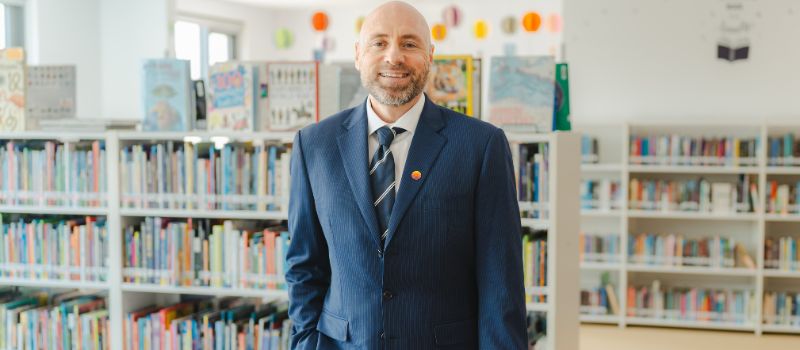
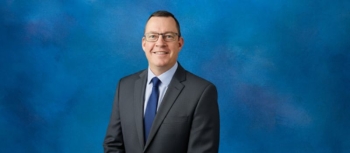
Edarabia had the opportunity to interview Michael Roberts, Director of Dunecrest American School, Dubai, to explore how schools are preparing students for a future shaped by rapid change and emerging technologies. In this insightful discussion, he shares how Dunecrest fosters critical thinking, resilience, and ethical responsibility, while promoting digital wellbeing, personalised learning pathways, and strong community partnerships to help students grow into confident, purpose-driven learners.
At Dunecrest American School, the shift has been both exciting and profound. As with any new technology, artificial intelligence has edged into learning spaces, with teachers exploring new tools and students experimenting with apps. With UAE’s National AI Strategy 2031 positioning the Emirates as a globalAI leader by 2031 and embedding AI into the national curriculum, AI is now center stage. Beyond using AI tools, we are now asking deeper questions about what it truly means to be AI literate in the 21st century.
Dunecrest, along with our sister Esol Education schools, have been exploring AI guidelines and policies, with professional development initiatives such as Day of AI, powered by MIT RAISE and developed with leading researchers in AI education. What we do at our school stretches past just knowing tools. Through our American, AP, and IB Diploma tracks, AI awareness is embedded into how our students learn, reason and explore. Younger students start by realising that machines learn from people, exploring the concept of Humans in the Loop, i.e., humans need to actively participate in AI training to ensure accuracy, safety, accountability, objectivity and ethical decision-making. Later, in advanced stages like AP or IBDP, they examine code patterns, question unfair outcomes, weigh moral impacts of automated systems much like they would dissect knowledge claims. AI literacy is another aspect of a students’ education, and a new lens for them to examine each field they study.
Dunecrest takes a proactive approach to digital wellbeing. Partnerships with external specialists such as EdRuption support regular digital audits and informed guidance for families. School leadership is also analyzing the long term impact of a phone free campus, helping to promote healthy and balanced technology use at home.
Our corridors and courtyards are alive again. Students are talking to each other, lunch has become a social experience rather than a parallel scrolling session and teachers report that students arrive to class more present, more settled, and more ready to engage. But perhaps what stands out to me most is the feedback from students themselves. Many of them, particularly in the older grades, have told us they feel less anxious. The ban gave them permission to disconnect in a world that was demanding constant connection, and they are thriving because of it.
Here’s a topic I care deeply about because rules aren’t walls but openings to act wisely. Instead of handing young learners powerful creation tools, we guide them through basics i.e. like how machines learn patterns, what role information plays, why thoughtful choices shape outcomes. Right now, their minds are forming the necessary groundwork.
Older students dive deeper into discussions. Instead of showing them simply how to run prompts, we encourage them to question outputs. When a Grade 11 student submits a piece of work, the conversation around it now includes questions like how did this idea originate, how did you verify it and what responsibility do you carry as its author? Our goal at Dunecrest is to graduate students who are not dependent on AI but genuinely empowered by it and wise enough to know the difference.
More than 65 different nationalities fill our school hallways, we are truly a diverse community deeply rooted in the UAE. When we teach National Identity, we frame it as an exploration inviting students to understand the remarkable story of a nation that built a knowledge-based, forward-looking society in a single generation, and to see the parallels with their own family stories of ambition and possibility. Arabic language instruction is delivered with cultural warmth and real-world relevance, and we work hard to ensure students experience it as a window into a living, vibrant culture rather than simply a required subject. Islamic Studies is taught with scholarship and sensitivity, encouraging thoughtful reflection that respects the diverse faith backgrounds in our community.
Deep learning begins when young people from varied roots meet around ideas like fairness, dignity, strong sight ahead – threads stitched into who the UAE truly is. Not only does awareness grow about this nation, but a clearer view of one another also takes shape. To me, that moment shines brightest in teaching.
If I had to distill everything into three essentials, they would be: the ability to think critically in the presence of noise, the courage to collaborate across differences, and the capacity for self-directed learning.
We are preparing students for a world where information is abundant but wisdom is scarce. Those who can pause, question, and reach reasoned conclusions rather than simply react will have a clear advantage.
Equally important is the ability to work with others. The challenges of the 2030s will require people who can engage with different perspectives and build solutions together.
Finally, as knowledge becomes increasingly accessible, what matters most is a student’s desire and ability to keep learning. A self-directed learner will continue to grow and that is what will carry them forward.
At Dunecrest, we made a conscious decision some years ago to stop asking students “what do you want to be?” and start asking “what kind of problems do you want to solve?” It sounds like a small shift, but it is transformative. The first question anchors a young person to a job title that may not exist in its current form by the time they graduate university. The second question connects them to something far more durable — their values, their curiosity, and their sense of purpose.
In practice, this means our college and career counselling is as much about self-knowledge as it is about university placement. Our students engage in real-world projects, community challenges, and cross-disciplinary experiences that force them to flex different muscles. Our AP and IB Diploma programmes are particularly powerful here; beyond content, they teach students how to construct an argument, manage a long-term project, and perform under pressure. Those are transferable and not career-specific skills.
We also talk openly with students about the concept of a portfolio career — the very real likelihood that they will do several different things across their professional lives, and that this is not uncertainty to be feared but a landscape to be navigated with confidence. The students who leave Dunecrest understanding that adaptability is itself the skill are the ones who will shape the future rather than simply respond to it.
This question cuts straight to what I think learning ought to mean. Schools shape results for most people. Yet those records show little of what sets one apart.
Working hard means bridging what’s missing. Our American curriculum provides choices; AP courses allow our students to explore subjects they truly connect with – take calculus if numbers speak to them , or analyze texts if ideas pull them forward. Those in the IBDP get the Extended Essay, really just a chance to study something meaningful like a college researcher would. None of this feels like routine schoolwork – more like finding out who you’re becoming.
Most of the time, learning happens outside official lessons. Instead of only prioritizing academics, we spotlight kids who speak clearly, step up without being asked, or solve things in surprising ways. Our teachers are skilled to look first for what each student does well. We offer several student leadership, service and character building opportunities at our school. Model UN gives voice to students who enjoy debate and global issues. The Dunecrest Symposium brings together thinkers across a variety of disciplines to share ideas and explore perspectives. The National Honor Society recognizes leadership, service, and character, rewarding consistency and commitment—not just academic ability.
Each of these roles allows different talents to be seen, valued, and developed in meaningful ways.
Our students have adapted quickly not only in the classroom but also to distance learning, where they continue to show independence, resilience, and curiosity.
One of the most powerful things we do is normalise productive struggle. From the earliest grades, we work to shift the narrative around difficulty. A student who finds something hard is not failing but they are at the exact point where growth happens. Our teachers are trained to respond to frustration with curiosity rather than rescue, to ask “what have you tried?” before offering a solution. Over time, students internalise that discomfort is not a signal to retreat but a signal that they are learning something real.
History is full of moments where the world changed faster than anyone anticipated, and the people who thrived were not the ones who had predicted every change — they were the ones who stayed curious, stayed connected, and stayed willing to act despite uncertainty.
Finally, we celebrate recovery as loudly as we celebrate achievement. When a student navigates a setback — a disappointing grade, a failed project, a difficult season — and comes back stronger, that story is worth telling. Because the students watching that are learning something no curriculum can fully capture: that resilience is not the absence of difficulty, it is the decision to keep going. That is the Dunecrest graduate we aim to send out into the 2030s.
Through the Komodo platform, our students in Grades 1–12 complete monthly surveys that offer timely insight into their emotional, social, and academic experiences. This structured process enables teachers, counselors, and school leaders at our school to respond proactively, connect meaningfully with students, and implement targeted support before concerns escalate. In addition, every student in our school has a dedicated advisory relationship with a trusted adult and not just a counselor they visit in a moment of crisis, but a consistent presence who checks in regularly, notices changes, and advocates for that student within the school community. Our counselling team works proactively, running structured wellbeing check-ins at the pressure points in the academic calendar — before exam seasons, during university application periods, at the transitions between school years.
Data from 2024–2025 shows that overall school wellbeing improved from 71% to 77%. Achievement and learning wellbeing increased significantly from 65% to 76%. The highest-rated areas were school climate and social-emotional wellbeing, reflecting a community where students feel supported, connected, and ready to learn.
Inclusion, done well, is one of the most powerful things a school can offer,not just for the students it most directly serves, but for the entire community that learns alongside them. More often, inclusion is reduced to access.
Data-driven learning is one of our key goals at Dunecrest and by using real-time insights, our teachers understand each student’s strengths and areas for growth, working alongside specialist teams to provide truly personalized support. We have also invested significantly in assistive technology, and the rise of AI tools has been genuinely transformative here — offering students with different learning profiles new ways to access, express, and demonstrate their understanding that simply didn’t exist a few years ago. But above all, it is the human element that makes the difference. When a student with a learning difference stands up to present a project they are proud of, when they earn a place on a sports team or lead a school initiative, that moment of visible excellence ripples outward. It tells every student in that room something important about what our school believes in: that human potential is not fixed, and excellence can be expressed in many different ways.
This is an area where I think education has historically been too reactive and too negative — focused almost entirely on what not to do online, rather than empowering students with a positive vision of what their digital presence can be. We have tried hard to flip that narrative.
With older students in particular, we focus on the idea of digital authorship. This might mean building a meaningful portfolio, engaging thoughtfully in online spaces, or pausing before posting to consider whether it aligns with the person they want to be.
The relationship between school and family has always been important, but we are entering a new chapter in what that partnership can look like. The Dunecrest Parent Association is a strong example of this in action. An active extension of the school that helps organise events and collaborations that directly support children’s learning.
For a long time, the school was seen as the expert; the family was the audience. What we are moving toward, deliberately and with great enthusiasm, is something far more reciprocal. Parents are not just stakeholders in their child’s education rather active contributors to it. In a recent school-wide survey, 61% of our parents felt welcome to make suggestions to the school. Parents who feel genuinely welcomed and valued become the school’s strongest advocates and most engaged partners. They show up not only for their own child but for the collective project of education. We are only beginning to explore the full potential of this partnership.
This is deeply personal to me because our veteran teachers are among our most valuable assets, and the pace of change in recent years has placed enormous demands on them. New technologies, new expectations, and new systems have been layered onto an already complex profession, and without careful support, we risk losing something irreplaceable. However, experience is not a liability in the age of AI. The ability to read a classroom, build relationships, and instinctively know when a student needs support cannot be replicated by technology. Our focus is to use technology to reduce administrative load so teachers can spend more time on the deeply human work of teaching.
Our professional development has also evolved from one-size-fits-all training to a more collaborative approach. This exchange between experience and innovation strengthens practice across the board and is ultimately felt by our students.
This question goes right to the heart of the true purpose of education. In a time of rapid change, artificial intelligence, and uncertainty about the future, there is understandable anxiety about relevance. But what I keep coming back to is this: the world will always need people who know how to be human.
No technology can replace what happens when a teacher truly sees a student, or when a young person chooses kindness, courage, or purpose over indifference. Those moments of human connection and judgment are what shape lives. At our school we are not just about academic outcomes, but developing people who think clearly, feel deeply, and act with integrity. Students who understand that success without purpose is empty, and intelligence without character is incomplete.
So my message is simple: stay human. Be curious, be kind, and keep growing. Because in the end, the future is not shaped by systems or algorithms, but by people who choose to show up fully and make a difference.




 Twitter
Add a Comment
Please do not post:
Thank you once again for doing your part to keep Edarabia the most trusted education source.