Founded by parents in 1971. Paideia is a school of people with a lot to say. Over the years, teachers, students and staff have expressed themselves in speeches and articles on wide-range of topics related to education and community and Paideia.
At Paideia, teaching language arts in the elementary program incorporates many approaches, but central to the middle and upper elementary experience is the literature group. The opportunity to read a complete work of fiction together as a group and discuss it is something students and teachers treasure. What a contrast with the way many of us were taught literature in elementary school, where rather than reading a whole novel, we spent the year working our way through hefty literature textbooks, chosen for all students in the state at a particular grade level. These textbooks were comprised of excerpts and didactic selections, each one followed by a numbingly predictable series of rote questions. The success of the literature year would be judged on whether we “got through” the whole book.
Every school is a complex social community with the assigned task of passing onto the younger generation some of the knowledge and skill acquired by the older generation. It is especially important to us at Paideia that we examine what we are teaching in addition to academic knowledge: how we view the larger human community, how we treat each other as individuals, how we relate to the physical environment, how we view the process of learning. We need to examine what we teach as part of the way we live and interact with each other as a community of adults and children.
We presume that families choose Paideia in part because they perceive that the school shares many of their values. While the primary teaching of values belongs to the family, the school is in the unique position of being able to mediate between a more impersonal social order and the intensely personal family experience. It is the school's responsibility to help prepare children for a place in the society; we also hope that the school environment can have some of the personal depth and meaningfulness of family life. We hope that our students will be prepared not only to live in the world but to improve it. These principles already exist at Paideia, and they will continue to be expressed in the life of the school. We list and define them because we recognize the importance of saying out loud what we treasure:
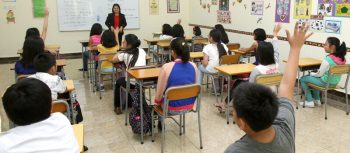
Paideia's philosophy is based on the belief that schools can be informal and individualized, yet still educate well. We believe that a quality education acknowledges the innate curiosity of children and their desire to understand and master their environment. Because children have different interests and learning styles, and because they progress at different rates, we take considerable care to tailor our program to the talents and needs of each child. We think that our concern for intellectual achievement and discipline is compatible with personal consideration of needs of each child and with an informal school environment.
Please do not post:
Thank you once again for doing your part to keep Edarabia the most trusted education source.








 Twitter
The Paideia School in Atlanta has provided my child with an outstanding education. The American curriculum has allowed my child to excel in various subjects. The teachers are incredibly helpful and supportive, ensuring that my child's progress is always a priority.
By Grace Wilson (Jul, 2023) |