


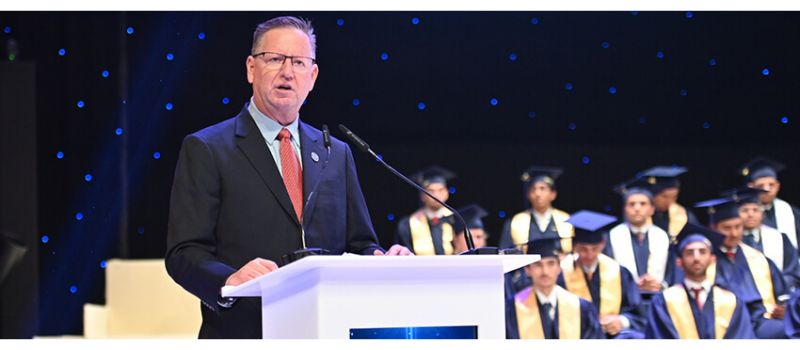
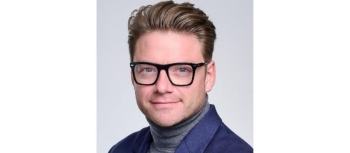
Edarabia had the opportunity to interview Dr. Andrew Torris, Director of the American International School in Abu Dhabi (AISA), to explore how schools are preparing students for an increasingly complex and technology-driven world. In this insightful discussion, he shares how AISA integrates computational thinking, ethical awareness, and problem-solving into everyday learning to build adaptable and resilient learners. He also highlights the importance of collaboration, cultural understanding, and personalised learning pathways that empower students to think critically, navigate uncertainty, and confidently shape the future.
The UAE’s decision to formalize AI as a subject from KG to Grade 12 arrived at AISA not as a disruption but as confirmation. We had already embedded computational thinking and ethical AI frameworks into our curriculum through our Future-Ready Learning pillar, so the transition has been less about adoption and more about acceleration. Our youngest learners now explore pattern recognition and decision-making through age-appropriate tools, while secondary students engage directly with machine learning concepts, bias detection, and the societal implications of algorithmic systems. We’re not teaching students to use AI—we’re teaching them to understand it, question it, and shape it.
The nationwide smartphone ban has reshaped our campus culture in visible ways. Students are talking to each other again—at lunch, between classes, during transitions. Teachers report stronger eye contact, fewer distractions, and more genuine peer collaboration during group work. The shift wasn’t automatic, but it was faster than we expected. What we’ve learned is that students don’t resist structure when the structure makes sense. Clear expectations around device use have freed them to be more present, and we’re seeing that presence translate into deeper focus during learning and richer social connection outside of it.
Balancing the GenAI restrictions for younger students with the imperative to prepare older learners has required intentional design. Students under 13 engage with AI concepts through unplugged activities, logic puzzles, and guided exploration that build foundational understanding without direct access to tools. Once students reach Grade 7, we scaffold their use of generative AI within supervised, ethically framed contexts—comparing outputs, evaluating bias, understanding provenance. By the time they reach Grades 11 and 12, they’re not just users but informed critics, capable of deploying AI strategically and evaluating its limitations with sophistication.
Our approach to Arabic, Islamic Studies, and National Identity education is rooted in respect and relevance. We don’t teach these subjects as compliance exercises—we teach them as windows into the culture, history, and values that define the UAE. Our internationally diverse student body benefits from bilingual instruction, culturally responsive pedagogy, and connections between national priorities and global citizenship. Students leave AISA not only meeting ADEK requirements but understanding why those requirements matter—and how the UAE’s vision for the future connects to their own.
We’re not preparing students for a static world. We’re preparing them to build the one that’s coming.
First, adaptive problem-solving—the ability to define problems clearly, evaluate evidence, and iterate toward solutions in contexts where the rules keep changing. Second, ethical judgment—knowing when to deploy technology, when to question it, and how to weigh competing values in complex situations. Third, collaborative capacity—the skill to work across differences, navigate conflict constructively, and contribute to teams where roles and tools are constantly evolving. Transcripts measure what students know. These competencies determine what they can do with that knowledge when the world doesn’t cooperate.
We teach students to build transferable intellectual foundations rather than chase job titles. Our curriculum emphasizes learning how to learn—meta-cognitive strategies, disciplinary thinking, and comfort with ambiguity. Career exploration happens through real-world problem-solving, not career fairs. Students engage with mentors, tackle authentic challenges, and reflect on what energizes them rather than what’s trending. The question we return to constantly is not “What do you want to be?” but “What problems do you want to solve, and what skills will you need to solve them?”
We’ve built flexibility into the system. Differentiated instruction, personalized learning pathways in secondary, and student voice in assessment design give learners agency over how they demonstrate mastery. Our inclusion model ensures supports and extensions exist for every student, not just those with formal plans. Teachers use formative data to adjust instruction in real time, and students set personal learning goals aligned with their strengths and growth areas. Recognition happens through portfolios, exhibitions, and authentic demonstration—not just test scores.
This is central to our mission statement: “Developing Resilient Learners and Compassionate Leaders for a Dynamic World”.
Resilience isn’t taught through motivational posters—it’s built through structured exposure to productive struggle. Students tackle problems without clear solutions, receive iterative feedback, and learn to revise rather than retreat. We normalize failure as part of learning, celebrate effort and growth, and teach explicit strategies for managing stress and regulating emotion. Our Lion’s Way values ground students in a stable identity even as circumstances shift. When change arrives, they’ve already practiced adapting. That practice transforms uncertainty from threat into design space.
We truly value expertise and are dedicated to building capacity together. Veteran teachers bring a depth of pedagogical knowledge that no tool can match, and we see new technologies as ways to enhance excellent teaching, not replace it. Our professional learning is personalized—teachers select pathways that match their readiness and interests, and our implementation timelines respect their pace for meaningful adoption. We encourage a collaborative environment by pairing early adopters with experienced educators, so innovation spreads both ways: veterans gain new technical skills while newer teachers learn classroom management and instructional strategies. When teachers feel genuinely supported instead of judged, they become truly empowered.
Education is more than just preparing for the future—it’s about how we shape it together. Every lesson we teach, every relationship we build, and every thoughtful system we create help shape the world our students will carry forward and lead. The work we do in schools is important, not because it’s merely transactional, but because it’s transformational. Students don’t just move through our classrooms—they carry the values we share, the ideas we nurture, and the beliefs we uphold. In a world full of uncertainties, schools are places full of hope and opportunity. We teach students to not fear complexity but to face it with resilience, empathy, and purpose. The future isn’t something that just happens to us; it’s something we create together—one student, one decision, one day at a time. That’s the work we cherish. That’s our privilege. And that’s why we’re here.






 Twitter
Add a Comment
Please do not post:
Thank you once again for doing your part to keep Edarabia the most trusted education source.