


1. What is the significance of the eAssessment Award win for IB?
Our introduction of eAssessment was a key stage in the IB journey to developing students who are independent and critical thinkers with the skills to create a better world. For our eAssessment and on-screen examinations to be recognised for making assessment more meaningful through its innovative examination techniques is an extremely proud moment for us.
2. How does MYP assessment make learning and assessment more meaningful to students?
We live in an increasingly digital age, yet the integration of technology into large-scale education assessment has been slow. Today’s students use a wide range of digital technologies at home and at school but when it’s time for high stakes end-of-course assessments that lead to registered qualifications, they are expected to use pen and paper, rather than the more familiar keyboard.
There is no comparison between on-screen and traditional paper examinations in terms of assessing the quality of student learning. Students prefer and are more engaged with on-screen examinations because they more accurately reflect how they learn on a daily basis. The on-screen assessments are media rich and dynamic so questions can be designed that require much more than just knowledge recall. Only 25 percent of the MYP eAssessment is based explicitly on knowledge. The rest of the examination focuses instead on inquiry, communication and critical thinking skills and provides an effective assessment of the broad range of knowledge, skills and concepts needed to thrive and succeed in the 21st century.
Different types of tasks are used within the on-screen examinations to test specific skills meaning that students’ achievement against all subject objectives is thoroughly tested. For example, writing a short essay assesses writing capabilities, creating an infographic assesses communication skills.
3. In your opinion, do you think students of today are equipped with 21st century skills they need to succeed?
Few would dispute that we need to raise young people who are well prepared for life in an interconnected 21st century and are able to contribute to a better, more peaceful world. This is the driving principle behind everything that IB World Schools do: ‘education for a better world’.
We believe that education needs to equip students with more than academic success – we need to develop young people with the skills, values and knowledge necessary to build a more peaceful future. This is brought to life through the unifying thread found throughout all four IB programmes: the IB learner profile – the organisation’s mission statement translated into a focused set of learning outcomes for students to develop during their courses and aims to inspire, motivate and focus the work of schools, teachers and students alike.
The learning style in an IB classroom encourages students to become responsible, active members of their community. Students learn to empathise with others, value diverse perspectives and cultures, understand how events around the world are interconnected, and solve problems that transcend borders; they learn to explore both sides of a story.
In addition, the theory of knowledge (TOK) course in the IB Diploma Programme (DP), for students aged 16 -19, is just one of the ways that the IB encourages inquisitiveness within its pedagogy – an invaluable skill for success in the 21st century. TOK inspires students to reflect on the nature of knowledge itself and to question claims of truth so they are encouraged to act upon narratives individually; in turn developing responsibility for the world around them.
4. Some teachers find it hard to adopt technology in their classroom. What is your advice for these educators?
Many schools are committed to providing students with access to a range of devices and are developing innovative ways to integrate technology in aspects of day-to-day teaching and learning; from online collaboration with peers or subject matter experts in other locations, to the involvement of parents in their children’s learning. Teachers can learn how to successfully adopt technology as a teaching and learning tool, by sharing knowledge and outcomes with each other, both on a micro-level within their own schools and local school communities, and on a macro-level with the help of the internet.
For example, we have seen educators using Skype to open up the door to classrooms around the world. You may have read about the trend of the ‘flipped’ classroom – the idea of inverting traditional teaching methods and harnessing technology to deliver the lesson online in the traditional homework slot, then using the time together in the classroom to consolidate the learning. The concept is increasing in popularity in the USA and UK, and studies have shown it can lead to greater engagement. It is encouraging to see that schools are introducing these types of technologies in the classroom to enhance students’ learning and equally it provides great opportunities for us to innovate within the assessment.
Modern technology offers educators a variety of new tools that can be used inside and outside of the classroom. Schools have started introducing several different ways to track and assess students’ performance and can create digital records of students’ development that can be passed from school year to school year. Computers are a huge part of everyday life and it is rare these days that people write by hand for an extended length of time. Students should be offered the best means to express themselves, especially when it comes to the critical examination season, which is why the IB decided to explore and develop eAssessments.
5. What do you think is the value of authentic assessment in learning? Why?
Authentic assessment has the ability to examine students’ higher thinking skills and to push them to go beyond the rote memorisation of disciplinary content. Assessments should focus on scenarios in which students must use knowledge and skills to analyse unfamiliar situations, challenging them to connect what they have learned with what they might learn next, make predictions and take action to see what happens, collect data, analyse results, and apply big ideas to solve unstructured real-world problems. This has traditionally been hard to achieve using paper examinations but is enabled through technology with the MYP eAssessment.
The authenticity of the MYP eAssessment is demonstrated through the diversity of its components, which range from carefully-defined classroom tasks (for more performance-oriented subjects) to an extended personal project that students plan and complete independently. For other courses (sciences, mathematics, language and literature, humanities and social sciences, and interdisciplinary learning), students complete two-hour on-screen examinations.
Technology facilitates every step of MYP eAssessment delivery, providing examinations that are not only valid and reliable but also manageable and cost-effective.
The greatest impact of technology, however, is on the content of the examinations themselves. The digital design makes it possible for students to engage with images, visual texts, videos, animations and complex models. Candidates can create, manipulate and make decisions about how to manage data. On-screen tools support candidates working in a language that might not be their first or best language. Individualised adaptive technologies ensure that the examinations are accessible to students with access needs.
In today’s knowledge society, the world of education is beginning to catch up with the rapid pace of change reflected at home and in the workplace. Contemporary adolescents have grown up with tablets, video games and a rich array of interactive social media. They deserve academic assessments that value what they already understand. Schools today are starting to develop assessments that measure what matters for tomorrow’s world. The power and impact of digital assessment are clear for young people who will live in societies that are ever-more complex, interconnected, and overflowing with cheap and easily-accessible information. We are only beginning to unleash the power of technology to promote both better learning and more meaningful assessment.

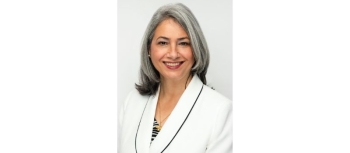
Sue Wilkinson is the current Head of eAssessment at IB (International Baccalaureate).
She is a cognitive psychologist with experience of teaching, research and development in higher education. She has expertise in curriculum design and assessment development and educational adaptations for individuals with cognitive impairments.
An experienced researcher and independent psychology and education consultant, Sue is also a senior fellow of the Higher Education Academy and gained her Chartered Psychologist status with the British Psychological Society.







 Twitter
Add a Comment
Please do not post:
Thank you once again for doing your part to keep Edarabia the most trusted education source.