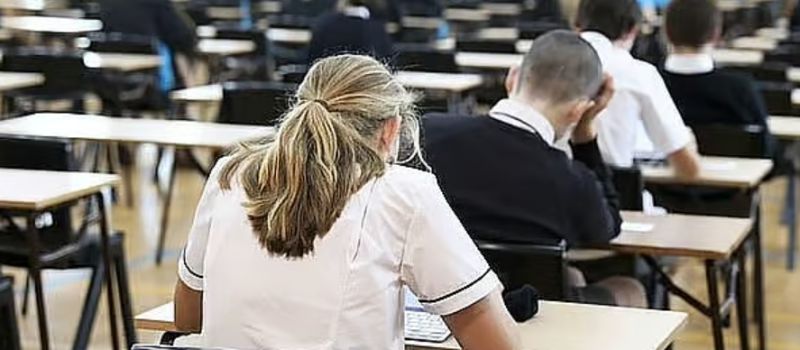
Despite the ongoing conflict, principals reassure that exams are so far expected to proceed as scheduled
As the summer exam season approaches, UAE families with children in Years 10 to 13 are facing growing uncertainty over IGCSE and A-Level schedules.
While schools continue preparing students for exams planned from early May to late June, ongoing US-Israel-Iran have left students and parents anxious about what the coming months hold.
Some British curriculum schools are already outlining contingency plans, consulting closely with exam boards and the Knowledge and Human Development Authority (KHDA).
Meanwhile, principals here have reassured parents that exams are expected to proceed as scheduled, while alternative options may include providing exam centres in other countries and maintaining comprehensive evidence-based assessment data, should alternative grading be required.
Rebecca Coulter, Principal of Dubai British School, Jumeirah Park, described the response among families as measured.
“We are hearing a small number of understandable concerns from families, primarily around continuity and ensuring that students are able to complete their GCSE and A-Level assessments with minimal disruption. There is naturally some uncertainty, but overall, we are seeing a calm and measured response from our community,” she said.
Schools across the UAE have emphasised both academic readiness and emotional support, offering consistent communication and flexibility to help students manage the challenges.
“Our messaging to students and parents has been consistent and reassuring. Pearson Edexcel has confirmed that exams are expected to go ahead as planned, and we are continuing to prepare students in the usual way,” Coulter added, highlighting that contingency plans are in place should adjustments be necessary.
Daspo Yiappos, Executive Principal of The Oxford School, explained that for many families, the concern is not the exams themselves but the uncertainty surrounding their timing and format.
“At present, the primary concern among families is not the examinations themselves, but the uncertainty surrounding how and when they will take place,” he said.
Schools are balancing academic preparation with wellbeing initiatives. Structured online lessons, targeted revision sessions, past paper practice, and subject-specific interventions are in place, complemented by online mock exams to allow teachers to monitor student progress. In parallel, pastoral care systems have been strengthened, with regular check-ins, mentoring, and counselling.
Yiappos noted that while no official changes have been announced, schools are planning for multiple scenarios, including evidence-based portfolios and potential adjustments to timelines.
“Schools are adopting a balanced approach: preparing students fully for examinations as scheduled, while ensuring that robust, evidence-based assessment data is available, should alternative grading mechanisms be activated,” he said.
UAE schools have drawn on experiences from previous disruptions, including the Covid-19 pandemic, to inform their planning.
Yiappos highlighted the importance of balancing immediate preparation with readiness for unforeseen developments. “Drawing on lessons from previous disruptions, there is confidence that examination boards have well-established contingency frameworks to safeguard student outcomes,” he said.
For parents, the waiting game is a source of anxiety.
Ben Lebig, a Filipino expat whose daughter is in Year 12, in GEMS Cambridge International School, said, “Like other parents where the child is about to take the boards in the coming May/June, the current situation is highly concerning. At this point we don’t know if the boards will proceed as planned and what are the implications if it does not.”
Lebig praised the proactive communication from schools. “We are fortunate that her school has been very proactive in informing the parents on any new updates from the government. Continued timely information on whether the Boards will proceed as planned will be mostly appreciated,” he added, underscoring the value of clarity amid uncertainty.
An online briefing for parents outlining contingency plans offered some reassurance.
Mehnaz Ansha, an Indian expat whose daughter is taking AS Levels at Safa British School, said, “As of now, the expectation is that exams will go ahead as scheduled in the May–June summer series. However, the school has shared contingency plans, particularly for students sitting GCSEs. If the situation continues, they’ve indicated that students could shift to the next exam series in October — this applies to Years 10 and 12.”
“For older students in Years 11 and 13, schools are exploring alternative arrangements, including the possibility of exam centres in other countries. At the moment, there is still limited clarity on this.”
The parent reiterated discussions are ongoing with KHDA, but no decisions have been finalised. “The school has told all parents that it remains in constant communication with exam boards and KHDA, and will continue to assess the situation daily before making decisions,” Ansha added.
She also emphasised the importance of preparing for last-resort grading methods. “Schools have reiterated that students should continue building their working portfolios. This is a last-resort option — one they hope to avoid — but if exams cannot be conducted at all, these portfolios may be used for grading. For now, though, this remains only a contingency.”
© Khaleej Times
















 Twitter