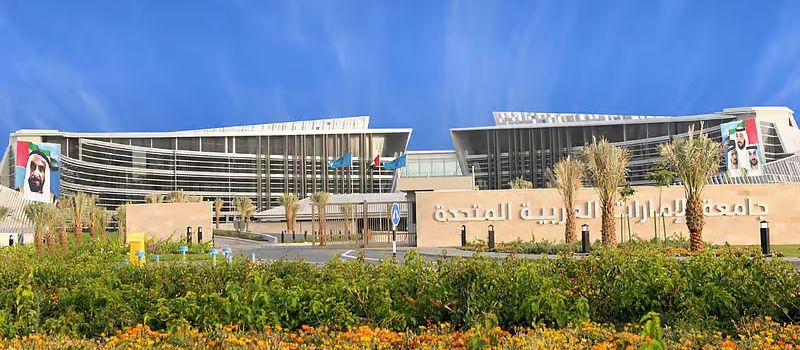
Institutions blend on-campus and online options, ensuring every student, whether local or abroad, continues their studies without disruption
Across the UAE, universities are strengthening hybrid learning systems that combine classroom teaching with digital platforms, as higher education institutions respond to evolving regional developments.
Even as universities across the country resume in-person learning, institutions are increasingly reinforcing blended and technology-enabled teaching models shaped by recent disruptions, including the pandemic and the US-Israel-Iran conflict.
Educators highlight that the model is increasingly becoming central to how universities operate, allowing students — whether on campus or abroad —to continue their studies without disruption.
While in-person learning remains a priority whenever possible and where required, institutions are also expanding online options to ensure accessibility and comfort for students in changing circumstances.
Dr Anita Patankar, Designation: Executive Director, Symbiosis Dubai, said, “Amid the recent regional developments, the UAE’s higher education sector has continued to demonstrate remarkable resilience, supported by a strong digital infrastructure that enables seamless academic continuity without compromising on learning quality. Building on the lessons learned during Covid-19, institutions across the UAE have further strengthened and refined their online and hybrid learning capabilities to ensure flexibility and comfort for students whenever required.
As a university committed to offering quality education to all our students, those who live in UAE and those who are yet to travel back to Dubai, we will offer our students the hybrid option while encouraging in-person learning.”
Emphasising continuity in science and engineering disciplines, Dr Patankar added, “We also will continue to use virtual labs, simulations, recorded demonstrations, and project-based learning to support practical training remotely where needed.”
She further highlighted institutional preparedness, saying emergency systems are firmly in place.
“We have established a dedicated Emergency Response Team and a detailed Emergency Response Plan to effectively manage any situation if required. All staff members have undergone the necessary KHDA safety and emergency response training, and our staff and students are aware of the procedures and safety protocols in place.”
The university like others, continues to remain fully aligned with UAE authorities’ directives and are closely monitoring all official updates. T” he university also maintains flexibility in academic delivery, including transitioning classes online whenever required, to ensure both student safety and continuity of learning,” added Patnakar.
At the American University of Ras Al Khaimah, the leadership also reiterated that institutional readiness remains strong amid ongoing regional developments.
Prof. Bassam Alameddine, President, American University of Ras Al Khaimah said, “We are closely monitoring the evolving regional situation and remain fully aligned with the directives and guidance issued by the UAE Ministry of Higher Education and Scientific Research and the relevant national authorities. The safety, well-being, and educational experience of our students and broader community remain our highest priorities. Consequently, every operational scenario under consideration is centered on preserving academic excellence and high standards while ensuring continuity of learning under all circumstances.”
At present, AURAK continues to carry out its operations normally while maintaining full readiness and flexibility.
“The university possesses extensive experience in online and hybrid education models, supported by advanced technological infrastructure and highly capable faculty and staff.
For students enrolled in science, engineering, computing, and other laboratory intensive disciplines, continuity plans are designed to ensure that hands-on learning outcomes remain fully achieved.”
Alameddine added, “Practical sessions and experimental work can be delivered through a combination of virtual simulation platforms, remote supervision technologies, digital experimentation tools, scheduled in-person practical sessions when required, and alternative assessment methodologies capable of evaluating both technical competencies and conceptual understanding. Research activities and capstone projects also continue to receive institutional support through digital collaboration platforms and flexible academic arrangements.”
In a social media update, Curtin University Dubai confirmed a structured transition for the current academic term.
“Following consultations with regulatory authorities, Curtin University Dubai is transitioning to hybrid delivery for the remainder of Trimester 2, effective Monday, May 11 2026.
On-campus: Students in the UAE are strongly encouraged to attend classes face-to-face to enjoy the full campus experience.
Online: Students currently outside the UAE may continue to join classes remotely.
Assessments: Exams and assessments will be conducted online wherever possible. Please check with your lecturers for unit-specific details.”
© Khaleej Times














 Twitter