
The UAE’s decision to shift the school admission age cut off to December 31 is expected to give families more flexibility when enrolling children in KG and Grade 1, but educators say age alone should not determine if a child is ready to start school.
The updated policy, approved by the Education, Human Development and Community Development Council, will apply to new admissions for the 2026-2027 academic year. It affects schools and kindergartens that begin in August or September. Schools starting in April will still use March 31 as the cutoff. Current students will not be affected.
Education authorities said the move aims to ensure fair access to early education through unified admission criteria and closer alignment with international education systems and national development goals.
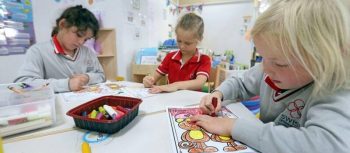
Schools say the change reflects a broader shift toward assessing individual readiness rather than relying solely on age. With the new policy, younger children may join classes with peers almost a year older, highlighting the need to consider developmental differences in the same classroom.
Educators at GEMS Education said, “with the new policy, 3 year olds can join classes with 4.4 year olds, despite developmental differences.” They pointed out that younger children may still be learning basic language and social skills, while older preschoolers often use more complex communication and play together in groups.
“These distinctions should inform school readiness decisions, as they may affect learning and peer interactions if teachers and support staff are not equipped with the necessary skills to manage the developmental and cognitive gap within the class,” the group said.
GEMS also said that moving the KG admission cut off to December “reflects a move towards considering individual development over strict age criteria,” and puts more value on holistic assessments and flexible teaching. They said that assessment in KG and Grade 1 will still use observations, formative assessments, play-based learning, and early interventions, with portfolios to track progress in important areas.
“Ongoing collaboration with parents and staff ensures assessment is used successfully to identify each child’s needs,” GEMS said, adding that more children born between September and December are expected to enrol under the new cutoff. “Adaptive teaching methods and teamwork will be key to ensuring each child receives the support and challenge they need to flourish pastorally and academically.”
Other private education providers in the UAE agreed, saying the policy gives families more choice but should not be applied as a blanket rule.
Taleem said, “The move to a December 31 cut-off brings welcome flexibility for families and greater alignment with international practice,” adding that for some children, the additional option will provide “a smoother pathway into Foundation Stages, KG or Grade 1, particularly where they are socially, emotionally, and academically ready to take that step.”
However, the group stressed that “age alone should never be the sole determinant of school readiness.” While research suggests early entry does not necessarily disadvantage children academically, Taleem said readiness at this stage involves far more than academic ability.
“Factors such as emotional maturity, social development, confidence, and independence play a critical role in a child’s long-term success at school,” the provider said.
Taleem added that it will be important for parents and educators to “continue working closely together to make thoughtful, individual decisions that place the child’s overall wellbeing at the centre,” noting that while schools are accustomed to supporting a range of developmental profiles, “professional guidance and parental insight remain essential in ensuring that each child starts school at the right time for them.”
Psychologists said that school readiness, from a mental and emotional perspective, is shaped by far more than age or academic ability.
Dr Lina Haddad, a Dubai-based psychologist, said that younger children entering structured school environments may face challenges with emotional regulation, confidence, and independence, particularly when placed alongside older peers.
“At this stage, the brain is still developing core self-regulation skills,” she said. “A child may be intellectually curious but struggle with separation, frustration tolerance, or social problem solving. These challenges are not failures; they are developmental realities.”
Dr Haddad explained that children who are pushed into formal learning environments before they are emotionally ready may internalise stress, which can affect self-esteem and peer relationships over time.
“Readiness is about how a child copes with demands, not how early they can meet them,” she said. “Parents should look for signs such as emotional resilience, comfort with routines, ability to communicate needs, and confidence in social settings.”
© Khaleej Times
















 Twitter