


Edarabia had the opportunity to interview Geoff Blaik, Principal of YMCA Christian Academy, to discuss his vision for the school in 2025 and beyond. In this interview, Geoff shares his insights on prioritizing wellbeing, fostering innovation, and preparing students for the future. He also discusses the challenges facing education and how YCA is addressing these issues.
At YCA we are in a period of community growth. In this phase, we recognise the paramount importance of maintaining our close-knit, small school culture and caring environment. This year, we will be enhancing our wellbeing practices, focusing on differentiation and deepening a culture of innovation across the school.
We are a data-driven school. We conduct regular surveys to evaluate student and organisational performance and collect feedback from parents. This process enables us to prioritize our development and training initiatives effectively. At YCA, wellbeing is central to our mission, and as such, it is consistently prioritized in our strategic planning. YCA has developed our own Social Emotional Learning survey. This ensures that both the survey and the data are individualised and tailored made for the needs of our community.
This year, we will be working on being a Google certified school. As part of our professional development, our teachers are taking Google training aimed at expanding their expertise in utilizing Google tools for educational applications. Additionally, we will explore the integration of artificial intelligence to support teaching and learning processes.
We’ll also further incorporate exciting new inquiry elements to enrich our existing IPC curriculum. Our aim is to offer our students a variety of engaging learning experiences.
In today’s rapidly evolving and interconnected environment, social and emotional development will become increasingly important. Children who possess strong social and emotional skills are more adept at handling stress, engaging in effective communication and cultivating a strong sense of self. This is why, as part of our wellbeing curriculum, we integrate Social Emotional Learning (SEL), which includes essential components in self-awareness, self-regulation, empathy, communication and problem solving skills. Establishing a solid foundation in these areas will support children in maintaining healthy emotional wellbeing throughout their lives.
As the world continues to evolve, envisioning the future workplace becomes increasingly challenging; thus, we assert that these transferable soft skills will represent the most valuable assets they can acquire.
We focus on building strong relationships and understanding individual learners. Our teachers have a comprehensive understanding of our students, enabling them to inspire and empower them on an individual basis, tailored to their interests. This approach is reflected in our teaching of the IPC curriculum, where units are customized to align with the interests of the class, fostering greater engagement and enthusiasm for learning and research. Furthermore, we advocate for purposeful learning, and so, students utilize the knowledge gained from their IPC units in a personalized project, which they are able to present to their peers and family.
We have a strong culture of inclusion at our school. Our teachers empower our students to express their opinions in the classroom while actively listening to and respecting their emotions and ideas. They create an environment where students feel secure in sharing their thoughts and individuality.
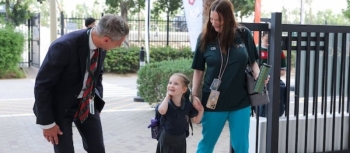
For new students joining our school, we have purposeful transition support. Each new student is partnered with a class buddy who will guide them through the school and ensure their inclusion during play times. Our Senior Leadership team will conduct regular meetings with class teachers to monitor the student’s adjustment and offer support as necessary. Additionally, they also make wellbeing calls to understand how the child is adjusting from parents’ observations.
In learning, we have strong differentiation practices across all subjects to ensure that every student feels included and empowered to engage actively. Furthermore, our students refer to one another as friends rather than classmates, fostering a sense of belonging at YCA.
We maintain a strict policy against bullying, treating all reports with the utmost seriousness. To foster positive behavioral changes and enhance future interactions, we employ a restorative method called “Solve It Together”. Our school has strong well-being practices, encouraging students to be supportive and empathetic towards one another. Additionally, they learn about emotional awareness and stress management in their well-being classes. All students are aware that they can approach our Child Protection Officers whenever they need someone to talk to.
We offer dedicated classes aimed at preparing students for the middle years, focusing on coaching them with executive functioning skills, transdisciplinary skills and soft skills. These skills include self-monitoring, planning and prioritizing, organisation, load and learning barrier management, among others. Additionally, we provide booster classes to ensure our students’ are academically equipped for the transition to secondary schools.
We have a wonderful parent community at our school. In addition to conducting regular surveys to gather feedback from parents, we maintain an open-door policy that encourages ongoing communication with both teachers and the Senior Leadership Team. Parents receive consistent updates through weekly class newsletters, school newsletters, and our parent app, HERO. We have a highly engaged PTA who organises amazing events and parent seminars for our community. There are also numerous events for our parents to participate in each year, such as school fairs, parent appreciation day, talent show, IPC exit points, and more.
We maintain a people first culture. Our relationships are founded on trust, and we ensure transparency by sharing the rationale behind our decisions while providing consistent communication to our staff. We encourage open dialogue, allowing our employees to express their opinions, and our Senior Leadership Team remains accessible for their feedback. We offer our teachers opportunities for internal growth and mentorship to facilitate their advancement into higher positions. This includes middle leaders who are teachers with additional leadership in areas of their interest. Furthermore, we uphold a high standard of professionalism in our training, support, and development initiatives. Most importantly, our staff is united by the shared passion of providing child-centered holistic education.
We believe that every student is unique and a uniform approach is insufficient. We have an individualised approach to our after-school activities, and so, it will be different for each student on how they benefit from the activity. Additionally, we provide over 20 activities weekly, offering our students a diverse array of opportunities to explore various interests and cultivate new skills.
My definition of success is a striving community. We always refer to our school values, and it brings joy to my heart when I see our values exhibited and lived on a daily basis. When our Guiding Statements are implemented well, we have great outcomes and that is success to me.
A rich life is one lived through agency, abundance, and fulfillment.







 Twitter
Add a Comment
Please do not post:
Thank you once again for doing your part to keep Edarabia the most trusted education source.