


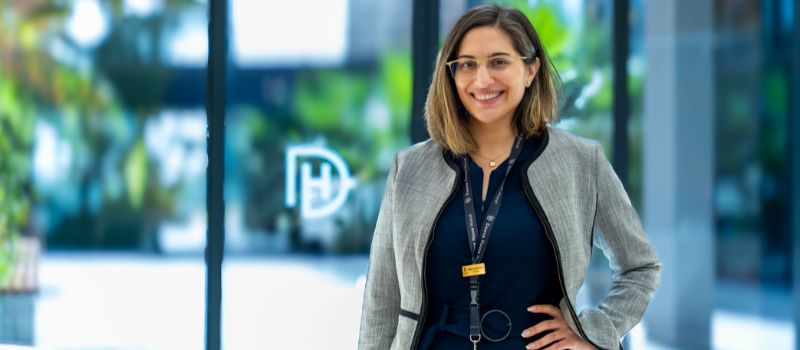
Edarabia had the opportunity to interview Helen Booth-Smith, Principal of Downe House Muscat, to explore how schools are preparing students for the future through AI literacy, ethical decision-making, resilience, and personalised learning. In this insightful discussion, she shares how Downe House Muscat integrates AI responsibly, nurtures adaptability, supports Students of Determination, and fosters strong digital citizenship, while creating a supportive environment where every student can thrive academically, socially, and personally.
At Downe House Muscat, we are introducing AI in a measured, research-informed way. We want students to understand it as a tool to support learning, not replace thinking, and to use it with care, curiosity and integrity.
We have taken a clear stance on phones and devices. In the senior school, device use is tightly structured for learning, while in primary we introduced school-based devices in response to safeguarding concerns, leading to better focus and more purposeful engagement.
For younger students, the focus is safety, supervision and strong habits. For older students, we explicitly teach bias, verification, ethics, academic honesty and when independent human judgment matters most.
These subjects are central, not add-ons. We teach them with seriousness and pride, while helping students connect Omani culture, heritage and values to a broader global understanding.
Communication, resilience and discernment. Students must be able to express themselves clearly, adapt confidently and make wise decisions in a world full of change and noise.
We focus on pathways rather than narrow destinations. Our aim is to develop students who can learn, unlearn and relearn with confidence throughout their lives.
Through adaptive teaching, strong pastoral knowledge and high challenge with high support. We work hard to know each student well and help her thrive from her own starting point.
Resilience is taught in the daily life of the school: through challenge, reflection, feedback and recovery from setbacks. It is built through practice, not slogans.
Our tutors, pastoral leaders, safeguarding team, school counsellor and school nurse all play a role. We want to notice concerns early, before they become something more serious.
Our ambition is not simply inclusion, but excellence. That means targeted support, adaptive teaching and high expectations sitting side by side.
We teach students that their digital footprint is part of their reputation. They need to think carefully about what they post, how they communicate and what their online presence says about their character.
Parents are no longer just recipients of information; they are active partners. The strongest outcomes come when school and home work closely together around values, wellbeing and routines.
We keep the focus on clear priorities, practical professional development and developmental feedback. We want teachers to feel supported, trusted and empowered to keep growing in their craft.
Prepare young people not simply to keep up with the future, but to shape it with purpose, confidence and integrity.







 Twitter
Add a Comment
Please do not post:
Thank you once again for doing your part to keep Edarabia the most trusted education source.