


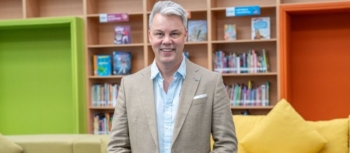
Director of Kings’ Education Alan Williamson discusses Kings’ expansion plans, new leadership, and the unique programmes that Kings’ Education has to offer. Read the full interview below.
The latest KHDA ratings are quite an achievement for Kings’ Education and are undoubtedly a continuation of your success story. Which areas do Kings’ Schools focus on to achieve such strong sustained results year after year?
In terms of focus, it’s simply about constantly striving to be a fantastic school. It’s about the culture and ‘the way we do things’. When I have the pleasure of visiting other schools, you can very quickly tell whether a school ‘feels right’. You pick up the ethos in the way that staff conduct themselves, and the way students are walking through the corridors and learning in class.
At Kings’ we continue to focus on maths, English and science in terms of academic attainment, plus we’ve also undertaken lots of excellent work around improving Arabic and Islamic Education – and that came through in the three KHDA reports for our schools. Fundamentally, success is also linked to pastoral care within the organisation; that means being very emotionally intelligent with parents, students and staff. Kings’ prides itself on having a culture of kindness in all our schools.
The mantra for Kings’ is that we try to do things differently, which means keeping the teaching and learning creative, and looking at best practice in terms of international pedagogy, pastoral support, innovation and curriculum. We call it ‘results the right way’. We want our students to be the best they can be in their academic work, but results have to be achieved within a context where children are happy, feel safe and secure, as well as healthy.
Wider achievement, whether that’s in music, sport, the arts or charity work, is appreciated just as much as being the best at maths, English or science. Schools should ‘target value’ rather than ‘valuing targets’, and if you’re getting it right for every child, and doing the best by every child, then a KHDA inspection team will come in and capture that school at work and play.
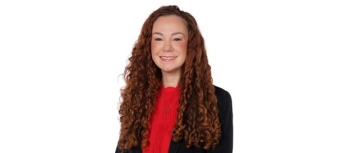
Tell us a little bit about your newly appointed Principal, Rebecca Gray.

Rebecca is a phenomenal school leader. She has huge experience from running multi-academy trusts in the UK as well as being a talented primary school head teacher in that context, leading ‘outstanding schools’ and knowing what that looks like.
Rebecca has been in Dubai for two years, so she now fully understands the UAE context and obviously, knows how best to grow a school from ‘good to great’. She’s really energetic and passionate about children, and about getting it right for them, and is a role model for both teachers and the students at Kings’ School Al Barsha.
In terms of her leadership style, she’s exactly what a school leader should be. There are times when she leads from the front, and to do that she’ll literally be at the front gate, or leading staff meetings and personally heading up specific school improvements, but she’s also a team player. Together with Michael Bloy, the secondary head, and strong deputy heads and other leaders in the campus, she’s playing a key role in the success that Kings’ School Al Barsha has become.
Rebecca was absolutely the right person to become principal and is also well respected by our chairman, Mr Tayeb Al Baker, and by KHDA.
Can you tell us more about the Kings’ ‘3 to 18’ agenda? How does it help in achieving greater student retention and growth?
In Dubai, as opposed to the UK, three to 18 years’ schools are very popular, and there are certain advantages in relation to a child being on their own journey to excellence through the one school – where they feel comfortable, safe, secure and familiar with the environment around them.
At Kings’ School Al Barsha, there are advantages in terms of our incredible sports, science and design technology facilities, and one of the many things we do very well when constructing timetables is to ensure that science, maths and design teachers in the secondary school are able to also work with years five and six, for example, so the transition becomes seamless.
However, Kings’ is broader than that. We are three schools, one family; so students from Kings’ School Dubai and Kings’ School Nad Al Sheba also come to Kings’ School Al Barsha Secondary as they transition to senior school.
The secondary school is now very well established, has strong GCSE exam results and has a very extensive A Level curriculum, as large as any in Dubai, providing for the increasing number of sixth form students. Therefore, it is increasingly becoming the school of choice for the Kings’ primary cohort, which is excellent given the level of competition between secondary schools that have been in Dubai for a long time. The school roll at Kings’ School Al Barsha has reached a maximum point in primary and junior phase secondary, with the school close to its original capacity of 2,000 students. This is mainly down to the fact that almost every child in our primary now transfers to secondary.
Kings’ values and beliefs are set out from age three, and that’s around characteristics such as independent learning, inclusion, a culture of kindness, innovation and ambition. It’s about valuing British heritage through a ‘character based education’ but being very aware of our setting here in Dubai, and therefore our strong international perspective on learning and culture. The values of ‘doing the best for every child’ now follow through from three to 18.
Kings’ School Al Barsha is set to undergo some major expansion this summer. Can you tell us more about that?
In recent years, Kings’ School Al Barsha has been very successful and we’ve transitioned from 300 students to 1,600 (and next year we will have in excess of 1,900 students). The campus was originally designed for five form entry, however, to meet increasing demand we now plan to stop expansion in primary at eight form entry. We believe this is the right size for us to achieve a balance between strong pastoral care and having the principal and her team know the children as individuals, but with the added advantages of being in a large campus with its associated resources, facilities, and ability to access an array of sports teams and drama and music productions.
The summer expansion programme is not really about classrooms, it’s more about five years on, putting some high-quality facilities into the original design for the benefit of the children. Our buildings are architecturally incredible and this campus is one of the few that I’ve been in where I’ve felt that the design complements the school curriculum.
In the foundation section, we’re putting in a drama and music space and a hall that’s appropriate for foundation student performances – a space where a three-year-old can confidently perform for their parents in drama and expressive arts. We will also have two additional music classrooms and, again, it’s not about increasing student numbers but about adding high-quality specialist resources and facilities.
Rebecca Gray has been a driving force in wanting to introduce the importance of etiquette and a strong character education within the school, and eating lunch together as well as gathering and socialising at interval and breaks, is a skill that children need to learn which will benefit them in later life. As a result, we are building an amazing primary canteen that will take two year groups, and that will also create some indoor space and a play area for us during the summer months.
In addition, we are increasing the number of Arabic classrooms that specialise in Arabic A and Arabic B learning, once again demonstrating our commitment to providing strong language learning and specialist facilities.
In secondary, we are increasing the number of purpose-built science labs from six to nine, which is a fabulous addition as we begin to teach even more demand for A Levels and GCSEs in physics, chemistry and biology.
Design technology has also expanded in popularity, so we will have yet another food technology kitchen and also new design technology facilities. Something that has become increasingly popular at GCSE and A Level is the growth in demand from students who want to pursue an innovative curriculum within areas such as design technology.
We will also move our English and maths departments within the school, and these will have A Level bases put into them, making them lovely places to teach and learn.
The final part of the jigsaw is that we are looking to create yet more sports facilities. At the rear of the school, on the additional land we have next to Dubai Hills, we are in consultation about constructing a dome – an indoor football and rugby facility, allowing students to play fixtures on a FIFA-size pitch throughout the year. This will be a real talking and selling point across Dubai.
The expansion of the food technology classrooms is interesting, what can students expect to learn here?
This is fundamental to Kings’ belief that as a secondary school we must be innovative and creative in relation to our curriculum choice at GCSE and A Level.
Design technology is an amazing department, and within, that you have subjects such as engineering, resistant materials, robotics, engineering and food technology. Food technology has been really popular with our students. We have a fantastic teacher and have just recruited another from the UK.
What I believe is important is that a school should teach skills for learning, skills for work and skills for life. I think lots of schools would lay claim to being good at skills for learning, and obviously that’s fundamental to what schools are about. With some confidence, I think some schools are less adept at also seeing a rounded learning experience by teaching skills for work and life. I see certain areas of the school such as science, food technology and design technology more about targeting vocational learning skills for work, as well as skills for life.
Through the industrial kitchens in which we work, students are learning about things like the hospitality industry, which is crucial to Dubai’s economy, and although a lot of our Kings’ students will go on to be managers and leaders in that industry, it’s important that they also know the skills around food and hospitality in general.
More importantly, when I went to university I didn’t know how to cook and that’s a fundamental life skill! All our students should know the basics of health and wellbeing around food, and be able to cook basic healthy meals. In actual fact, when they do their master chef course, what they produce is far from basic. Our sports scholars are also spending time in food technology understanding the importance of food and diet in their overall success.
Many schools in Dubai and the UK don’t have food technology departments. We are quite unique in this respect, and I wouldn’t build a Kings’ School without this, as it’s fundamental to that skills for work and life agenda. Indeed, we have just installed a STEAM facility in our Kings’ School Nad Al Sheba primary with this level of resource, which presents an incredible opportunity for our younger children.
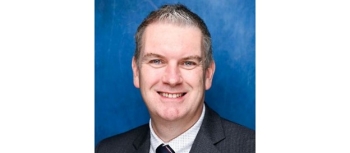
Alan Williamson is the Director of Education at Kings’ Education, Dubai. He graduated from Glasgow University with an honours degree in History and Russian Language and has also attended the Harvard Graduate School of Education. His teaching career began in the Anderson School in the Shetland Islands and has covered schools across the United Kingdom, progressing from teaching and leading departments in Humanities and Languages to two Headships. This included heading up the first ever Scottish Future Trust School, an integrated community campus in Edinburgh from Foundation to Secondary level. He is particularly proud of work undertaken in the independent sector with Rugby School (in Warwickshire, England) through a partnership with the remarkable Arnold Scholarship Foundation. Alan became Principal of Kings’ School Al Barsha in January 2016. As well as being passionate about teaching and learning, he has been actively involved in school leadership related to Special Educational Needs.
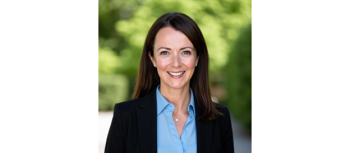
Rebecca Gray is the Principal of Kings’ School Al Barsha. Rebecca graduated with a degree in Psychology in 2002, and went on to complete her PGCE at the University of North London. She began her teaching career in the London borough of Tower Hamlets, where she gained her first senior leadership post, and progressed to further senior leadership responsibilities in Peterborough. Following her career progression through leadership roles, Rebecca became deputy head teacher at a school in Huntingdon, during which time she also completed her NPQH. Rebecca has since been the head teacher of a primary school in Northamptonshire and the founding principal of a preparatory school. She has also worked as an Improvement Cluster Lead for the David Ross Education Trust, where she led on whole school improvement for seven of their primary schools. Rebecca joined Kings’ School Al Barsha as primary head teacher from September 2016 and was named the new principal in May 2018.



 Twitter
Add a Comment
Please do not post:
Thank you once again for doing your part to keep Edarabia the most trusted education source.